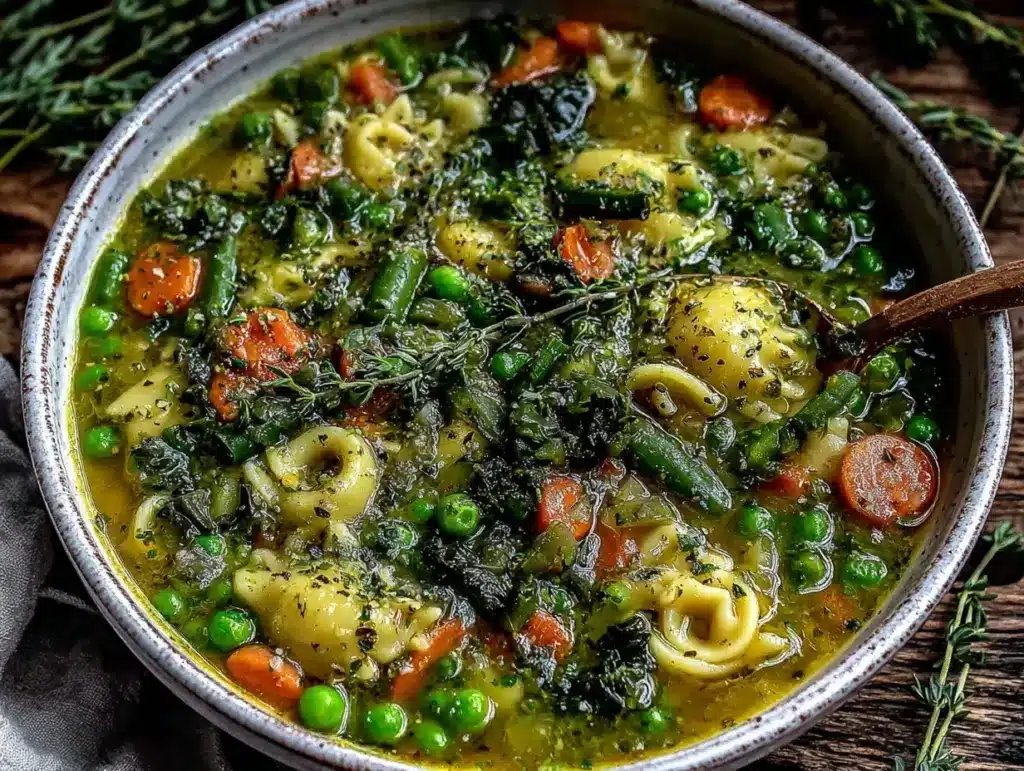
There’s something about the way the kitchen smelled that afternoon—a subtle mix of fresh herbs, simmering tomatoes, and the faint crunch of spring peas—that pulled me back to a quiet moment last season. I was halfway through cleaning out my fridge, and honestly, it was a bit of a mess. Instead of tossing every leftover vegetable, I grabbed a handful of what looked like random bits: a handful of fresh green beans, some baby carrots, a few stalks of celery, and a small bunch of spinach. The idea was to just throw them all into a pot and see what happened, maybe make some sort of soup to clear out the fridge. I wasn’t expecting much, but the results? Honestly, it was one of the best bowls of minestrone soup I’ve had in a long time.
This fresh spring minestrone soup, packed with vibrant vegetables, turned out to be exactly what I needed that day—a simple, healthy meal that felt light but still comforting. It’s not one of those complicated, heavy soups that weigh you down. Instead, it’s bright and fresh, like the first real taste of spring in a bowl. I found myself making it again and again over the weeks, tweaking the veggie combo depending on what was in season or on hand.
What stuck with me was how easy it was to pull together, yet how deeply satisfying it felt. It’s the kind of soup that makes you slow down and appreciate simple ingredients—fresh beans, ripe tomatoes, fragrant herbs—working together. This recipe isn’t fussy, but it’s full of honest flavor and goodness. And you know, sometimes that’s exactly what you want, especially when life feels busy or a bit hectic.
So, if you’re looking for a fresh spring minestrone soup recipe that’s easy, veggie-packed, and feels like a little reset in a bowl, this one’s for you. It’s become a quiet favorite in my kitchen—a dependable way to enjoy the season’s best produce without any fuss.
Why You’ll Love This Recipe
- Quick & Easy: This soup comes together in about 40 minutes, perfect for those weeknights when you want something wholesome without spending hours.
- Simple Ingredients: No need to hunt down specialty items; most ingredients are pantry staples or fresh veggies you can find in any market this time of year.
- Perfect for Spring: Celebrates seasonal vegetables like snap peas, zucchini, and baby spinach, making it a light and fresh choice for the warming weather.
- Crowd-Pleaser: Whether you’re cooking for family or friends, this recipe consistently gets compliments and seconds—kids and adults both love it.
- Unbelievably Delicious: The mix of herbs, tender vegetables, and al dente pasta creates a texture and flavor combo that feels both comforting and lively.
This isn’t just any minestrone soup—it’s the one I keep coming back to because of the perfectly balanced freshness and heartiness. The secret? A splash of good-quality olive oil at the end and just the right hint of fresh basil and thyme. Plus, blending a bit of the beans into the broth adds a silky texture without any cream.
It’s the kind of recipe that makes you pause mid-bite and think, “Yeah, this is exactly what I needed.” It’s healthy but satisfying, bright but cozy—an ideal way to honor spring’s bounty without fuss or fancy techniques.
What Ingredients You Will Need
This fresh spring minestrone soup uses simple, wholesome ingredients to deliver bold flavor and satisfying texture without the fuss. Most are pantry staples, with a few seasonal vegetables that bring that vibrant spring vibe.
- Olive oil: For sautéing; I prefer extra virgin like Colavita for its rich flavor.
- Yellow onion, diced: Provides a sweet base note.
- Garlic cloves, minced: Adds warmth and depth.
- Carrots, chopped: Sweet and crunchy, balancing the savory broth.
- Celery stalks, chopped: Classic soup flavor builder.
- Zucchini, diced: A tender spring vegetable that soaks up flavors well.
- Green beans, trimmed and cut: Fresh and crisp, adding texture.
- Fresh or frozen peas: Sweet bursts of springtime goodness.
- Baby spinach leaves: Stirred in at the end for a fresh, leafy note.
- Canned diced tomatoes (14 oz/400g): Use San Marzano if you can for a richer taste.
- Vegetable broth (6 cups / 1.4 liters): I recommend a low-sodium version to control saltiness.
- Small pasta (like ditalini or elbow macaroni): About 3/4 cup (90g); makes the soup more filling.
- Cannellini beans, drained and rinsed: Adds protein and creamy texture; I like to mash a bit to thicken the broth.
- Fresh thyme and basil: Roughly chopped; herbs make all the difference here.
- Salt and pepper: To taste; balance is key.
- Parmesan rind (optional): Adds umami if you have it on hand.
Substitution tips: If you want a gluten-free option, swap the pasta for gluten-free varieties or use more beans and veggies instead. For dairy-free, skip the Parmesan rind or use a vegan alternative. Seasonal swaps work well too—try asparagus tips or fresh fennel for a twist.
Equipment Needed
- Large heavy-bottomed pot or Dutch oven: Essential for even heat and a good simmer. I find a 5-quart (4.7L) size perfect.
- Chef’s knife and cutting board: For chopping all your fresh vegetables.
- Wooden spoon or silicone spatula: For stirring without scratching your pot.
- Measuring cups and spoons: Accuracy helps balance the flavors.
- Colander: To drain and rinse beans or pasta.
If you don’t have a Dutch oven, a deep sauté pan with a lid works fine—just watch your liquid levels. For chopping, I sometimes use kitchen shears for herbs or peas to save time. Keeping your knives sharp makes prep quicker and safer, trust me on that one.
Preparation Method
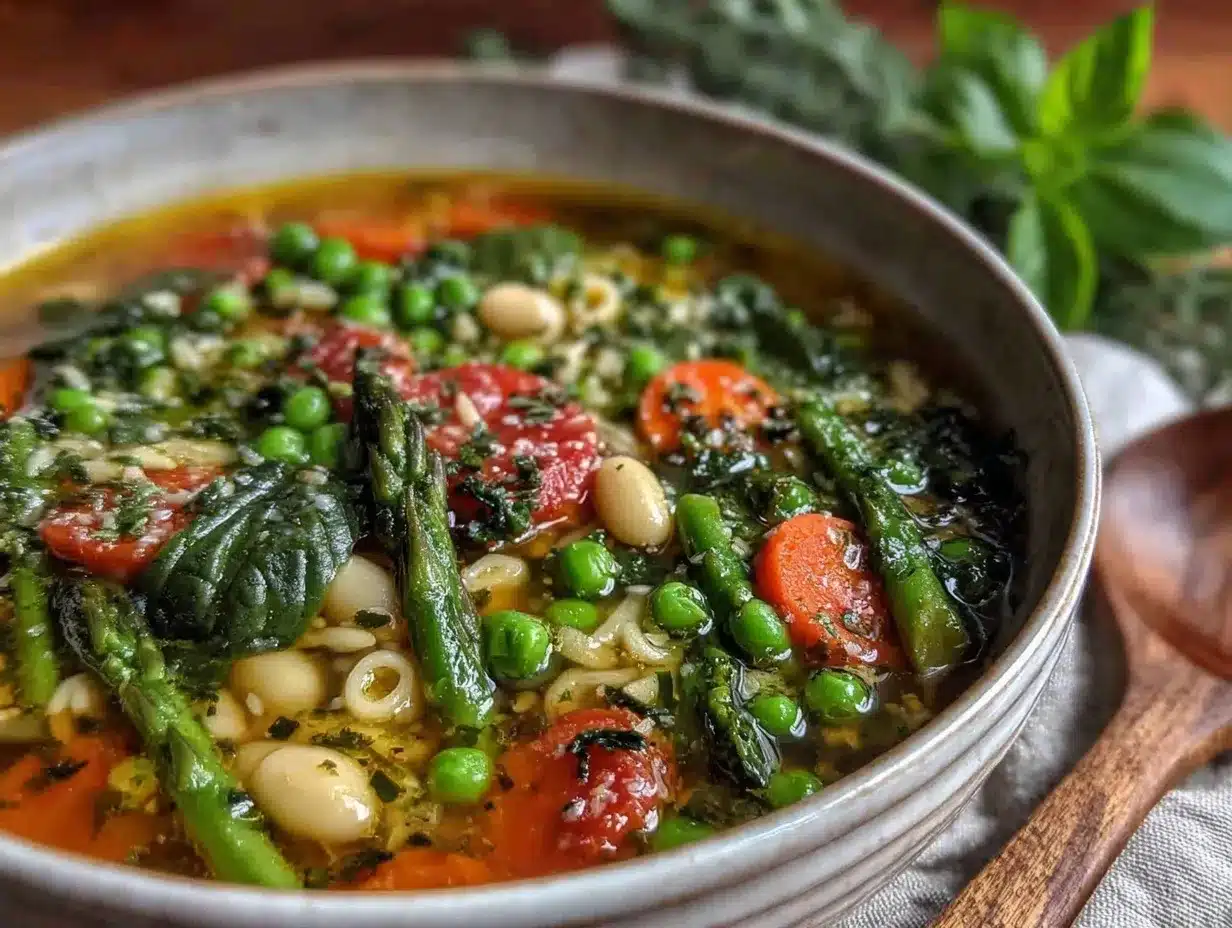
- Heat the olive oil: Warm 2 tablespoons (30 ml) in your pot over medium heat. It should shimmer but not smoke, about 2 minutes.
- Sauté the aromatics: Add the diced onion, 1 cup (130g) chopped carrots, and 1 cup (100g) chopped celery. Cook for 5-7 minutes, stirring occasionally, until the veggies soften and the onion turns translucent.
- Add garlic: Stir in 3 minced garlic cloves and cook for 30 seconds, until fragrant but not browned.
- Pour in the broth and tomatoes: Add 6 cups (1.4 liters) vegetable broth and one 14-ounce (400g) can of diced tomatoes with their juices. Bring to a gentle boil.
- Add beans and herbs: Stir in 1 cup (165g) drained and rinsed cannellini beans, 1 teaspoon fresh thyme leaves, and the Parmesan rind if using. Reduce heat and simmer uncovered for 15 minutes to let flavors meld.
- Cook the pasta: Meanwhile, in a separate pot, cook 3/4 cup (90g) small pasta according to package instructions until just al dente, about 7-8 minutes. Drain and rinse under cold water to stop cooking.
- Add spring vegetables: To the simmering soup, add 1 cup (120g) chopped zucchini, 1 cup (100g) green beans, and 1/2 cup (75g) fresh or frozen peas. Cook 5-7 minutes until vegetables are tender but still bright and slightly crisp.
- Blend part of the soup (optional): Scoop about 1 cup of soup (including beans and broth) into a blender and puree until smooth, then stir back into the pot for a creamier texture without cream.
- Combine pasta and spinach: Stir in the cooked pasta and 2 cups (60g) baby spinach leaves, cooking for another 2 minutes until spinach wilts.
- Season and finish: Remove the Parmesan rind, season with salt and freshly ground black pepper to taste, and add 1 tablespoon (15 ml) good-quality olive oil for richness. Serve hot.
Preparation notes: Watch your simmer so it doesn’t boil too hard—gentle bubbles keep vegetables intact. If the soup thickens too much, add a splash more broth or water. The pureeing step is optional but really adds a nice silky mouthfeel.
Cooking Tips & Techniques
One trick I learned the hard way is not to overcook the spring vegetables. They should stay bright and have a bit of snap to keep the soup lively. Adding them in stages, just minutes before serving, helps with that.
Another tip: rinsing the pasta after cooking stops it from getting mushy in the soup. You want it tender but firm, especially since it will soak up broth as it sits.
Using fresh herbs at the end rather than dried ones early on keeps the flavor punchy and fresh. If you only have dried, add it earlier with the broth, but fresh is best here.
Don’t skip the olive oil finish—it’s a simple layer of flavor that rounds everything out and makes the soup feel a little special.
Lastly, I often mash some beans into the broth to thicken it naturally. It’s a neat way to add creaminess without cream or extra fat.
Variations & Adaptations
- Seasonal swaps: In early spring, swap zucchini for asparagus tips or add fennel for a sweet anise note.
- Protein boost: Add cooked shredded chicken or turkey for a heartier meal, or stir in cooked quinoa or barley instead of pasta.
- Vegan & gluten-free: Use gluten-free pasta or more beans for substance, and skip the Parmesan rind or use a nutritional yeast sprinkle instead.
- Spicy twist: Add a pinch of red pepper flakes or a diced jalapeño when sautéing the garlic for a subtle heat kick.
Once, I tried adding a spoonful of pesto stirred in just before serving—totally changed the flavor profile but in a good way. It’s a fun way to customize this fresh spring minestrone soup depending on what you’re craving.
Serving & Storage Suggestions
This soup is best served hot, straight from the pot. A sprinkle of grated Parmesan cheese or a drizzle of extra virgin olive oil on top adds a nice finishing touch. It pairs beautifully with crusty bread or a simple green salad.
Leftovers keep well in the fridge for 3-4 days in an airtight container. Reheat gently on the stove, adding a splash of broth or water if it thickens too much. It also freezes nicely for up to 2 months—thaw overnight in the fridge and reheat slowly.
The flavors actually deepen after resting, so if you make it ahead, it’s even better the next day. Just toss in a handful of fresh spinach when reheating to bring back that vibrant green pop.
Nutritional Information & Benefits
This fresh spring minestrone soup is a nutrient-packed meal, loaded with fiber, vitamins A and C, and plant-based protein from the beans. The variety of vegetables supports digestion and offers antioxidants that help keep your immune system steady.
It’s naturally low in calories and fat, making it a smart choice for anyone watching their intake but still wanting something satisfying. Plus, the olive oil adds heart-healthy monounsaturated fats.
For those with dietary restrictions, this recipe is easily adapted to be gluten-free and vegan, making it accessible for many diets. Just watch out for the Parmesan if you’re dairy-free or vegan.
Conclusion
If you’re after a fresh spring minestrone soup that’s easy, healthy, and bursting with vibrant vegetables, this recipe is a real gem. It’s the kind of meal that feels both nourishing and comforting without being heavy or complicated.
I love how flexible it is—you can swap in your favorite spring produce or tweak it to match your pantry. It’s become a go-to in my kitchen when I want something wholesome and satisfying, yet fresh and light.
Give it a try and see how this little bowl of spring can brighten your day. I’d love to hear how you make it your own or what veggies you add. Soup season may not last forever, but this one is definitely worth savoring while it’s here.
FAQs
Can I make this soup ahead of time?
Absolutely! It actually tastes better the next day once the flavors meld. Just store it in the fridge and add fresh spinach when reheating.
What pasta works best in minestrone soup?
Small shapes like ditalini, elbow macaroni, or small shells work best since they cook quickly and mix well with the veggies.
Can I freeze this minestrone soup?
Yes, freeze in airtight containers for up to 2 months. Thaw overnight in the fridge and reheat gently on the stove.
How do I make it gluten-free?
Swap the pasta for gluten-free varieties or replace with extra beans and vegetables for a naturally gluten-free meal.
Can I add meat to this soup?
Definitely! Cooked shredded chicken or turkey can be stirred in at the end for extra protein and heartiness.
Pin This Recipe!
Fresh Spring Minestrone Soup

A quick, easy, and healthy veggie-packed minestrone soup that celebrates seasonal spring vegetables with a bright and fresh flavor.
- Prep Time: 15 minutes
- Cook Time: 25 minutes
- Total Time: 40 minutes
- Yield: 6 servings 1x
- Category: Soup
- Cuisine: Italian
Ingredients
- 2 tablespoons extra virgin olive oil
- 1 yellow onion, diced
- 3 garlic cloves, minced
- 1 cup chopped carrots (about 130g)
- 1 cup chopped celery (about 100g)
- 1 cup diced zucchini (about 120g)
- 1 cup trimmed and cut green beans (about 100g)
- 1/2 cup fresh or frozen peas (about 75g)
- 2 cups baby spinach leaves (about 60g)
- 1 (14 oz / 400g) can diced tomatoes
- 6 cups (1.4 liters) low-sodium vegetable broth
- 3/4 cup (90g) small pasta (ditalini or elbow macaroni)
- 1 cup (165g) cannellini beans, drained and rinsed
- 1 teaspoon fresh thyme leaves
- Fresh basil, roughly chopped
- Salt and freshly ground black pepper, to taste
- Parmesan rind (optional)
- 1 tablespoon extra virgin olive oil (for finishing)
Instructions
- Heat 2 tablespoons olive oil in a large heavy-bottomed pot over medium heat until shimmering, about 2 minutes.
- Add diced onion, chopped carrots, and chopped celery. Sauté for 5-7 minutes until vegetables soften and onion is translucent.
- Stir in minced garlic and cook for 30 seconds until fragrant.
- Pour in vegetable broth and diced tomatoes with juices. Bring to a gentle boil.
- Add cannellini beans, fresh thyme leaves, and Parmesan rind if using. Reduce heat and simmer uncovered for 15 minutes.
- Meanwhile, cook pasta in a separate pot according to package instructions until just al dente (about 7-8 minutes). Drain and rinse under cold water.
- Add zucchini, green beans, and peas to the simmering soup. Cook 5-7 minutes until vegetables are tender but still bright and slightly crisp.
- Optional: Scoop about 1 cup of soup (including beans and broth) into a blender and puree until smooth. Stir back into the pot for creamier texture.
- Stir in cooked pasta and baby spinach leaves. Cook for another 2 minutes until spinach wilts.
- Remove Parmesan rind, season soup with salt and pepper to taste, and stir in 1 tablespoon olive oil. Serve hot.
Notes
Do not overcook the spring vegetables to keep them bright and slightly crisp. Rinse pasta after cooking to prevent mushiness. Use fresh herbs at the end for best flavor. The Parmesan rind is optional and can be omitted for dairy-free or vegan diets. Pureeing part of the soup adds a creamy texture without cream. Add a splash of broth or water if soup thickens too much during simmering.
Nutrition
- Serving Size: 1 bowl (about 1.5 cu
- Calories: 180
- Sugar: 6
- Sodium: 350
- Fat: 5
- Saturated Fat: 0.7
- Carbohydrates: 28
- Fiber: 6
- Protein: 8
Keywords: minestrone soup, spring soup, vegetable soup, healthy soup, easy soup, vegetarian soup, gluten-free option, vegan option