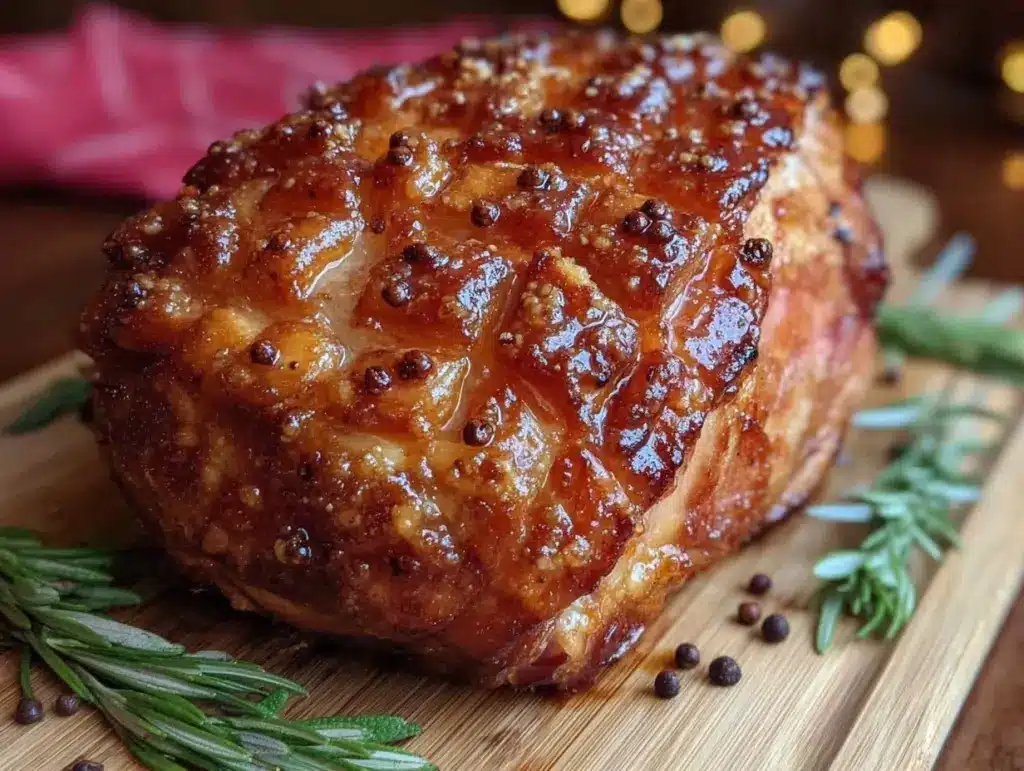
The first time I made this perfect glazed Easter ham with cloves, it wasn’t exactly planned. It was one of those mornings where I realized halfway through preparing my holiday spread that I forgot to defrost the turkey. Panic was setting in, but then I spotted the ham sitting in the fridge, quietly waiting for a chance to shine. I’d always been a bit skeptical about cooking ham at home—thought it was just something you buy already done. But honestly, the smell of cloves mingling with a sweet glaze baking low and slow in the oven changed my mind fast.
There’s something about the warm aroma of cloves studded into a ham, combined with that sticky-sweet glaze, that just feels like the perfect holiday hug. That day, I tossed together a glaze from pantry staples and poked cloves into the ham without much thought, but the result was a feast-worthy centerpiece that had everyone asking for seconds. What stuck with me wasn’t just the flavor but the ease of making something so festive without fuss.
Over the years, this recipe became my go-to for Easter and other holiday feasts. It’s that comforting blend of sweet and spice that feels timeless, and I love how the cloves add a subtle depth that’s not overpowering but just right. If you’re like me, juggling a busy kitchen and craving something that looks impressive but is truly simple to pull off, this glazed ham recipe might just be the quiet star you need on your holiday table.
Why You’ll Love This Recipe
- Quick & Easy: The glaze comes together in under 15 minutes, and the hands-on prep is minimal, leaving you free to focus on sides or guests.
- Simple Ingredients: Uses common pantry staples like brown sugar, mustard, and cloves—no obscure shopping runs needed.
- Perfect for Holiday Feasts: Whether it’s Easter, Christmas, or any special gathering, this ham makes a memorable centerpiece everyone loves.
- Crowd-Pleaser: The balance of sweet glaze with aromatic cloves wins over even those “not really into ham” folks at the table.
- Unbelievably Delicious: The slow roasting allows the glaze to caramelize beautifully, locking in juicy, tender meat with a glossy finish.
This isn’t just another ham recipe you’ll forget about—it’s the one that feels like tradition from the first bite. The cloves aren’t just for show; they subtly infuse the meat during roasting, creating a flavor depth that pairs perfectly with the sticky glaze. Plus, the method is forgiving—perfect if you’re not a “serious” cook but want to impress without stress.
What Ingredients You Will Need
This recipe uses simple, wholesome ingredients to deliver bold flavor and satisfying texture without the fuss. Most are pantry staples, and substitutions are easy if needed.
- Bone-in smoked ham (7-9 pounds) – I recommend a spiral-cut ham for easy serving, but a whole shank ham works fine too.
- Whole cloves – About 20-30 cloves for studding the ham, adding that signature aromatic flavor.
- Brown sugar (1 cup, packed) – Provides rich caramel sweetness; dark brown sugar adds a nice molasses touch.
- Dijon mustard (1/4 cup) – Balances sweetness with a bit of tang, helps the glaze stick.
- Honey (1/3 cup) – For natural sweetness and a beautiful glaze sheen.
- Apple cider vinegar (2 tablespoons) – Adds brightness and cuts through richness.
- Pineapple juice (1/2 cup) – Optional but recommended for a subtle fruity note and tenderizing effect.
- Ground cinnamon (1/2 teaspoon) – A warm spice hint that complements cloves without overwhelming.
- Black pepper (freshly ground, to taste) – For mild heat and seasoning.
Substitution tips: Use maple syrup instead of honey if you want a deeper flavor. For a gluten-free twist, just double-check your mustard and vinegar labels (most are naturally gluten-free). If you don’t have pineapple juice, orange juice works well too.
Equipment Needed
- Roasting pan with rack: Essential for even cooking and allowing fat to drip away. I use a simple budget-friendly pan from my local store that’s easy to clean.
- Sharp paring knife: For poking holes to insert cloves accurately.
- Basting brush: To spread the glaze evenly and build up layers during roasting.
- Meat thermometer: Super helpful for checking doneness without guessing. A digital instant-read thermometer is my favorite for accuracy and speed.
- Aluminum foil: For tenting the ham to prevent over-browning during roasting.
If you don’t have a roasting rack, you can improvise with a bed of thickly sliced onions or sturdy vegetables to lift the ham off the pan bottom. Just avoid direct contact with the pan to keep the ham juicy and to catch drippings for a potential sauce.
Preparation Method
- Preheat your oven to 325°F (163°C). This low and slow heat is key to tender, juicy ham without drying out.
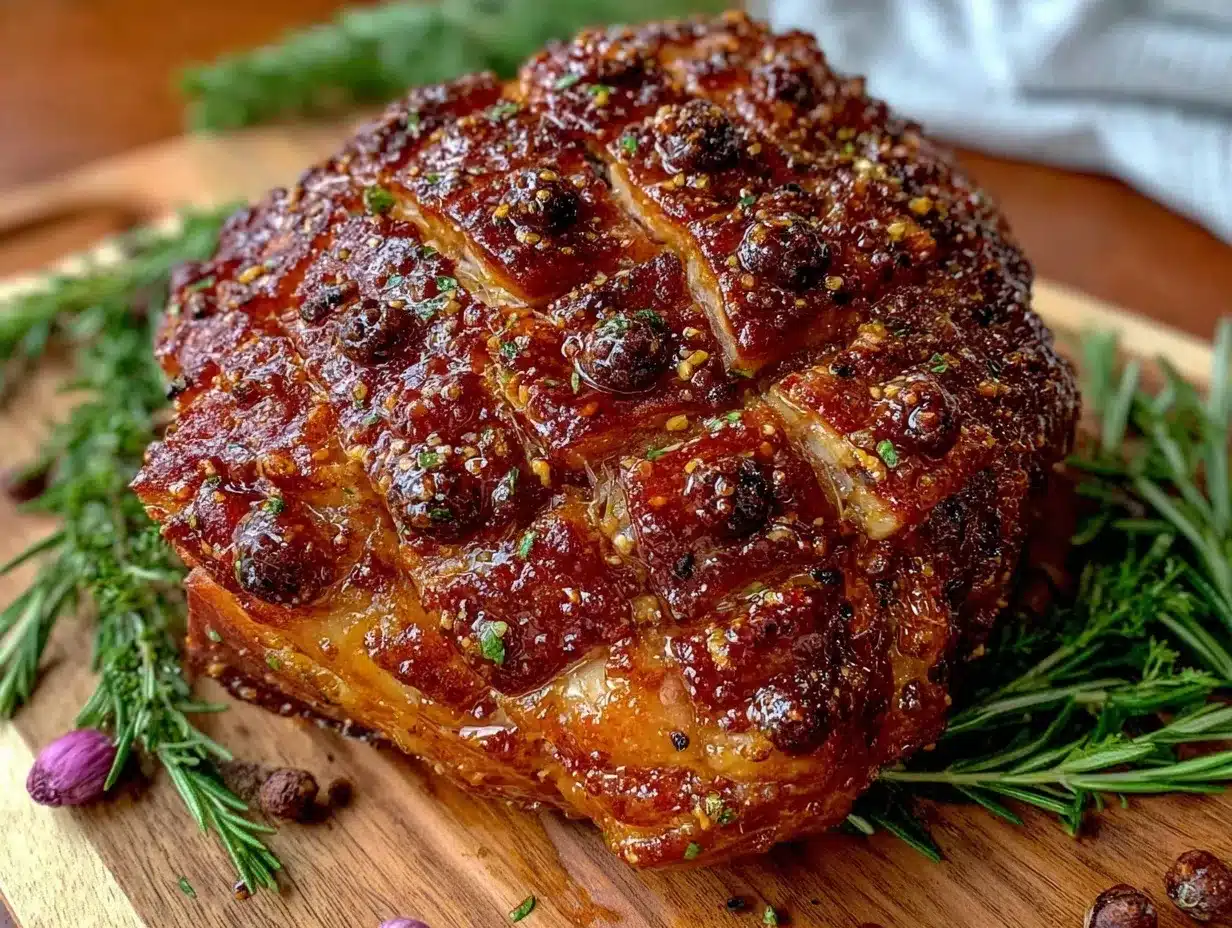
- Prepare the ham: Remove any packaging and pat the ham dry with paper towels. Score the surface in a diamond pattern about 1/4 inch deep—this helps the glaze soak in and gives a beautiful look. Use your paring knife to make shallow cuts about 1.5 inches apart.
- Stud with cloves: Press whole cloves into the center of each diamond shape. This adds flavor and a festive look. Don’t poke too deep or you’ll go through the ham.
- Make the glaze: In a small saucepan over medium heat, combine 1 cup brown sugar, 1/4 cup Dijon mustard, 1/3 cup honey, 2 tablespoons apple cider vinegar, 1/2 cup pineapple juice, and 1/2 teaspoon cinnamon. Stir until sugar dissolves, then simmer gently for 5 minutes until slightly thickened. Remove from heat.
- Place ham on rack in roasting pan: Make sure fat side is up so the glaze drips down, basting the meat.
- Baste the ham: Brush the ham generously with the glaze, making sure to get into the scored cuts. Reserve extra glaze for later.
- Roast: Place ham in oven and roast for about 15-18 minutes per pound (approx. 1.75 to 2 hours for 7-9 lbs). Every 20-30 minutes, baste with remaining glaze and pan juices to build a sticky, caramelized crust.
- Check temperature: Insert a meat thermometer into the thickest part of the ham (not touching bone). Once it reaches 140°F (60°C), it’s done.
- Rest the ham: Remove from oven and tent loosely with foil. Let rest for 15-20 minutes before slicing to allow juices to redistribute.
- Serve: Slice against the grain and arrange on a warm platter. Spoon any pan juices over the top for extra flavor.
Tip: If the glaze starts to darken too quickly, tent the ham with foil to avoid burning. Slow roasting and frequent basting create that signature sticky, shiny finish.
Cooking Tips & Techniques
One of the trickiest parts of making a glazed ham is getting the balance right between caramelized exterior and juicy interior. You know, sometimes the glaze can burn before the ham is cooked through, which is disappointing. To avoid this, keep your oven temperature low and baste often—this builds layers of flavor without scorching.
When scoring, be gentle—cutting too deeply will dry out the meat. Cloves are potent, so don’t overdo them; they should enhance, not dominate the flavor. I’ve learned that spacing the cloves evenly makes the ham look festive and ensures the aroma spreads nicely.
Another personal tip: reserve a little extra glaze to brush on the ham right before serving. It gives that fresh shine and an extra kick of sweetness. Also, resting the ham after roasting is key. It’s tempting to slice right away, but resting lets the juices settle, so your slices stay moist.
Multitasking during roasting helps—use the basting time to prep side dishes or tidy up. That way, the ham gets your full attention without chaos. And if you want a little more complexity, adding a splash of bourbon or orange juice to the glaze mix can be a game changer (though it’s optional).
Variations & Adaptations
- Maple-Glazed Ham: Swap honey for pure maple syrup for a deeper, earthier sweetness that pairs beautifully with cloves.
- Spicy Twist: Add a teaspoon of ground cayenne or a few dashes of hot sauce to the glaze for a subtle heat that cuts through the sweetness.
- Gluten-Free Option: Use gluten-free Dijon mustard and double-check your vinegar and other ingredients to avoid gluten. The recipe is naturally low in gluten otherwise.
- Slow Cooker Ham: For a hands-off approach, place the studded ham in a slow cooker with the glaze poured over and cook on low for 4-5 hours, basting once or twice. The skin won’t caramelize as much, but the flavor is still fantastic.
- Personal Favorite: I once added a splash of freshly squeezed orange juice and a handful of crushed pineapple chunks to the glaze for a tropical vibe. It was a hit and added a fun twist for summer holiday dinners.
Serving & Storage Suggestions
This ham is best served warm or at room temperature, making it easy to prepare ahead and relax before guests arrive. Arrange slices on a platter garnished with fresh herbs or pineapple rings for a festive touch. It pairs beautifully with classic sides like scalloped potatoes, roasted asparagus, or a crisp green salad.
Leftovers store well! Wrap tightly in foil or airtight containers and refrigerate for up to 4 days. For longer storage, slice and freeze portions for up to 3 months. When reheating, warm gently in the oven at 250°F (120°C) covered with foil to retain moisture.
Flavors often deepen after a day or two as the cloves and glaze meld with the meat, so don’t hesitate to prepare it a day ahead. Just keep the glaze warm and fresh for serving.
Nutritional Information & Benefits
Per serving (approx. 4 oz / 113g):
| Calories | 280 |
|---|---|
| Protein | 22g |
| Fat | 18g |
| Carbohydrates | 8g |
| Sugar | 7g |
Ham is a good source of protein and provides essential minerals like zinc and iron. The cloves bring antioxidants and anti-inflammatory properties, which is a nice little bonus. This recipe contains some sugar from the glaze, so it’s best enjoyed as an occasional treat. For a lower-sugar version, reduce the brown sugar and honey by half and increase mustard slightly to maintain tang.
Conclusion
This perfect glazed Easter ham with cloves recipe has become a quiet tradition in my kitchen—something I turn to when I want a meal that feels special but isn’t complicated. It’s forgiving, flavorful, and the kind of dish that invites people to gather around and savor together. I love how just a few simple ingredients can transform a humble ham into a showstopper without hours of stress.
Feel free to tweak the glaze or try the variations to make it your own. And if you do, I’d love to hear what you added or changed! Cooking is all about making recipes personal, after all. Here’s to more joyful, flavorful holiday feasts made with care and a little bit of clove-scented magic.
FAQs
Can I use a boneless ham for this recipe?
Yes, boneless hams work well. Just adjust cooking time since they may cook faster. Use a meat thermometer to check for internal temperature of 140°F (60°C).
How many cloves should I use for a 7-pound ham?
About 20 to 30 whole cloves spaced evenly in the scored diamond pattern works well for a ham this size.
Can I prepare the glaze ahead of time?
Absolutely! You can make the glaze a day ahead and refrigerate it. Warm it gently before brushing on the ham during roasting.
What if I don’t like cloves?
You can skip the cloves and still enjoy the glaze. Try adding a pinch of ground allspice or cinnamon for a warm spice note instead.
How do I know when the ham is done?
Use a meat thermometer inserted into the thickest part of the ham (avoiding bone). It should read 140°F (60°C) for fully cooked ham.
Pin This Recipe!
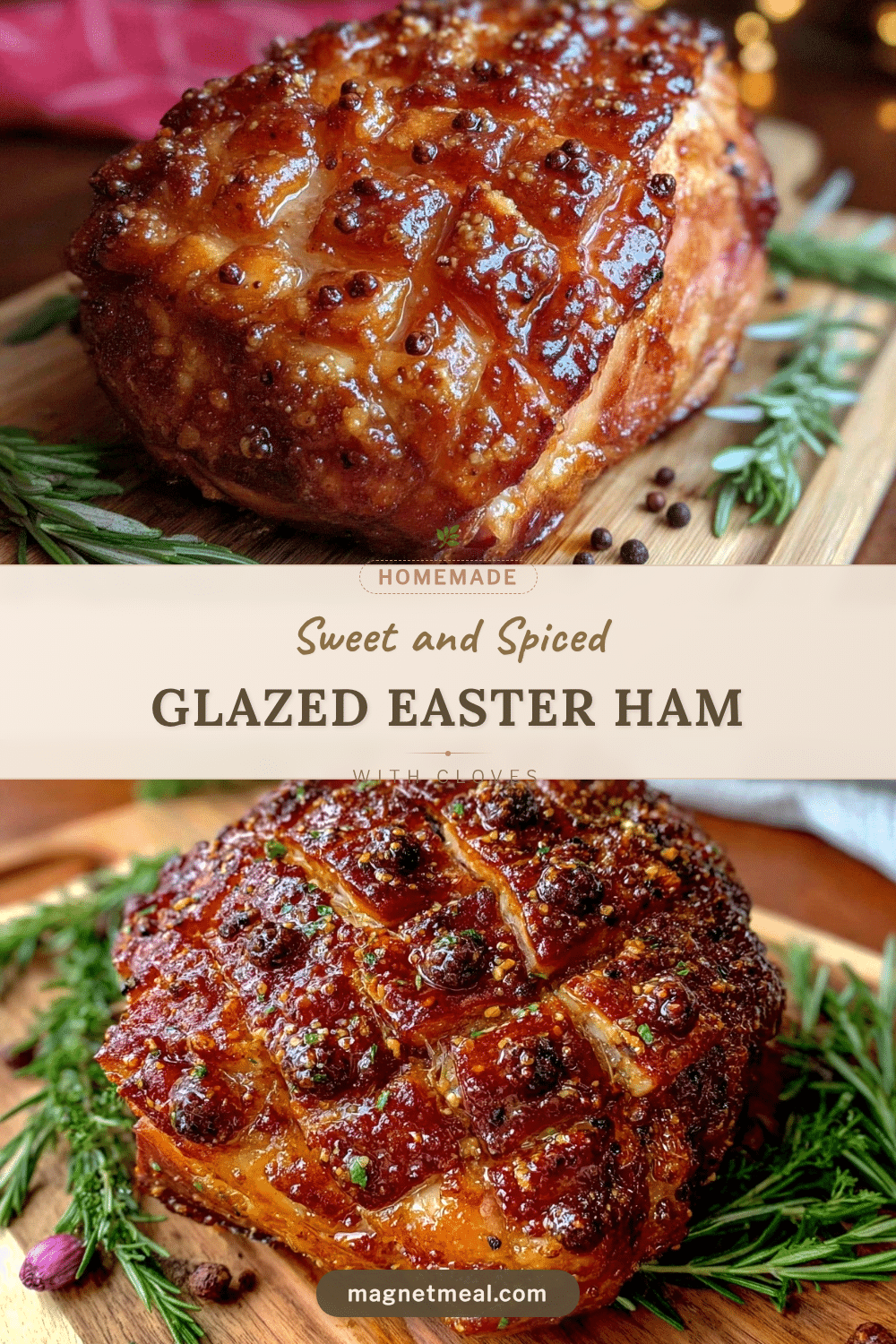
Perfect Glazed Easter Ham with Cloves
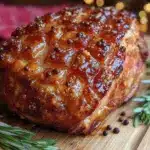
A simple and festive glazed ham studded with cloves, perfect for Easter or any holiday feast. Slow roasted to tender, juicy perfection with a sweet and spicy glaze.
- Prep Time: 15 minutes
- Cook Time: 1 hour 45 minutes to 2 hours
- Total Time: 2 hours
- Yield: 10-12 servings 1x
- Category: Main Course
- Cuisine: American
Ingredients
- 7–9 pounds bone-in smoked ham (spiral-cut recommended)
- 20–30 whole cloves
- 1 cup packed brown sugar
- 1/4 cup Dijon mustard
- 1/3 cup honey
- 2 tablespoons apple cider vinegar
- 1/2 cup pineapple juice (optional)
- 1/2 teaspoon ground cinnamon
- Freshly ground black pepper to taste
Instructions
- Preheat oven to 325°F (163°C).
- Remove packaging from ham and pat dry with paper towels.
- Score the surface of the ham in a diamond pattern about 1/4 inch deep, spacing cuts about 1.5 inches apart.
- Press whole cloves into the center of each diamond shape, spacing evenly without poking too deep.
- In a small saucepan over medium heat, combine brown sugar, Dijon mustard, honey, apple cider vinegar, pineapple juice, and ground cinnamon. Stir until sugar dissolves, then simmer gently for 5 minutes until slightly thickened. Remove from heat.
- Place ham fat side up on a rack in a roasting pan.
- Brush the ham generously with the glaze, making sure to get into the scored cuts. Reserve extra glaze for basting.
- Roast ham for about 15-18 minutes per pound (approximately 1.75 to 2 hours for 7-9 pounds). Every 20-30 minutes, baste with remaining glaze and pan juices to build a sticky, caramelized crust.
- Check doneness by inserting a meat thermometer into the thickest part of the ham (not touching bone). When it reaches 140°F (60°C), the ham is done.
- Remove ham from oven and tent loosely with foil. Let rest for 15-20 minutes before slicing to allow juices to redistribute.
- Slice against the grain and arrange on a warm platter. Spoon any pan juices over the top before serving.
Notes
If glaze darkens too quickly, tent ham with foil to prevent burning. Frequent basting builds flavor and a sticky, shiny finish. Rest ham after roasting to keep slices moist. Substitute maple syrup for honey for a deeper sweetness. Pineapple juice is optional but recommended for tenderizing and flavor. Slow cooker method possible but glaze won’t caramelize as much.
Nutrition
- Serving Size: Approx. 4 oz (113g)
- Calories: 280
- Sugar: 7
- Fat: 18
- Carbohydrates: 8
- Protein: 22
Keywords: glazed ham, Easter ham, holiday ham, cloves, baked ham, holiday feast, easy ham recipe, sweet and spicy ham