“Are you sure this’ll taste good?” my friend asked skeptically, holding a bunch of fresh peas and asparagus stalks like they were alien artifacts. Honestly, I wasn’t entirely sure either when I first tossed these spring vegetables into a pan with a generous pat of garlic butter and a splash of cream. But sometimes, the best meals come from those spur-of-the-moment kitchen experiments—especially when you’re craving something fresh but comforting after a hectic day.
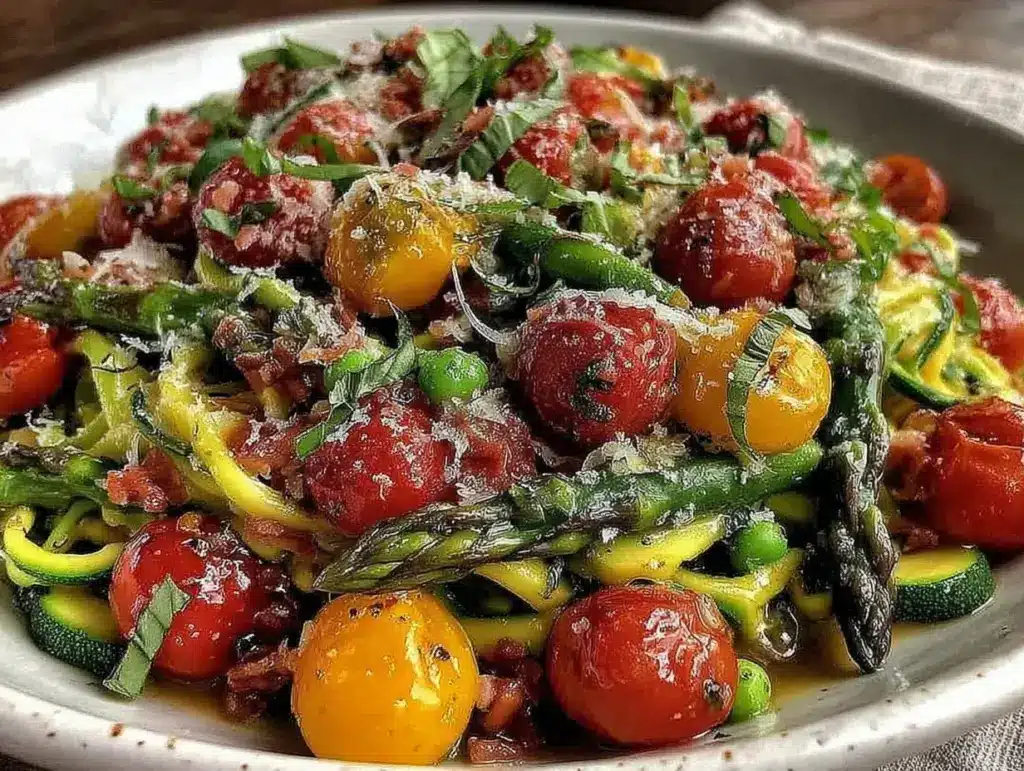
That night, the kitchen smelled like a garden kissed by dawn, with garlic notes swirling gently through the air. The first bite was surprising—creamy, silky, yet bright and fresh, the primavera perfectly balancing spring’s bounty with a richness that felt like a hug on a plate. I couldn’t stop tweaking the recipe, making it again and again over the week, each time inviting a neighbor or two to share it. It quickly became my go-to for when I needed a quick but satisfying dinner that didn’t feel like a compromise.
There’s something quietly satisfying about this Easy Creamy Spring Vegetable Primavera with Garlic Butter—the kind of dish that makes you pause and just appreciate the simple joys of fresh ingredients coming together. No fuss, no complicated steps, just honest flavor and a little kitchen magic. It stuck with me because it’s reliable, fresh, and downright delicious, the kind of recipe that feels like it was meant to be part of my spring dinner rotation from the start.
Why You’ll Love This Recipe
After making this Easy Creamy Spring Vegetable Primavera with Garlic Butter multiple times, I can say it really stands out for several reasons:
- Quick & Easy: The whole dish comes together in under 30 minutes, perfect for busy weeknights or when you’re craving something fresh but fast.
- Simple Ingredients: All pantry staples or easy-to-find fresh veggies—no complicated grocery runs required.
- Perfect for Spring Gatherings: Its bright colors and fresh flavors make it an ideal centerpiece for casual dinners or potlucks.
- Crowd-Pleaser: Even picky eaters love the creamy sauce and the gentle garlic butter flavor.
- Unbelievably Delicious: The creaminess and garlic butter add a rich, indulgent twist without overpowering the fresh vegetable notes.
This isn’t just another primavera recipe. The little trick is the garlic butter base that infuses every bite with warmth and depth, while the cream ties it all together for that silky mouthfeel. I’ve tried versions with just olive oil or plain butter, but honestly, the garlic butter brings this to a whole new level. Plus, tossing in fresh peas and asparagus at just the right tenderness keeps the texture lively, not mushy. It’s comfort food with a springtime twist, easy enough to whip up after a long day but special enough to make you feel like you’re treating yourself.
When I make this, I often think about pairing it with a simple protein like pan-seared chicken or even the butter-basted ribeye steak I love for those indulgent nights. It’s the kind of dish that invites you to slow down and savor the season’s best flavors—without stress.
What Ingredients You Will Need
This recipe uses simple, wholesome ingredients that come together beautifully to deliver bold flavor and a satisfying texture without much fuss. Most of these are pantry staples or fresh spring produce you can find easily at your local market.
- Vegetables:
- 1 cup fresh or frozen peas (I prefer fresh when in season for the pop)
- 1 bunch asparagus, trimmed and cut into 2-inch pieces
- 1 cup cherry tomatoes, halved (adds a juicy burst)
- 1 small zucchini, sliced into half-moons
- Garlic Butter Base:
- 3 tablespoons unsalted butter (I like Plugrá for its creamy texture)
- 3 cloves garlic, minced (fresh is key here for that punch)
- 1 small shallot, finely chopped (adds subtle sweetness)
- Creamy Sauce:
- 1/2 cup heavy cream (use full-fat for richness; half-and-half works if you want lighter)
- 1/4 cup grated Parmesan cheese (preferably Parmigiano-Reggiano)
- Salt and freshly cracked black pepper, to taste
- Pinch of red pepper flakes (optional, for a gentle kick)
- Pasta:
- 8 oz (225 g) of your favorite pasta (I usually go with linguine or fettuccine)
- Fresh Herbs (optional but recommended):
- 2 tablespoons chopped fresh basil
- 1 tablespoon chopped fresh parsley
Substitution notes: For a gluten-free version, swap the pasta with chickpea or lentil pasta. If dairy isn’t your thing, try coconut cream instead of heavy cream and a dairy-free butter alternative. Just keep in mind these swaps slightly change the final flavor but still work great.
Equipment Needed
- A large pot for boiling pasta
- A large skillet or sauté pan (preferably non-stick or stainless steel)
- A sharp chef’s knife and cutting board for prepping vegetables
- A colander or pasta strainer
- Wooden spoon or silicone spatula for stirring
- Grater for Parmesan cheese
If you don’t have a large skillet, a wide sauté pan works just as well for cooking the vegetables and sauce. I’ve also found that a good-quality non-stick pan helps prevent the garlic butter from sticking or burning, but just keep a close eye if you’re using stainless steel.
For those on a budget, simple tools like a basic sharp knife and a sturdy pot will do the trick—no fancy gadgets needed. Just make sure your knife is sharp enough to slice through the asparagus cleanly, or you’ll end up with ragged edges that cook unevenly.
Preparation Method
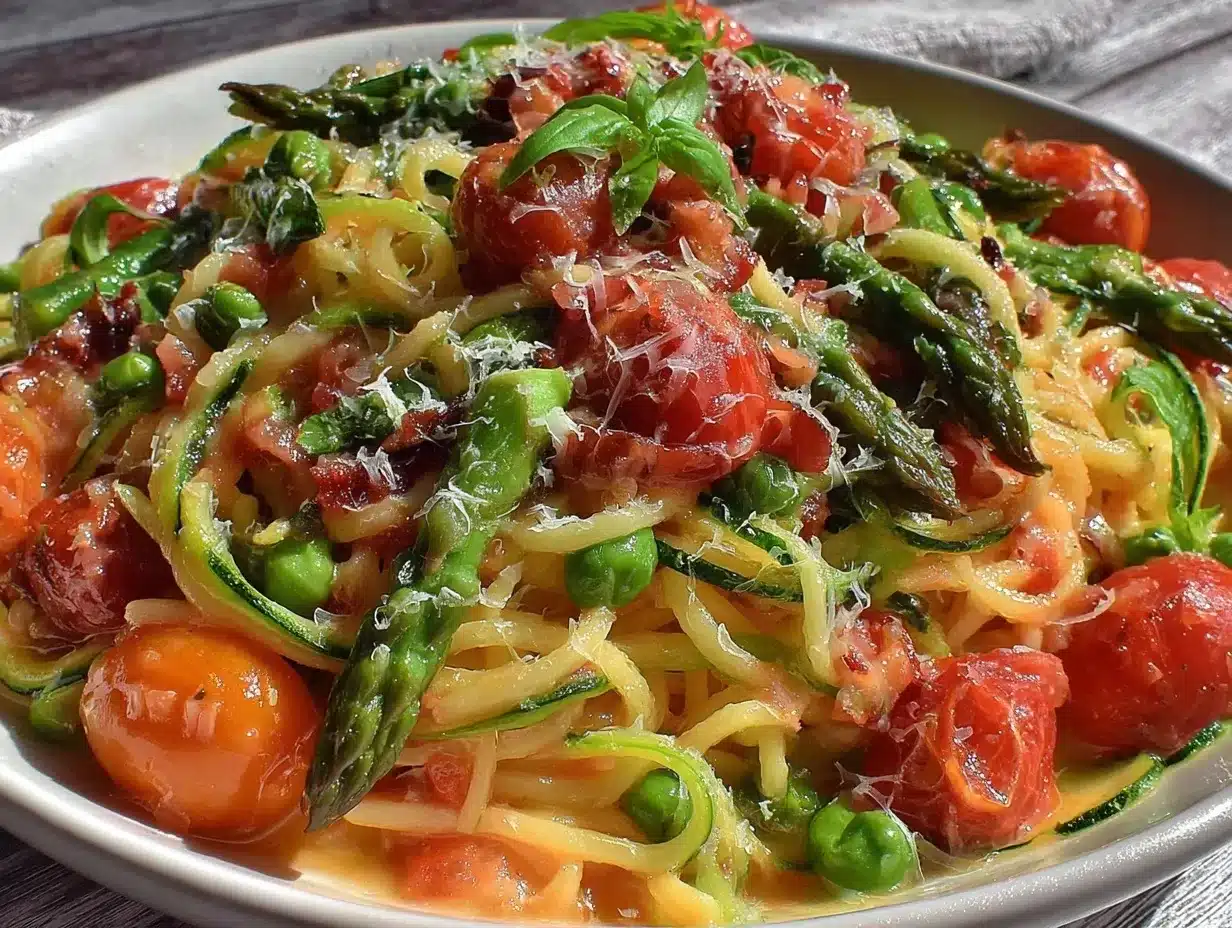
- Cook the Pasta: Bring a large pot of salted water to a boil. Add 8 oz (225 g) pasta and cook according to package instructions until al dente (usually about 8-10 minutes). Reserve 1/2 cup (120 ml) of pasta water before draining. Set pasta aside.
- Prepare Vegetables: While pasta cooks, rinse and trim asparagus, slice zucchini, halve cherry tomatoes, and measure peas. This multitasking saves time and keeps things flowing smoothly.
- Make Garlic Butter Base: In a large skillet over medium heat, melt 3 tablespoons unsalted butter. Add minced garlic and chopped shallots, cooking gently for about 2 minutes until fragrant and translucent but not browned (burnt garlic tastes bitter!).
- Sauté Vegetables: Add asparagus and zucchini to the skillet. Cook for 4-5 minutes, stirring occasionally, until vegetables are tender but still crisp. Add peas and cherry tomatoes, cooking another 2 minutes. The tomatoes should soften but keep their shape.
- Create Creamy Sauce: Lower heat to medium-low. Pour in 1/2 cup heavy cream, stirring well to combine. Let it simmer gently for 2-3 minutes until slightly thickened. Stir in 1/4 cup grated Parmesan cheese until melted and smooth. Season with salt, pepper, and a pinch of red pepper flakes if using.
- Toss Pasta and Sauce: Add cooked pasta to the skillet with the vegetables and sauce. Toss gently to coat evenly. If the sauce feels too thick, stir in reserved pasta water a tablespoon at a time to loosen it to your liking.
- Finish with Fresh Herbs: Remove from heat and sprinkle chopped basil and parsley over the top. Give it one last gentle toss.
- Serve Immediately: Portion onto plates and add an extra sprinkle of Parmesan if desired.
Watch out for overcooking the veggies—they should be tender-crisp to keep that fresh spring vibe. If sauce starts to separate, just add a splash more cream or a bit of pasta water and stir vigorously to bring it back together.
Cooking Tips & Techniques
To get the best results with this primavera, here are a few tips I’ve picked up along the way:
- Don’t overcook your garlic: Burnt garlic can ruin the whole dish with bitterness. Keep the heat moderate and watch carefully during that initial sauté.
- Reserve pasta water: This starchy water is gold for loosening sauces without diluting flavor. Add it gradually until you hit that perfect creamy consistency.
- Timing is key: Prep all your veggies while pasta cooks. This way, everything comes together hot and fresh without waiting or losing texture.
- Use fresh herbs last: Adding basil and parsley at the end keeps their flavors bright and vibrant instead of muted by heat.
- Adjust creaminess: Depending on your cream’s fat content, the sauce might thicken more or less. If it’s too thick, a splash of broth or pasta water helps. Too thin? Simmer a bit longer, stirring constantly.
I once tried making this primavera with frozen peas only, and while convenient, the texture wasn’t quite as lively. Fresh is best when you can get it. Also, I learned the hard way that adding tomatoes too early turns them into mush—they’re better tossed in near the end for that juicy pop.
Variations & Adaptations
This Easy Creamy Spring Vegetable Primavera with Garlic Butter is pretty flexible. Here are some variations I’ve tested or considered:
- Protein Boost: Add grilled chicken strips, shrimp sautéed in garlic butter (similar to my favorite garlic butter shrimp ramen), or crispy bacon for a heartier meal.
- Vegan Version: Swap butter for vegan margarine, use coconut cream or cashew cream instead of heavy cream, and replace Parmesan with nutritional yeast for that cheesy flavor.
- Seasonal Swaps: In summer, I love switching peas for fresh green beans or swapping zucchini for summer squash. In fall, roasted butternut squash cubes add a lovely sweetness.
- Spice it Up: Add a pinch of smoked paprika or cayenne for a little smoky heat. It pairs surprisingly well with the creamy garlic sauce.
One variation I personally love is stirring in a spoonful of pesto just before serving—it adds a fresh herbaceous note that brightens the dish even more.
Serving & Storage Suggestions
This primavera is best served hot straight from the pan, garnished with extra Parmesan and fresh herbs for that inviting look. It pairs beautifully with a crisp white wine, like Sauvignon Blanc, or a sparkling water with lemon for a light touch.
For a full meal, serve alongside a simple green salad or crusty bread—though if you’re in a hurry, it’s perfectly satisfying as a one-dish wonder. It also works well as a side for something like the one-pan Mediterranean chicken with orzo.
To store leftovers, let the primavera cool completely, then place in an airtight container and refrigerate for up to 3 days. When reheating, add a splash of cream or water to bring back that creamy texture and warm gently on the stovetop or microwave. Flavors meld beautifully overnight, making the second-day taste even richer.
Nutritional Information & Benefits
This recipe is a well-rounded dish offering fiber, vitamins, and some protein, depending on your pasta choice. Key benefits include:
- Rich in Vitamin C and K: Thanks to fresh peas and asparagus, supporting immunity and bone health.
- Healthy Fats: From butter and cream, which provide fat-soluble vitamins and satiety.
- Protein: Parmesan cheese adds a nice protein boost, and swapping pasta for legume-based varieties ups it even more.
- Low Sugar: Naturally low in sugar, making it a balanced meal option.
For those monitoring gluten intake, using gluten-free pasta keeps this dish accessible. The recipe is also adaptable for low-carb diets by substituting pasta with spiralized vegetables or shirataki noodles.
Conclusion
This Easy Creamy Spring Vegetable Primavera with Garlic Butter is more than just a quick meal—it’s a celebration of fresh seasonality wrapped in a cozy, creamy sauce. Whether you’re cooking for one or feeding a small crowd, it’s a recipe that adapts to your needs and tastes.
I love how it brings out the best in simple ingredients without needing hours in the kitchen. It’s perfect for those moments when you want something that feels special but is totally doable on a weeknight. If you give it a try, feel free to tweak the veggies or add your favorite protein to make it your own.
Would love to hear how you customize it or any tips you discover along the way. Happy cooking and here’s to many delicious spring dinners ahead!
Frequently Asked Questions
Can I use frozen vegetables for this primavera?
Yes, frozen peas work well, but fresh asparagus is best. If using frozen asparagus, thaw and pat dry to avoid excess water in the sauce.
What pasta works best for this recipe?
Linguine, fettuccine, or penne hold the sauce nicely, but feel free to use your favorite. For a gluten-free option, chickpea or lentil pasta works great.
How can I make this dish vegan?
Replace butter with vegan margarine or olive oil, use coconut or cashew cream instead of heavy cream, and swap Parmesan for nutritional yeast or vegan cheese.
Can I prepare this primavera ahead of time?
You can prep the vegetables and cook pasta in advance, but it’s best to combine and finish the sauce right before serving to keep flavors fresh and veggies crisp.
What can I serve with this primavera for a complete meal?
Grilled chicken, shrimp, or a simple green salad pairs wonderfully. For a cozy combo, try it alongside the classic tuna melt on sourdough bread for a satisfying lunch or dinner.
Pin This Recipe!
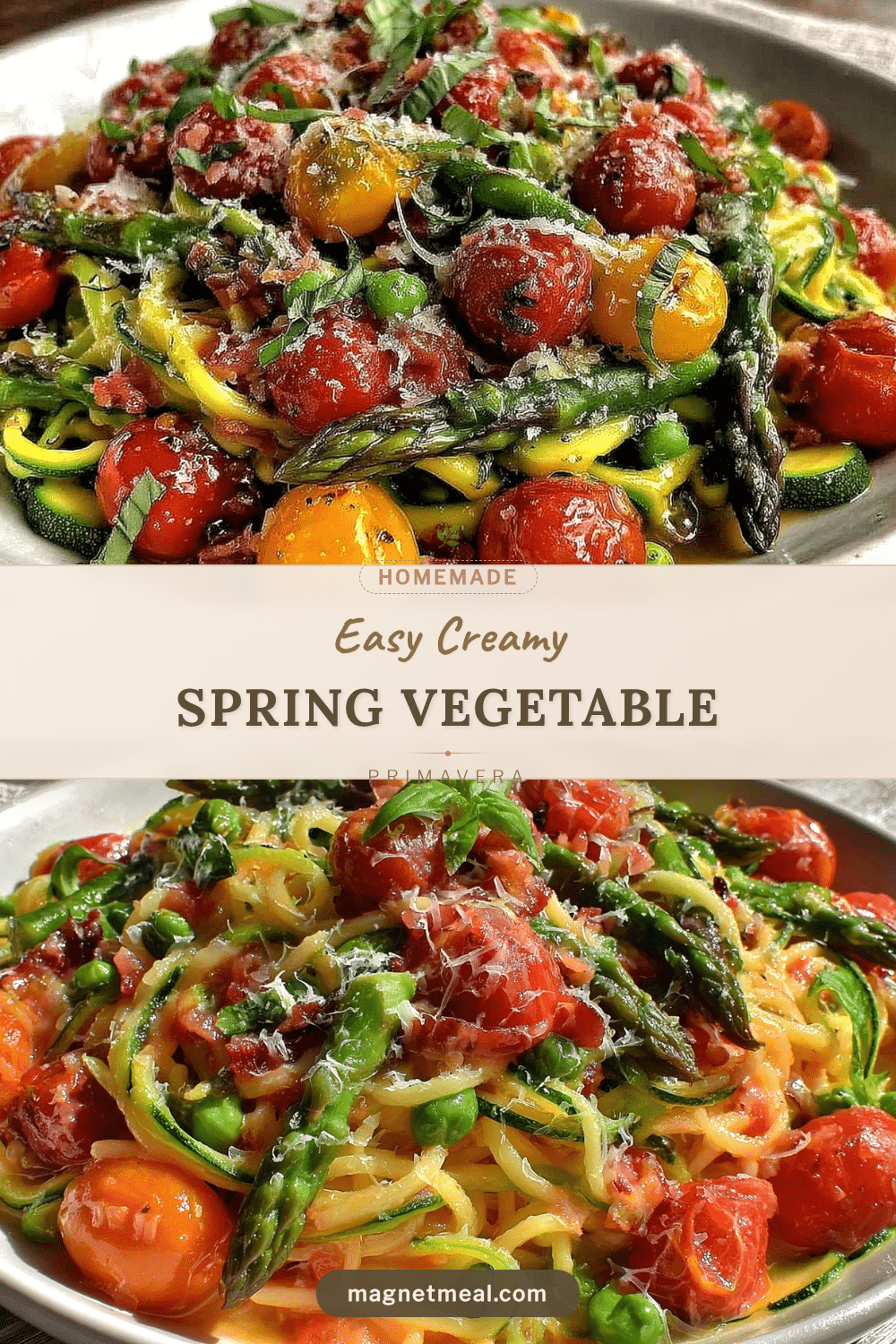
Easy Creamy Spring Vegetable Primavera Recipe with Garlic Butter
A quick and easy primavera featuring fresh spring vegetables sautéed in a garlic butter base with a creamy Parmesan sauce, perfect for a fresh yet comforting meal.
- Prep Time: 10 minutes
- Cook Time: 15 minutes
- Total Time: 25 minutes
- Yield: 4 servings 1x
- Category: Main Course
- Cuisine: Italian
Ingredients
- 1 cup fresh or frozen peas
- 1 bunch asparagus, trimmed and cut into 2-inch pieces
- 1 cup cherry tomatoes, halved
- 1 small zucchini, sliced into half-moons
- 3 tablespoons unsalted butter
- 3 cloves garlic, minced
- 1 small shallot, finely chopped
- 1/2 cup heavy cream
- 1/4 cup grated Parmesan cheese
- Salt and freshly cracked black pepper, to taste
- Pinch of red pepper flakes (optional)
- 8 oz (225 g) pasta (linguine or fettuccine preferred)
- 2 tablespoons chopped fresh basil (optional)
- 1 tablespoon chopped fresh parsley (optional)
Instructions
- Bring a large pot of salted water to a boil. Add 8 oz pasta and cook according to package instructions until al dente (about 8-10 minutes). Reserve 1/2 cup pasta water before draining. Set pasta aside.
- While pasta cooks, rinse and trim asparagus, slice zucchini, halve cherry tomatoes, and measure peas.
- In a large skillet over medium heat, melt 3 tablespoons unsalted butter. Add minced garlic and chopped shallots, cooking gently for about 2 minutes until fragrant and translucent but not browned.
- Add asparagus and zucchini to the skillet. Cook for 4-5 minutes, stirring occasionally, until vegetables are tender but still crisp. Add peas and cherry tomatoes, cooking another 2 minutes until tomatoes soften but keep their shape.
- Lower heat to medium-low. Pour in 1/2 cup heavy cream, stirring well to combine. Let simmer gently for 2-3 minutes until slightly thickened. Stir in 1/4 cup grated Parmesan cheese until melted and smooth. Season with salt, pepper, and red pepper flakes if using.
- Add cooked pasta to the skillet with the vegetables and sauce. Toss gently to coat evenly. If sauce is too thick, stir in reserved pasta water a tablespoon at a time to loosen.
- Remove from heat and sprinkle chopped basil and parsley over the top. Toss gently.
- Serve immediately, optionally garnished with extra Parmesan.
Notes
Do not overcook garlic to avoid bitterness. Reserve pasta water to adjust sauce consistency. Add fresh herbs at the end to preserve flavor. Use fresh peas and asparagus for best texture. For gluten-free, substitute pasta with chickpea or lentil pasta. For vegan, use vegan margarine, coconut or cashew cream, and nutritional yeast instead of Parmesan.
Nutrition
- Serving Size: 1 serving (about 1/4
- Calories: 420
- Sugar: 6
- Sodium: 350
- Fat: 22
- Saturated Fat: 13
- Carbohydrates: 40
- Fiber: 5
- Protein: 14
Keywords: spring vegetable primavera, garlic butter, creamy pasta, easy dinner, quick pasta recipe, fresh vegetables, primavera recipe