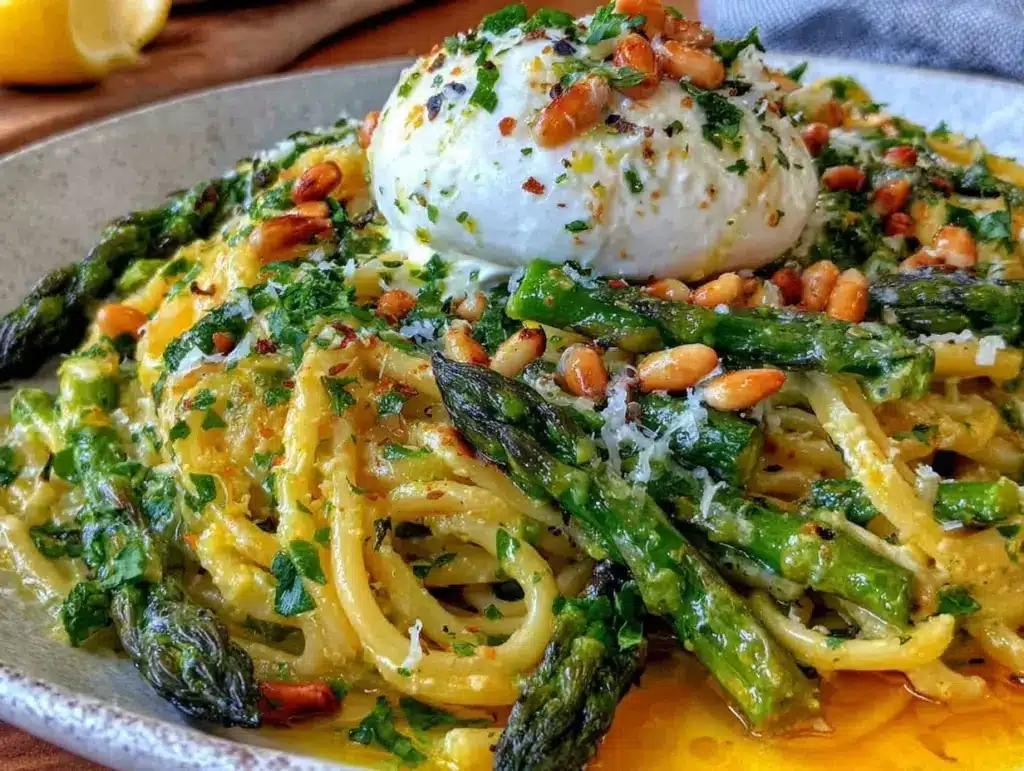
I remember that stretch of early spring when the days felt long but nothing quite settled right. I was juggling a million things—emails, a cranky kid, and a fridge that basically held the bare minimum. Honestly, I wasn’t in the mood to cook, but the sight of a bunch of asparagus sitting there, lonely and overlooked, sparked something. I didn’t want heavy, just something light that still felt like a proper meal. The idea of pairing fresh asparagus with bright lemon and that luscious burrata came out almost by accident—like a last-minute save that turned into my new favorite go-to. You know those dishes that make you pause and think, “How had I not made this before?” That was this pasta for me.
The gentle snap of the asparagus as I trimmed it, the way the lemon zest filled the room, and the creamy burrata melting softly into the warm noodles created this quietly joyful meal. It wasn’t flashy, just honest and comforting in its simplicity, a perfect reset after a day that felt all over the place. It’s the kind of dinner that welcomes you back to yourself, one forkful at a time.
Since then, I’ve found myself making this Fresh Spring Asparagus and Lemon Pasta with Creamy Burrata multiple times within just a few weeks. It’s that kind of recipe that sticks with you—not because it’s complicated, but because it’s exactly what you want when you need a little fresh, bright comfort. And honestly? It’s one of those recipes that’s just as good on a quiet solo night as it is when you’ve got unexpected guests stopping by.
That little bundle of asparagus and lemon reminded me how simple ingredients can hit the mark in a way that feels both fresh and indulgent. If you’re ready for a pasta that’s light but creamy, tangy but mellow, and fast enough to whip up on a whim, this might just become your new favorite too.
Why You’ll Love This Fresh Spring Asparagus and Lemon Pasta with Creamy Burrata
Through many kitchen trials and a few happy accidents, this recipe has proven its worth over and over. I’ve tested different pasta types, tweaked the lemon balance, and tried various burrata brands to land on a version that’s just right every time. Here’s why this recipe has earned a permanent spot in my rotation:
- Quick & Easy: Ready in under 30 minutes, it’s perfect when time isn’t on your side but you still want something homemade and fresh.
- Simple Ingredients: No need to hunt for fancy items. Asparagus, lemon, pasta, and burrata are usually easy to find, especially in spring.
- Ideal for Spring & Summer: The bright lemon and fresh asparagus capture the season’s essence, making it a great choice for warm-weather dinners or weekend lunches.
- Crowd-Pleaser: It’s a dish that both veggie lovers and pasta fans adore. The creamy burrata adds that indulgent touch everyone appreciates.
- Unbelievably Delicious: The contrast of tangy lemon, tender asparagus, and luscious burrata with perfectly al dente pasta makes this more than your average spring meal.
What sets this recipe apart is the creamy burrata, which isn’t just tossed on but gently folded into the warm pasta, creating a silky sauce without any heavy cream. The lemon zest is bright but balanced, and the asparagus is cooked just right — tender but still with a little snap. It’s a recipe that feels fancy but is honestly fuss-free, which I love. This isn’t just another lemon pasta; it’s the kind that makes you close your eyes after the first bite and savor the simplicity and freshness.
It pairs beautifully with other dishes, too. I’ve often served it alongside a Mediterranean baked salmon with feta and olives for a light but satisfying meal. And if you’re looking for a creamy pasta twist with a different protein, the garlic butter shrimp ramen might catch your eye next.
What Ingredients You Will Need
This recipe uses straightforward, fresh ingredients to deliver a bright and creamy pasta dish without any complicated steps. Most are pantry staples or easy to grab at the market this time of year.
- Pasta: 8 ounces (225 g) of your choice—spaghetti, linguine, or even fettuccine works well.
- Asparagus: 1 bunch (about 1 pound / 450 g), trimmed and cut into 2-inch pieces. Look for firm, fresh stalks with tight tips.
- Lemon: 1 large lemon, zested and juiced. Fresh lemons give the best brightness.
- Burrata Cheese: 8 ounces (225 g), fresh and creamy. I recommend brands like BelGioioso or local artisan burrata if you can find it.
- Olive Oil: 3 tablespoons, extra virgin for that rich, fruity flavor.
- Garlic: 2 cloves, minced for a subtle kick.
- Parmesan Cheese: ½ cup (50 g), freshly grated to sprinkle on top (optional, but highly recommended).
- Salt & Pepper: To taste. Use coarse sea salt and freshly ground black pepper for best results.
- Red Pepper Flakes: A pinch if you like a touch of heat (totally optional).
Substitutions: If burrata isn’t available, fresh mozzarella or ricotta can work in a pinch, but the creaminess won’t be quite the same. For a gluten-free option, swap the pasta with your favorite gluten-free noodles. Coconut or almond yogurt can’t replace burrata here, but for a dairy-free twist, consider a creamy cashew cheese on the side.
Equipment Needed
- Large Pot: For boiling pasta. A heavy-bottomed pot helps keep the water at a steady boil.
- Large Skillet or Sauté Pan: To cook asparagus and toss pasta with lemon and garlic. Non-stick or stainless steel both work.
- Fine Grater or Microplane: For zesting the lemon finely without the bitter pith.
- Colander: To drain pasta and asparagus.
- Tongs or Pasta Fork: Useful for mixing the pasta with sauce and ingredients.
- Knife and Cutting Board: For trimming asparagus and mincing garlic.
Don’t worry about fancy gadgets here—standard kitchen tools will do just fine. I’ve cooked this in everything from my trusty old skillet to a newer non-stick pan, and it turns out beautifully. Just make sure your skillet is large enough to toss the pasta comfortably. If you’re on a budget, a basic microplane and a sturdy pot are the key investments here, and they’ll serve you well in countless other recipes too.
Preparation Method
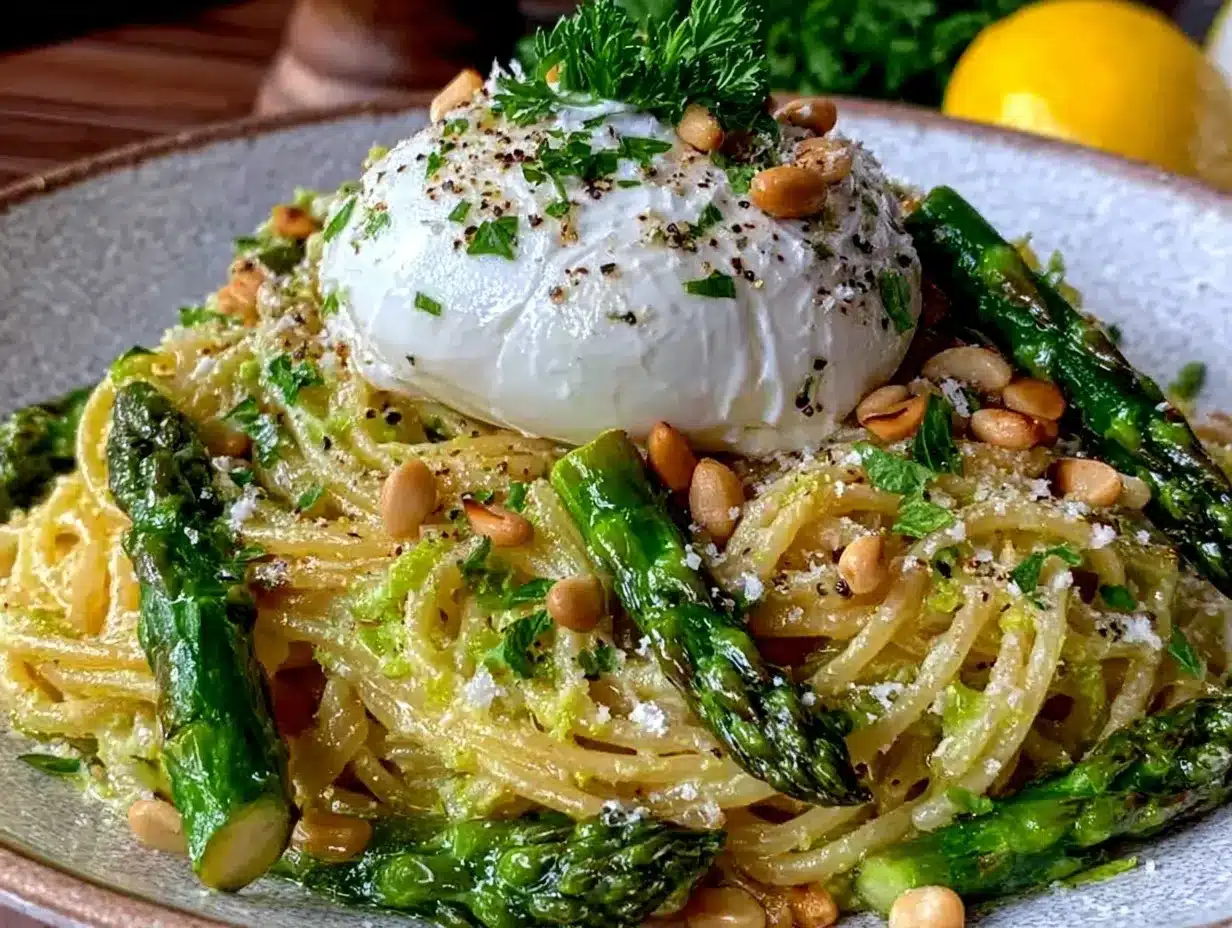
- Bring a large pot of salted water to a boil. Add 1 tablespoon of salt once boiling. This seasons the pasta from the start and enhances flavor. Cook the pasta according to package instructions until al dente—usually about 8 to 10 minutes for spaghetti or linguine. Save 1 cup (240 ml) of the pasta water before draining.
- While the pasta cooks, prep your asparagus. Snap off the woody ends and cut the stalks into roughly 2-inch (5 cm) pieces. Mince the garlic finely and zest the lemon, then juice it.
- Heat 2 tablespoons of olive oil in a large skillet over medium heat. Add the minced garlic and sauté for about 30 seconds until fragrant but not browned—watch closely here, garlic burns fast and can turn bitter.
- Add the asparagus pieces to the skillet. Cook for 4 to 5 minutes, stirring occasionally, until they’re bright green and tender-crisp. You want them cooked through but with a slight snap when bitten.
- Drain the pasta, reserving that starchy cooking water. Add the pasta directly to the skillet with asparagus. Toss well to combine.
- Turn heat to low and add lemon zest, lemon juice, and remaining 1 tablespoon olive oil. Toss everything together, adding reserved pasta water a little at a time (about ¼ cup / 60 ml) to create a light sauce that coats the pasta evenly.
- Remove the skillet from heat. Tear the burrata into chunks and gently fold it into the warm pasta, letting it soften and melt slightly (this creates a creamy texture without the need for cream).
- Season with salt, freshly ground black pepper, and red pepper flakes if using. Taste and adjust seasoning as needed.
- Serve immediately, garnished with freshly grated Parmesan if desired.
Tip: If the pasta seems dry, add a splash more of reserved pasta water. The starch helps bind everything together for that perfect silky finish. Also, resist the urge to overcook asparagus—it should retain a little crunch to balance the creaminess of burrata.
Cooking Tips & Techniques
One trick I’ve learned is to always save pasta water—it’s like liquid gold for sauces, especially one this simple. The starchy water helps marry the lemon, garlic, and olive oil into a glossy coating rather than a clumpy mess. Also, when adding burrata, warm pasta is key; too hot and it melts away, too cool and it stays clumpy.
Another tip: don’t zest the lemon directly over the pasta bowl. Zest first on a plate to avoid any bitter pith falling in. And when cooking asparagus, high heat helps maintain its color and snap, so keep that skillet hot but not smoking.
I once tried cooking asparagus with the pasta water to save time, but the results were mushy stalks and a dull sauce—lesson learned. Cooking asparagus separately keeps the texture and flavor bright.
Timing is everything here. Start prepping asparagus when the pasta water boils so everything comes together just right. Multitasking is your friend—while pasta cooks, you can prep and sauté asparagus, making weeknight dinners feel less chaotic.
Finally, don’t skip the lemon zest. It’s the secret weapon that lifts the whole dish beyond simple pasta with veggies. Freshly grated zest brings that aromatic punch that bottled lemon juice can’t touch.
Variations & Adaptations
This recipe is flexible, so feel free to customize according to your pantry, season, or dietary needs.
- Protein Boost: Add grilled chicken, shrimp, or crispy pancetta for a heartier meal. A light drizzle of browned butter over the top can take it to the next level too.
- Seasonal Veggie Swap: Swap asparagus for tender green beans, peas, or even thinly sliced zucchini ribbons when asparagus isn’t in season. Each adds its own fresh crunch and flavor.
- Dairy-Free Version: Replace burrata with a creamy cashew cheese or omit altogether and toss extra olive oil with toasted pine nuts for richness and texture.
- Low-Carb Option: Use spiralized zucchini or shirataki noodles instead of pasta for a lighter dish without losing the bright lemon and asparagus vibe.
- Herb Variations: Toss in fresh basil, mint, or tarragon for a fresh herbal note that pairs beautifully with lemon.
Personally, I’ve tried swapping burrata with fresh ricotta during a grocery run when I was out of burrata, and while it’s not quite the same, it still gave that creamy mouthfeel I love. If you’re curious about more pasta recipes that balance simple ingredients with impressive flavor, the baked feta pasta is another fantastic, no-fuss option you might enjoy.
Serving & Storage Suggestions
This pasta tastes best fresh and warm, served right out of the skillet. The creamy burrata shines brightest when it’s soft and melty, so plating immediately is ideal.
For presentation, a little extra lemon zest or cracked black pepper on top adds a fresh pop. Pair it with a crisp white wine like Sauvignon Blanc or a sparkling water with a lemon twist to complement the citrus notes.
Leftovers can be stored in an airtight container in the refrigerator for up to 2 days. Reheat gently in a skillet over low heat with a splash of water or olive oil to revive the sauce and prevent the burrata from clumping.
Keep in mind, the texture of burrata changes once refrigerated; it firms up and loses some creaminess, so reheated pasta won’t be quite as silky as fresh. However, the flavors meld beautifully overnight, making it a solid next-day lunch option.
Nutritional Information & Benefits
Per serving (recipe serves 4): approximately 450 calories, 18g fat, 50g carbohydrates, and 15g protein.
This dish is a great source of vitamins A, C, and K from the asparagus and lemon, which support immune function and bone health. Burrata adds calcium and protein, making it satisfying without feeling heavy.
Using whole-grain pasta can boost fiber content if desired. For those watching carbs, swapping in zucchini noodles cuts carbs drastically while keeping the dish fresh and light.
Allergens include dairy and gluten (from regular pasta), so choose gluten-free pasta or dairy substitutes if needed.
From my perspective, this pasta ticks the boxes for a balanced meal—fresh veggies, a good dose of protein from cheese, and just enough carbs to keep you energized without weighing you down.
Conclusion
This Fresh Spring Asparagus and Lemon Pasta with Creamy Burrata is more than a meal; it’s a quiet moment of comfort and brightness on your plate. It’s fast enough for busy nights yet special enough to impress without fuss. You can tweak it to fit your taste, season, or pantry—whether you love it simple or with a protein boost.
What I love most is how it brings the essence of spring to the table with just a few ingredients, making every bite feel fresh and satisfying. It’s been a little culinary companion on hectic days and a star for casual dinner guests alike.
Give it a try and see how those simple flavors come together in a way that feels both fresh and indulgent. If you experiment with your own twists or have questions, I’d love to hear your thoughts in the comments below.
Enjoy the bright flavors and creamy textures of spring on your plate!
Frequently Asked Questions about Fresh Spring Asparagus and Lemon Pasta with Creamy Burrata
Can I use frozen asparagus for this recipe?
While fresh asparagus is best for texture and flavor, frozen can work in a pinch. Just thaw and pat dry before sautéing to avoid excess moisture.
What kind of pasta works best with this dish?
Long, thin pastas like spaghetti, linguine, or fettuccine hold the sauce and mix well with asparagus. But feel free to use your favorite shape!
How do I store leftovers with burrata?
Store leftovers in an airtight container in the fridge for up to 2 days. Reheat gently on the stove with a splash of water to help loosen the sauce.
Can I prepare this dish vegan or dairy-free?
Yes! Substitute burrata with creamy cashew cheese or a dairy-free cheese alternative. Use gluten-free pasta if needed.
Is this recipe suitable for meal prep?
It’s best fresh, but you can prepare the pasta and asparagus ahead, then add burrata just before serving for best texture.
Pin This Recipe!
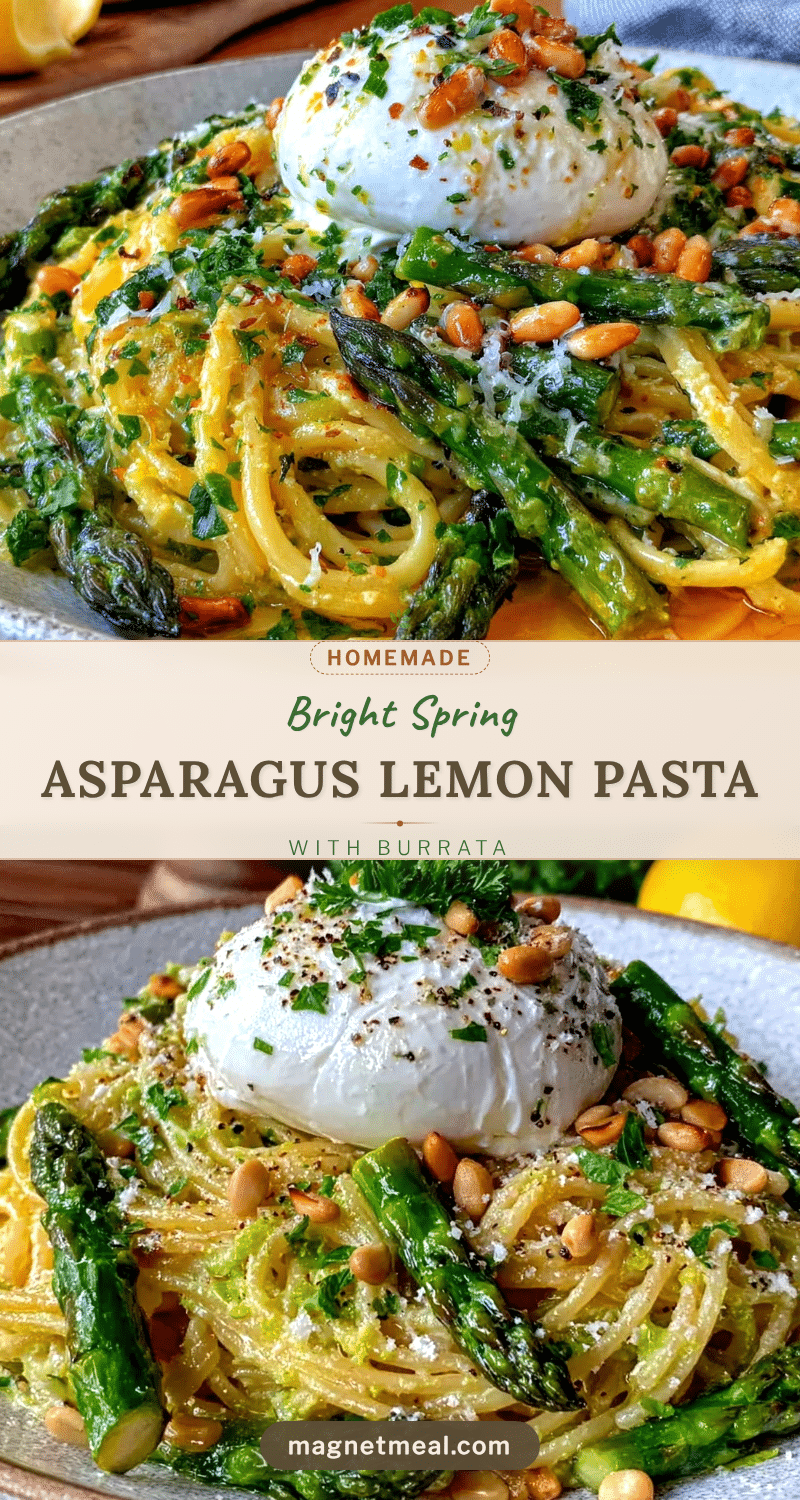
Fresh Spring Asparagus Lemon Pasta Recipe with Creamy Burrata
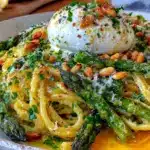
A light and creamy pasta dish featuring fresh asparagus, bright lemon, and luscious burrata cheese, perfect for spring and summer meals.
- Prep Time: 10 minutes
- Cook Time: 15 minutes
- Total Time: 25 minutes
- Yield: 4 servings 1x
- Category: Main Course
- Cuisine: Italian
Ingredients
- 8 ounces spaghetti, linguine, or fettuccine pasta
- 1 bunch (about 1 pound) asparagus, trimmed and cut into 2-inch pieces
- 1 large lemon, zested and juiced
- 8 ounces fresh burrata cheese
- 3 tablespoons extra virgin olive oil
- 2 cloves garlic, minced
- ½ cup freshly grated Parmesan cheese (optional)
- Salt to taste
- Freshly ground black pepper to taste
- Pinch of red pepper flakes (optional)
Instructions
- Bring a large pot of salted water to a boil. Add 1 tablespoon of salt once boiling.
- Cook the pasta according to package instructions until al dente, about 8 to 10 minutes. Save 1 cup of pasta water before draining.
- While pasta cooks, snap off woody ends of asparagus and cut into 2-inch pieces. Mince garlic, zest and juice the lemon.
- Heat 2 tablespoons olive oil in a large skillet over medium heat. Add minced garlic and sauté for about 30 seconds until fragrant but not browned.
- Add asparagus pieces to skillet and cook for 4 to 5 minutes, stirring occasionally, until bright green and tender-crisp.
- Drain pasta, reserving pasta water. Add pasta to skillet with asparagus and toss to combine.
- Turn heat to low and add lemon zest, lemon juice, and remaining 1 tablespoon olive oil. Toss together, adding reserved pasta water a little at a time (about ¼ cup) to create a light sauce.
- Remove skillet from heat. Tear burrata into chunks and gently fold into warm pasta to soften and melt slightly.
- Season with salt, freshly ground black pepper, and red pepper flakes if using. Adjust seasoning to taste.
- Serve immediately, garnished with freshly grated Parmesan if desired.
Notes
Save pasta water to create a silky sauce. Do not overcook asparagus to maintain a slight crunch. Warm pasta is key to gently melting burrata without clumping. Zest lemon on a plate to avoid bitter pith falling into the dish. Leftovers can be stored in the refrigerator for up to 2 days and reheated gently with a splash of water or olive oil.
Nutrition
- Serving Size: 1 serving (about 1/4
- Calories: 450
- Sugar: 3
- Sodium: 300
- Fat: 18
- Saturated Fat: 7
- Carbohydrates: 50
- Fiber: 5
- Protein: 15
Keywords: asparagus pasta, lemon pasta, burrata recipe, spring pasta, creamy pasta, easy pasta recipe, vegetarian pasta