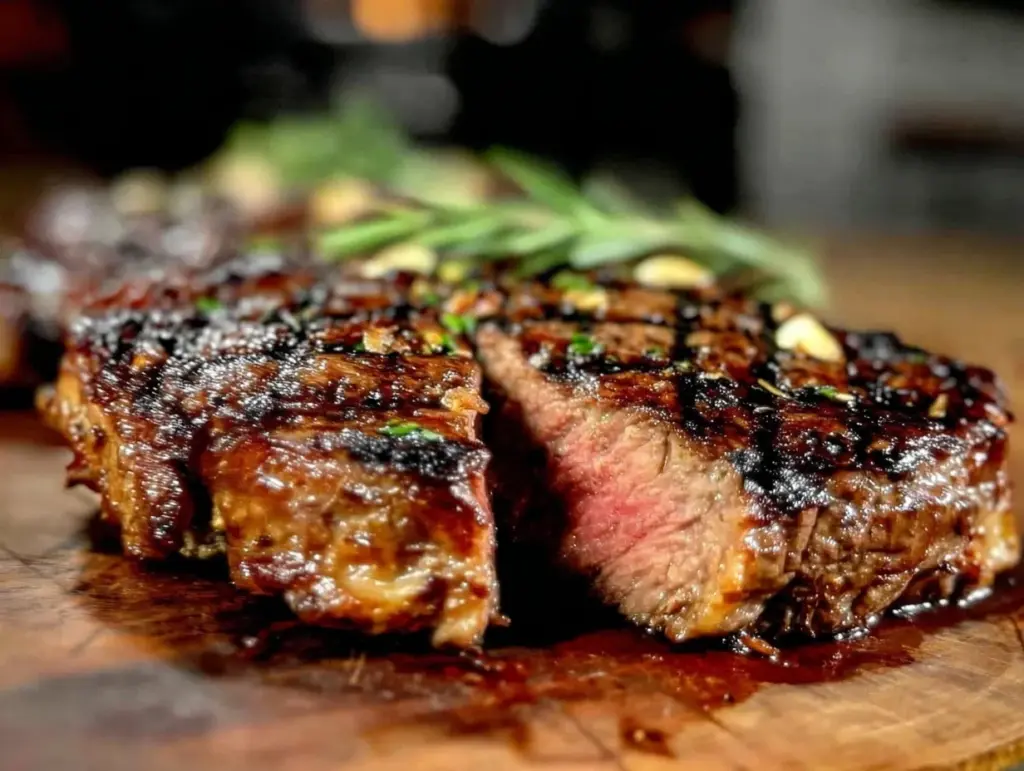
“You gotta try this,” my neighbor said last weekend, sliding a plate across the porch table like it was some kind of treasure. At first, I was skeptical—cast iron reverse sear ribeye steak? It sounded like one of those fancy cooking terms that promised a lot but delivered a shrug. But then I took a bite, and honestly, it was like the steak had been marinated in magic or something. Juicy, tender, with that perfect crust that only a cast iron skillet can pull off. I couldn’t stop thinking about it all evening (and yes, I made it three more times before Monday).
What hooked me was how the reverse sear method turns a ribeye steak into something tender and juicy without the guesswork of traditional pan-frying. Instead of searing first, you slow-cook it gently, letting the heat work its way evenly through the meat, then finish with a quick, hot sear that locks in all those juices. It’s like the best of both worlds—slow and steady meets fiery and crisp.
That quiet moment when everything just clicks—the crust crackling under the knife, the pink center melting in your mouth—made me realize this recipe isn’t just for special occasions. It’s the kind of steak that makes you pause, savor, and maybe even savor a little extra because you know you nailed it. If you’re after a foolproof way to cook ribeye that’s juicy, tender, and full of flavor, this is the one I keep coming back to.
Why You’ll Love This Recipe
After testing several ribeye recipes, this cast iron reverse sear method stands out for some solid reasons. I’ve found it consistently delivers steakhouse-quality results without the stress or expensive equipment.
- Quick & Easy: The hands-on time is minimal — about 10 minutes to prep and sear, with the oven doing most of the work for 20-30 minutes.
- Simple Ingredients: Just good-quality ribeye, salt, pepper, and a bit of butter or oil. No complicated marinades or sauces needed.
- Perfect for Dinner Parties or Weeknight Treats: Whether you’re impressing friends or just craving a juicy steak after work, this recipe fits the bill.
- Crowd-Pleaser: It’s a hit with both steak novices and seasoned carnivores alike. My family even asks for this over my usual butter-basted ribeye!
- Unbelievably Delicious: The texture is tender and juicy inside, with a crust that’s perfectly caramelized — none of that chewy or overcooked disappointment.
What makes this recipe different? It’s all about the timing and technique. Slow-roasting the ribeye gently raises the internal temperature without drying it out, then the hot cast iron sear crisps the outside just right. Plus, I’ve tweaked the seasoning so the natural beef flavor shines through without being masked.
This isn’t just a steak; it’s a small moment of indulgence that feels worth every bite. And honestly, once you try this method, you’ll notice why it’s become my go-to for that perfect juicy cast iron reverse sear ribeye steak.
What Ingredients You Will Need
This recipe uses simple, wholesome ingredients to bring out the ribeye’s best qualities — juicy, tender, and full of flavor without fuss or fancy add-ons.
- Ribeye steak, about 1.5 to 2 inches thick (roughly 12-16 oz / 340-450 g) — I recommend USDA Choice or Prime grade for best marbling and tenderness.
- Coarse sea salt or kosher salt — essential for pulling out the steak’s natural flavors and creating that crust.
- Freshly ground black pepper — adds a subtle spice and depth without overpowering.
- High smoke point oil like avocado oil or grapeseed oil (1-2 tablespoons) — ideal for searing without burning.
- Unsalted butter, 2 tablespoons — added near the end of searing to enrich the crust and add a silky finish.
- Fresh garlic cloves, 2 crushed — optional, but I love the aroma it adds during the butter basting stage.
- Fresh thyme or rosemary sprigs, 2-3 — for an herby note that complements the beef beautifully.
Ingredient tips: If you can find grass-fed ribeye, it adds a slightly richer flavor. For seasoning, I stick to salt and pepper here — it lets the steak’s natural flavor shine, unlike marinades that sometimes mask it. That said, you can switch up herbs based on what you have on hand.
For a twist, some folks swap butter for ghee or use a garlic-infused oil for searing. And if you want a keto-friendly side, pairing this with creamy mushroom sauce or sautéed greens works wonders. I sometimes pair this steak with a fresh avocado tuna salad to keep the meal light and satisfying.
Equipment Needed
- Cast iron skillet: A well-seasoned 10-12 inch cast iron pan is perfect for even heat and that coveted crust. I’ve tried cheaper pans, but cast iron really seals the deal.
- Oven: For the reverse sear, you’ll need an oven preheated to around 250°F (120°C) for gentle cooking.
- Meat thermometer: A digital instant-read thermometer is a must for accuracy — it takes the guesswork out of doneness. I keep one like the ThermoPro TP03 handy.
- Tongs: For flipping the steak without piercing the meat (which keeps juices in).
- Aluminum foil: To tent the steak and rest it after cooking, ensuring juices redistribute.
If you don’t have cast iron, a heavy stainless steel pan works, but the sear won’t be quite as intense. Also, a reliable meat thermometer saved me from overcooked disasters more times than I can count — it’s a small investment that pays off big.
Preparation Method
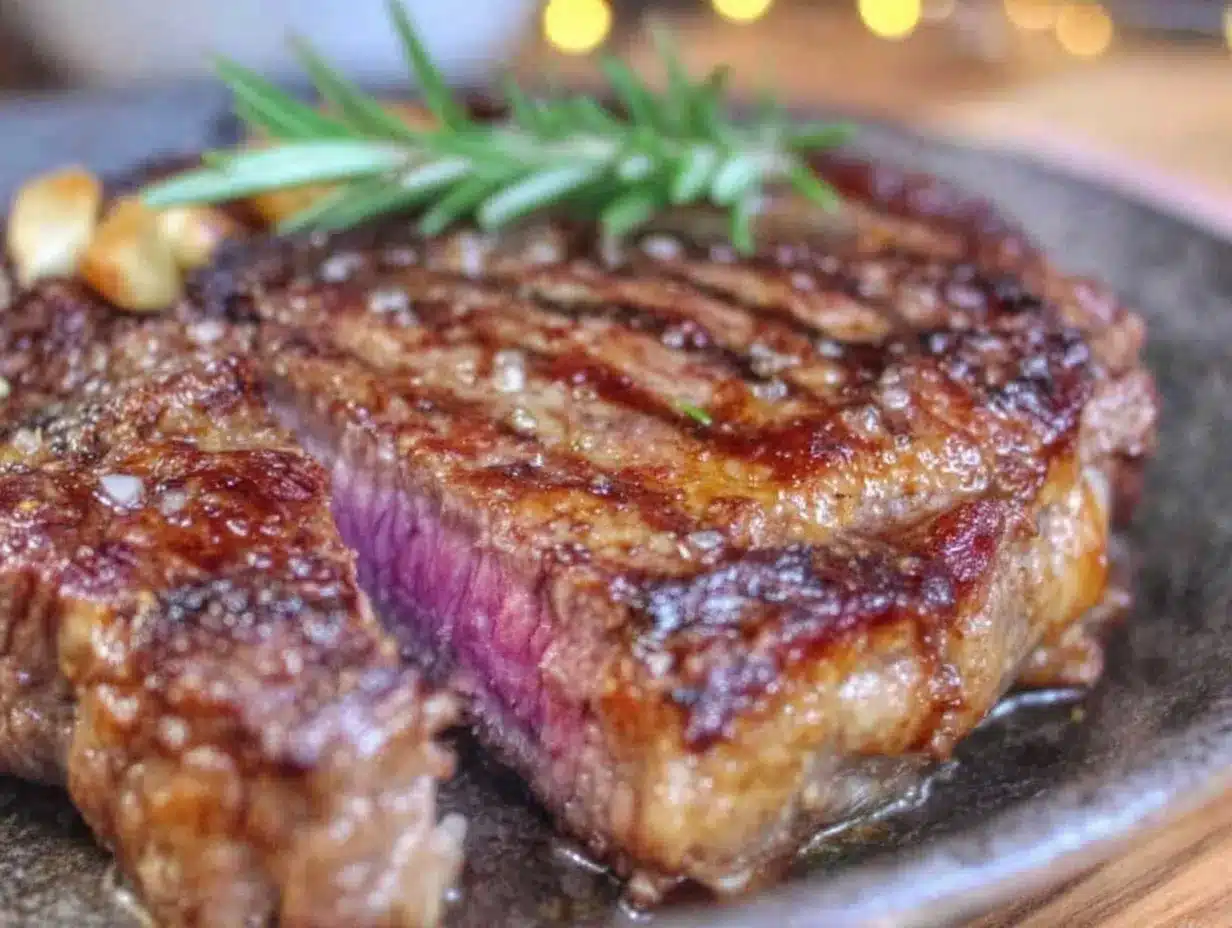
- Bring the steak to room temperature: Take the ribeye out of the fridge about 30-45 minutes before cooking — this helps it cook evenly inside.
- Preheat your oven: Set it to 250°F (120°C). This low heat will gently raise the steak’s internal temperature without drying it out.
- Season the steak: Pat dry with paper towels, then generously season both sides with coarse sea salt and freshly ground black pepper. Don’t shy away from the salt—it’s key to building that savory crust.
- Place steak on a wire rack: Set the ribeye on a wire rack over a baking sheet to allow air circulation, which promotes even cooking.
- Slow roast in the oven: Slide the baking sheet into the oven and cook for 20-30 minutes, depending on thickness and desired doneness. For medium-rare, aim for an internal temperature of about 120°F (49°C). Use your instant-read thermometer to check.
- Rest briefly: Remove steak from the oven and let it rest for 5-10 minutes. This step allows the juices to redistribute and keeps the steak juicy.
- Heat the cast iron skillet: While the steak rests, heat your cast iron pan over high heat until it’s smoking hot (about 4-5 minutes). Add the high smoke point oil and swirl to coat.
- Sear the steak: Place the ribeye in the hot skillet. Sear for 1.5 to 2 minutes per side, pressing gently to get full contact with the pan. Add butter, garlic, and herbs during the last minute, tilting the pan and spooning the melted butter over the steak for flavor and moisture.
- Final temperature check: Use the thermometer again to confirm the steak has reached your preferred doneness (130-135°F / 54-57°C for medium-rare). If needed, sear a bit longer on each side.
- Rest again before serving: Tent loosely with foil and let the steak rest for 5 minutes. This final rest ensures every bite is juicy.
Pro tip: Don’t overcrowd the pan if cooking multiple steaks. Searing is all about high heat and space for the crust to form. Also, don’t forget that the steak will continue to cook a bit during resting, so pull it off the heat just shy of your target temp.
Cooking Tips & Techniques
Mastering the reverse sear technique takes some patience but pays off in steak perfection.
- Get the temperature right: Using a meat thermometer is clutch here. Cooking low and slow in the oven prevents overcooking the outside while the inside cooks through.
- Don’t skip resting: Resting allows juices to redistribute evenly. Skipping this is a common mistake that leads to dry steak.
- Use a well-seasoned cast iron skillet: This gives you that perfect crust. If your pan isn’t seasoned well, the steak might stick and tear.
- High heat sear: Waiting until your pan is almost smoking hot before searing is crucial. Otherwise, you get more stewing than searing.
- Butter basting: Adding butter with garlic and herbs toward the end of searing adds flavor and a glossy finish. I learned the hard way that adding butter too early burns it.
- Pat steak dry: Moisture is the enemy of a good crust. Make sure to pat your ribeye dry before seasoning.
One time, I rushed the sear and ended up with a greyish crust — lesson learned! The patience to wait for that perfect pan heat makes all the difference.
Variations & Adaptations
This recipe is flexible and easy to adapt depending on your taste or dietary needs.
- Herb variations: Swap thyme or rosemary for sage or tarragon for a different aromatic profile.
- Spice rub: Add smoked paprika, garlic powder, or cayenne to your seasoning mix for a little kick.
- Oven method: Instead of slow-roasting, some prefer sous vide for precision, then sear in cast iron for the crust.
- Allergen-friendly: This recipe is naturally gluten-free and dairy-free if you skip the butter or use a dairy-free alternative like ghee or coconut oil.
- Personal twist: I once finished the steak with a quick splash of balsamic vinegar in the pan during butter basting — unexpected but delicious!
Serving & Storage Suggestions
Serve your perfect juicy cast iron reverse sear ribeye steak hot off the skillet with your favorite sides. I like pairing it with garlic mashed potatoes or sautéed mushrooms for a hearty meal. For something lighter, a crisp salad or steamed green beans work well.
Leftovers can be stored in an airtight container in the refrigerator for up to 3 days. Reheat gently in a skillet over medium-low heat to keep it tender—avoid the microwave, which tends to dry out the meat.
Flavors often deepen after resting overnight, especially if you slice the steak thinly and toss it with a little olive oil and fresh herbs the next day. That makes for fantastic steak sandwiches or salads.
For a special finish, I occasionally serve this ribeye alongside a homemade garlic butter shrimp ramen, which balances richness with bright flavors.
Nutritional Information & Benefits
A typical 12-ounce (340 g) ribeye cooked this way contains approximately 700-800 calories, with around 55 grams of fat and 55 grams of protein. It’s a hearty, protein-packed meal that supports muscle repair and satiety.
Ribeye is rich in iron, zinc, and B vitamins, essential for energy and immune health. Using a method like the cast iron reverse sear preserves the steak’s nutrients and prevents overcooking, which can degrade some vitamins.
This recipe is naturally gluten-free and low in carbs, making it a great option for those following keto or paleo diets. Just watch the butter if you have dairy sensitivities, or swap for a dairy-free alternative.
Conclusion
This perfect juicy cast iron reverse sear ribeye steak recipe is the kind of dish that turns an ordinary dinner into a little celebration. The method takes a bit of patience but rewards you with steak that’s tender, flavorful, and beautifully crusted.
I love how flexible this recipe is—you can tweak seasonings or sides to fit your mood, but the core technique remains reliable every time. It’s become a favorite way to impress without stress, whether for family dinners or casual get-togethers.
Give it a shot and see how satisfying steak can be when cooked just right. And if you try it, I’d love to hear how you make it your own!
FAQs
What’s the advantage of reverse searing a ribeye steak?
Reverse searing cooks the steak gently first, ensuring even doneness inside, then finishes with a hot sear for a crisp crust. This method prevents overcooking and keeps the steak juicy.
Can I use a different cut of steak for this method?
Yes, thick cuts like New York strip, filet mignon, or even thick pork chops work well with reverse searing, but cooking times may vary.
How do I know when the steak is done?
Use an instant-read meat thermometer. For medium-rare, pull the steak at about 130-135°F (54-57°C) internal temperature after searing.
What if I don’t have a cast iron skillet?
A heavy stainless steel or carbon steel pan can work, but you may not get quite as intense a sear or crust as with cast iron.
Can I prepare the steak ahead of time?
You can season the steak a few hours in advance and keep it in the fridge uncovered to dry the surface, which helps with searing. Just bring it to room temperature before cooking.
Pin This Recipe!
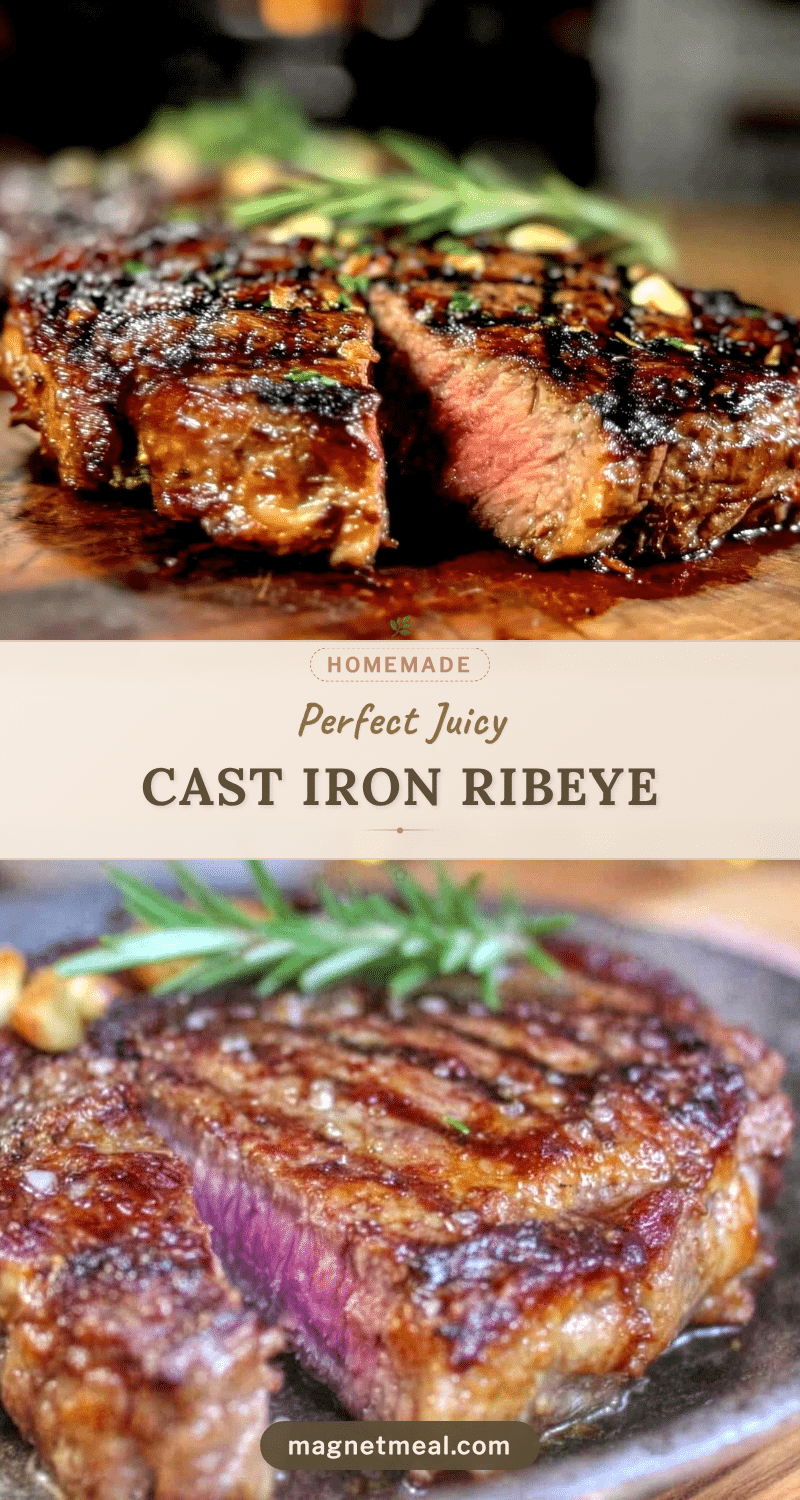
Perfect Juicy Cast Iron Reverse Sear Ribeye Steak Recipe for Tender Results
This recipe uses the reverse sear method to cook ribeye steak slowly in the oven and finish with a hot cast iron sear, resulting in a juicy, tender steak with a perfect crust.
- Prep Time: 10 minutes
- Cook Time: 25 minutes
- Total Time: 35 minutes
- Yield: 1 serving 1x
- Category: Main Course
- Cuisine: American
Ingredients
- 1 ribeye steak, 1.5 to 2 inches thick (12–16 oz / 340–450 g), USDA Choice or Prime grade
- Coarse sea salt or kosher salt, to taste
- Freshly ground black pepper, to taste
- 1–2 tablespoons high smoke point oil (avocado oil or grapeseed oil)
- 2 tablespoons unsalted butter
- 2 crushed fresh garlic cloves (optional)
- 2–3 sprigs fresh thyme or rosemary
Instructions
- Bring the steak to room temperature by taking it out of the fridge 30-45 minutes before cooking.
- Preheat your oven to 250°F (120°C).
- Pat the steak dry with paper towels, then generously season both sides with coarse sea salt and freshly ground black pepper.
- Place the ribeye on a wire rack over a baking sheet to allow air circulation.
- Slow roast the steak in the oven for 20-30 minutes, depending on thickness and desired doneness. For medium-rare, aim for an internal temperature of about 120°F (49°C). Use an instant-read thermometer to check.
- Remove the steak from the oven and let it rest for 5-10 minutes to allow juices to redistribute.
- Heat a well-seasoned cast iron skillet over high heat until smoking hot (about 4-5 minutes). Add the high smoke point oil and swirl to coat.
- Sear the steak in the hot skillet for 1.5 to 2 minutes per side, pressing gently to ensure full contact with the pan.
- During the last minute of searing, add butter, crushed garlic, and herbs. Tilt the pan and spoon the melted butter over the steak to baste it.
- Use the thermometer to confirm the steak has reached your preferred doneness (130-135°F / 54-57°C for medium-rare). If needed, sear a bit longer on each side.
- Tent the steak loosely with aluminum foil and let it rest for 5 minutes before serving.
Notes
Use a well-seasoned cast iron skillet for the best crust. Pat the steak dry before seasoning to ensure a good sear. Use a meat thermometer to avoid overcooking. Rest the steak twice to keep it juicy. If dairy-sensitive, substitute butter with ghee or coconut oil.
Nutrition
- Serving Size: 1 ribeye steak (12-1
- Calories: 750
- Sodium: 600
- Fat: 55
- Saturated Fat: 22
- Protein: 55
Keywords: ribeye steak, reverse sear, cast iron skillet, juicy steak, tender steak, steak recipe, easy steak, dinner