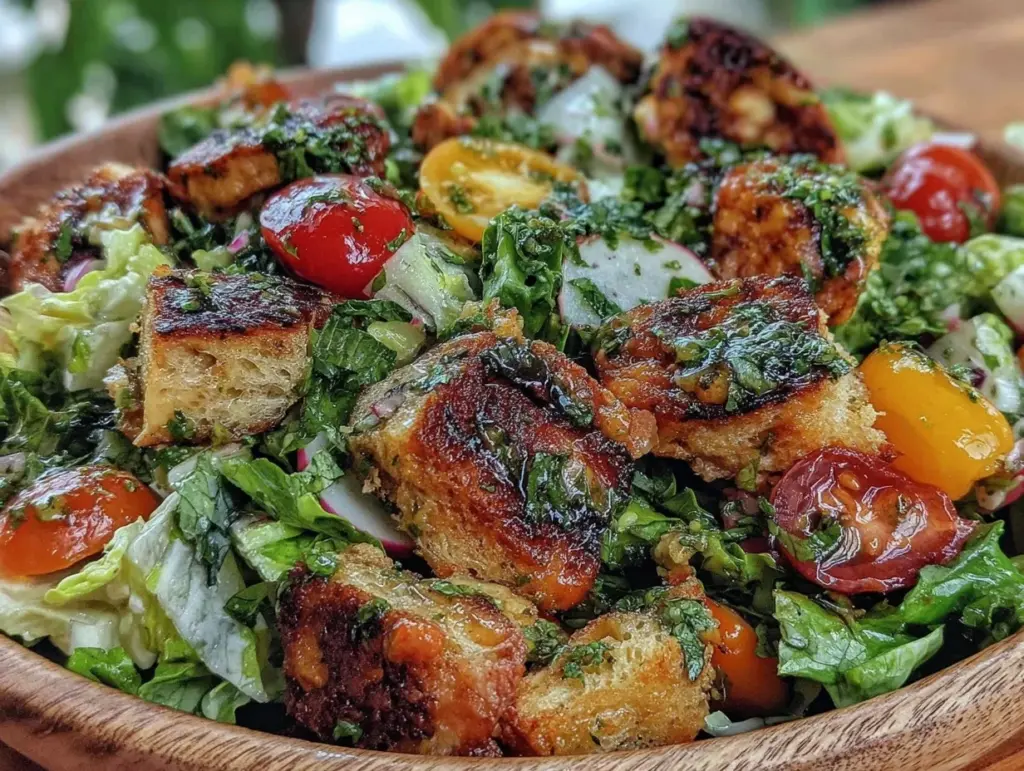
“You’ve got to try this salad,” my neighbor declared as she handed over a container filled with vibrant greens and crunchy pita pieces. The afternoon sun was dipping low, and I was halfway through a long, draining day of work. Honestly, I wasn’t expecting much—just another salad among many. But something about the mix of sharp lemon, fresh herbs, and that unexpected pop of sweet-tart pomegranate caught me off guard. That was my introduction to fresh Lebanese fattoush salad with zesty pomegranate dressing, and it quickly became the go-to whenever I needed a fresh reset.
It wasn’t just the bright colors or the satisfying crunch that won me over, but the way the flavors made me slow down and actually savor something simple but vibrant. I remember thinking how odd it was that toasted pita could taste so lively and essential, almost like the star of the dish rather than a side note. I found myself making it repeatedly that week—mixing, tasting, tweaking the dressing just a little. It felt like an easy, fresh celebration on a plate when all I wanted was something light but full of character.
Looking back, I realize this salad stuck around because it’s not just a recipe; it’s a quiet invitation to bring some zest and freshness into your day without fuss. The tangy pomegranate dressing is just the right kind of zing, and the herbs give it a homey, earthy note that feels honest and grounding. It’s perfect for those moments when you want something bright and satisfying but don’t want to spend forever in the kitchen. That simple moment of neighborly generosity turned into a delicious habit — one I’m happy to share with you today.
Why You’ll Love This Recipe
After many kitchen experiments and friendly feedback, this fresh Lebanese fattoush salad with zesty pomegranate dressing has proven to be a real winner. Here’s why it’s earned a permanent spot on my table:
- Quick & Easy: You can whip this up in under 20 minutes, making it perfect for busy weeknights or when you need a fast, healthy pick-me-up.
- Simple Ingredients: No need for exotic or hard-to-find items. Most of these ingredients are pantry staples or easy to get from your local market.
- Perfect for Warm Weather or Anytime: Whether it’s a light lunch, a refreshing side for dinner, or an impressive dish for potlucks, fattoush fits the bill.
- Crowd-Pleaser: The combination of crisp veggies, crunchy pita, and tangy dressing always gets people asking for seconds.
- Unbelievably Delicious: The zing from the pomegranate molasses dressing sets this apart from ordinary salads, giving it a complex, satisfying flavor without being heavy.
This isn’t just another salad tossed together. The secret lies in the perfectly balanced dressing—rich with pomegranate’s sweet-tart punch and a bright lemon kick—plus the toasted pita that adds that iconic crunch and absorbs just enough dressing. It’s a little bit of Lebanese tradition meeting fresh, modern simplicity. Honestly, once you try it, you might find yourself craving it like I did that first week.
What Ingredients You Will Need
This fattoush salad uses simple, wholesome ingredients to deliver bold flavor and satisfying texture without the fuss. Most are pantry staples, with fresh herbs and vegetables bringing the salad to life. Here’s what you’ll need:
- Pita Bread: 2 pieces, cut into bite-sized triangles and toasted or lightly fried until crisp (this adds essential crunch and texture)
- Mixed Greens: 4 cups, roughly chopped romaine lettuce or a mix of fresh greens (provides the crisp base)
- Tomatoes: 2 medium, diced (juicy sweetness and color)
- Cucumber: 1 large, peeled and diced (adds refreshing coolness)
- Radishes: 4-5, thinly sliced (for peppery crunch)
- Green Onions: 2, thinly sliced (mild onion flavor)
- Fresh Parsley: 1/2 cup, chopped (classic herb note—use flat-leaf for best flavor)
- Fresh Mint: 1/4 cup, chopped (bright, cooling accent)
- Sumac: 1 tablespoon (optional but authentic, adds tangy, lemony depth)
For the zesty pomegranate dressing:
- Pomegranate Molasses: 3 tablespoons (key ingredient for that sweet-tart zing—brands like Al Wadi are reliable)
- Fresh Lemon Juice: 2 tablespoons (brightens the dressing)
- Extra Virgin Olive Oil: 1/4 cup (adds richness and mouthfeel)
- Garlic: 1 clove, minced (for a subtle savory kick)
- Ground Sumac: 1 teaspoon (boosts the tangy flavor)
- Salt & Pepper: to taste (balances the flavors)
Feel free to swap regular pita for gluten-free if needed, or use dairy-free olive oil-based dressings for a vegan twist. When pomegranate molasses isn’t easy to find, a mix of pomegranate juice reduced with a little honey can work as a substitute, though the molasses has a unique depth you don’t want to miss.
Equipment Needed
- Large Mixing Bowl: For tossing the salad ingredients together easily.
- Baking Sheet or Skillet: To toast or fry the pita pieces until crispy. A cast iron skillet works wonders for even browning.
- Whisk or Small Bowl: To mix the dressing ingredients thoroughly.
- Sharp Knife and Cutting Board: For chopping vegetables and herbs efficiently.
- Citrus Juicer (optional): Handy for squeezing fresh lemon juice without seeds.
I personally love using a cast iron skillet for the pita—it crisps evenly and adds a bit of a rustic char that’s hard to beat. If you don’t have one, a regular non-stick pan or even the oven works fine. For the dressing, whisking by hand is best—you want the oil and pomegranate molasses to blend smoothly without separating.
Preparation Method
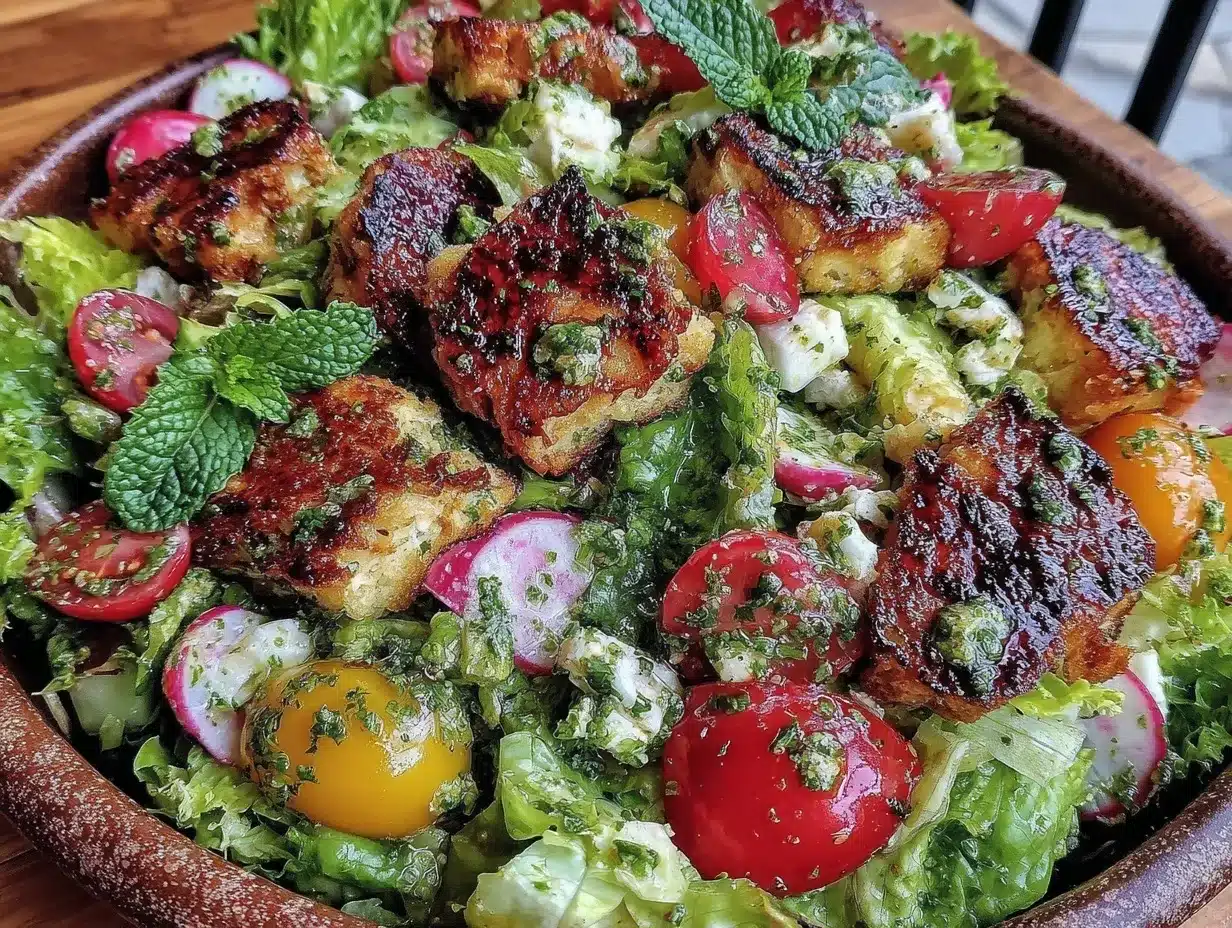
- Toast the Pita: Preheat your oven to 375°F (190°C) or warm a skillet over medium heat. Cut pita bread into bite-sized triangles. Spread them on a baking sheet and bake for 8-10 minutes until golden and crisp. Alternatively, lightly fry them in a skillet with a teaspoon of olive oil until crunchy. Set aside to cool.
- Prepare Vegetables: While the pita cools, wash and chop the romaine lettuce or mixed greens into bite-sized pieces. Dice the tomatoes and cucumber, slice the radishes thinly, and chop the green onions. Chop fresh parsley and mint finely. Toss everything gently into a large mixing bowl.
- Make the Dressing: In a small bowl, whisk together pomegranate molasses, fresh lemon juice, olive oil, minced garlic, ground sumac, salt, and pepper. Taste and adjust seasoning if needed—sometimes a little extra lemon juice or salt helps balance the sweetness.
- Toss the Salad: Pour the dressing over the mixed vegetables and herbs. Add the crispy pita pieces last and gently toss everything together to coat evenly without breaking the pita too much. The pita should soak up some dressing but stay crunchy in parts.
- Final Touch: Sprinkle a pinch of sumac on top for extra tang and a pop of color. Serve immediately for best texture and freshness.
Note: If you want to prep ahead, keep the dressing and pita separate until serving to avoid sogginess. The salad ingredients can be chopped and stored in the fridge in an airtight container for up to a day.
Cooking Tips & Techniques
Getting the perfect fattoush salad balance is all about texture and flavor harmony. Here are some tips I’ve picked up over time:
- Don’t skip toasting the pita: It’s what sets fattoush apart with that satisfying crunch. Oven toasting is hands-off and consistent, but frying adds a lovely richness.
- Use fresh herbs generously: Parsley and mint make a huge difference. If you’re short on fresh mint, a little dried mint (added sparingly) can work in a pinch, but fresh is best.
- Balance the dressing: The key is the sweet-tart zing from the pomegranate molasses balanced with lemon and a touch of garlic. Always taste and adjust as you go. If it’s too sharp, a tiny pinch of sugar or honey can mellow it out.
- Layer textures: Add the pita last and toss gently. If you mix it too early, it’ll lose the crunch, which is half the fun.
- Sumac is your friend: This Middle Eastern spice adds a lemony brightness unique to fattoush. If you don’t have it, a little extra lemon zest can substitute, but it’s worth hunting down.
One time I accidentally left the pita in the oven too long, and it turned almost burnt—but after crumbling it into the salad, it added a smoky crunch that was surprisingly good. So don’t stress too much if things don’t go perfectly; fattoush is forgiving and flexible.
Variations & Adaptations
Fattoush is a wonderfully adaptable salad that welcomes your creativity. Here are some ways to tailor it:
- Seasonal Twist: Swap out tomatoes for roasted red peppers or add diced avocado for creaminess in summer. In winter, roasted root vegetables can add warmth.
- Protein Boost: Add grilled chicken, shrimp, or chickpeas to turn it into a filling meal. For a vegetarian boost, crumbled feta or labneh works beautifully.
- Grain Option: Mix in cooked bulgur or quinoa to add heartiness without losing freshness.
- Allergen-Friendly: Use gluten-free pita or crispbread for those avoiding gluten. The dressing is naturally vegan and dairy-free.
- Spice it Up: Add a pinch of Aleppo pepper or chili flakes in the dressing for a subtle heat that pairs well with the sweetness.
Personally, I once tried tossing in some toasted pine nuts for a nutty crunch and loved how it added a new dimension. If you enjoy Mediterranean flavors, pairing this with dishes like the Mediterranean baked salmon with feta and olives makes for a balanced, delicious dinner.
Serving & Storage Suggestions
Serve fattoush chilled or at room temperature for the best flavor. It’s perfect as a vibrant side dish alongside grilled meats or as a light lunch on its own.
For presentation, garnish with a few whole mint leaves and a sprinkle of sumac or pomegranate seeds if you want a pop of color and texture. Pair it with a crisp white wine or sparkling water with a slice of lemon for a refreshing meal.
Leftovers store well in the fridge for up to 2 days if you keep the pita separate. To re-crisp pita, warm in the oven for a few minutes before tossing it back into the salad. The flavors tend to meld beautifully overnight, so it can taste even better the next day—just add fresh pita to maintain crunch.
Nutritional Information & Benefits
This fresh Lebanese fattoush salad is a nutrient-rich dish that’s low in calories but high in vitamins and fiber. The mix of fresh vegetables provides vitamin C, antioxidants, and hydration, while the olive oil offers heart-healthy fats.
Pomegranate molasses adds antioxidants and a touch of natural sweetness without refined sugars. The herbs contribute anti-inflammatory benefits and digestive support. This salad is naturally gluten-free if you use gluten-free pita and vegan if you skip any cheese add-ins.
Overall, fattoush is a wholesome, balanced choice for those watching calories but craving big flavor and satisfying textures. It fits well in many diets, including Mediterranean, vegan, and low-carb with minor tweaks.
Conclusion
Fresh Lebanese fattoush salad with zesty pomegranate dressing is one of those recipes that feels effortless yet leaves a lasting impression. It’s light but packed with flavor, crunchy but juicy, tangy but balanced—a true celebration of simple, honest ingredients.
Feel free to make it your own by adjusting the herbs or adding proteins, but don’t skip the crispy pita and that zesty dressing—they’re what make this salad so special for me. It’s become a small, delicious ritual that brightens my week and grounds me in fresh flavors.
If you try this recipe, I’d love to hear how you made it your own or what moments it brought to your table. Happy cooking and here’s to fresh, flavorful meals that feel good inside and out!
Frequently Asked Questions
What can I use if I don’t have pomegranate molasses?
You can substitute with a mixture of pomegranate juice reduced by simmering with a teaspoon of honey or sugar to thicken. It won’t be as intense but works well in a pinch.
Can I make fattoush salad ahead of time?
The salad ingredients can be prepped and stored separately, but add the pita and dressing just before serving to keep the pita crunchy.
Is fattoush gluten-free?
Traditional fattoush uses pita bread which contains gluten, but you can swap in gluten-free pita or toasted gluten-free crackers to make it safe for gluten-sensitive diets.
How important is sumac in this recipe?
Sumac adds a unique tangy flavor that’s characteristic of fattoush, but if you don’t have it, lemon zest or a dash of vinegar can provide a similar brightness.
Can I add protein to make it a full meal?
Absolutely! Grilled chicken, shrimp, chickpeas, or crumbled feta cheese are great additions to turn this salad into a satisfying main dish.
Pin This Recipe!
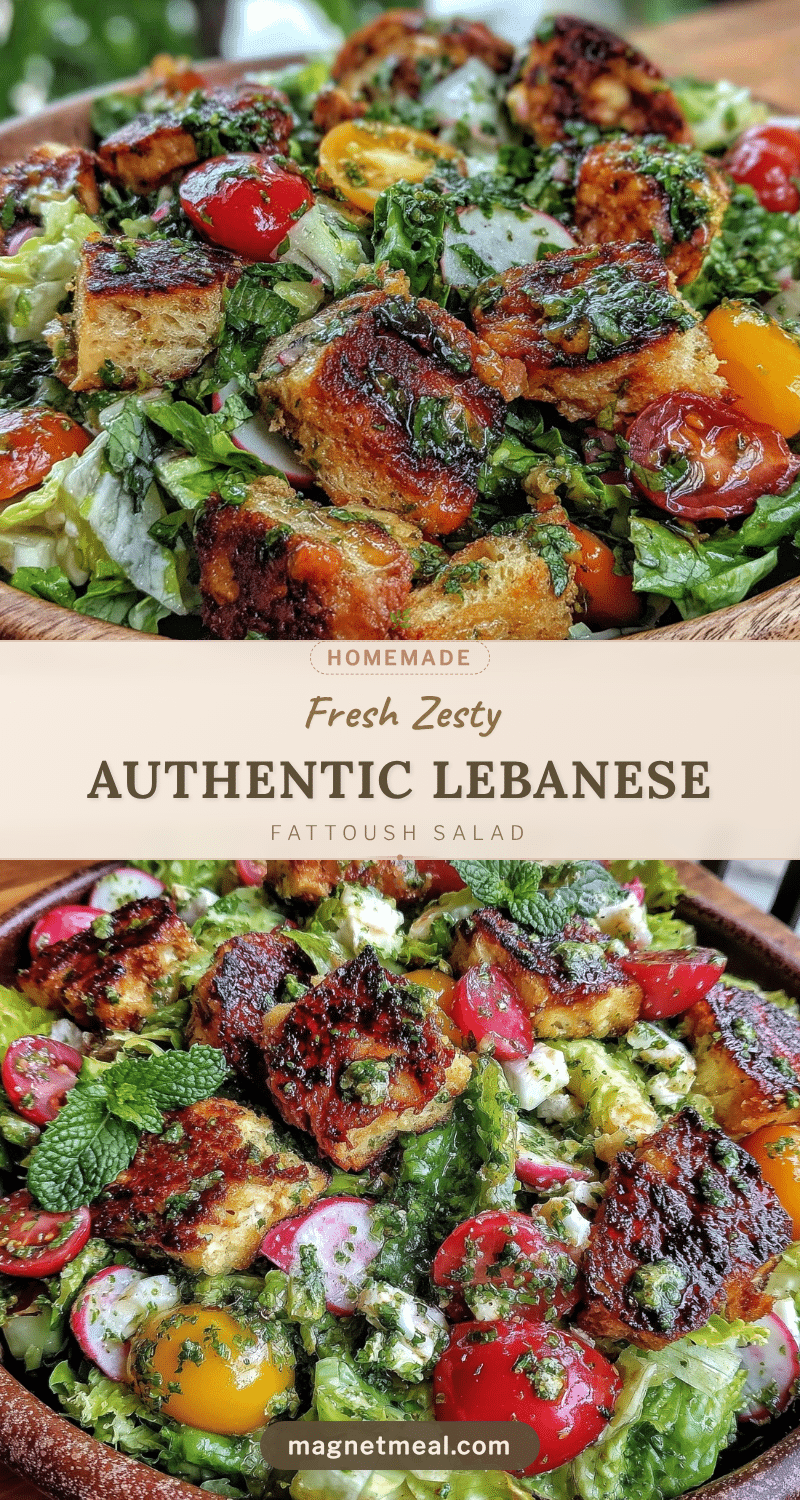
Fresh Lebanese Fattoush Salad Recipe with Easy Zesty Pomegranate Dressing
A vibrant and crunchy Lebanese salad featuring fresh greens, toasted pita, and a zesty pomegranate molasses dressing. Perfect for a quick, healthy, and flavorful meal or side dish.
- Prep Time: 10 minutes
- Cook Time: 10 minutes
- Total Time: 20 minutes
- Yield: 4 servings 1x
- Category: Salad
- Cuisine: Lebanese
Ingredients
- 2 pieces pita bread, cut into bite-sized triangles and toasted or lightly fried
- 4 cups mixed greens (romaine lettuce or a mix of fresh greens), roughly chopped
- 2 medium tomatoes, diced
- 1 large cucumber, peeled and diced
- 4–5 radishes, thinly sliced
- 2 green onions, thinly sliced
- 1/2 cup fresh parsley, chopped
- 1/4 cup fresh mint, chopped
- 1 tablespoon sumac (optional)
- 3 tablespoons pomegranate molasses
- 2 tablespoons fresh lemon juice
- 1/4 cup extra virgin olive oil
- 1 clove garlic, minced
- 1 teaspoon ground sumac
- Salt and pepper to taste
Instructions
- Preheat oven to 375°F (190°C) or warm a skillet over medium heat. Cut pita bread into bite-sized triangles. Spread on a baking sheet and bake for 8-10 minutes until golden and crisp, or lightly fry in a skillet with a teaspoon of olive oil until crunchy. Set aside to cool.
- Wash and chop the romaine lettuce or mixed greens into bite-sized pieces. Dice the tomatoes and cucumber, slice the radishes thinly, and chop the green onions. Finely chop fresh parsley and mint. Toss all vegetables and herbs gently into a large mixing bowl.
- In a small bowl, whisk together pomegranate molasses, fresh lemon juice, olive oil, minced garlic, ground sumac, salt, and pepper. Taste and adjust seasoning as needed.
- Pour the dressing over the mixed vegetables and herbs. Add the crispy pita pieces last and gently toss everything together to coat evenly without breaking the pita too much.
- Sprinkle a pinch of sumac on top for extra tang and color. Serve immediately for best texture and freshness.
Notes
Toast pita bread just before serving to maintain crunch. Keep dressing and pita separate if prepping ahead to avoid sogginess. Fresh herbs like parsley and mint are essential for authentic flavor. Sumac adds a unique tang but can be substituted with lemon zest if unavailable. Pomegranate molasses can be replaced with reduced pomegranate juice and honey if needed.
Nutrition
- Serving Size: 1 serving (about 1.5
- Calories: 180
- Sugar: 6
- Sodium: 250
- Fat: 12
- Saturated Fat: 2
- Carbohydrates: 18
- Fiber: 4
- Protein: 3
Keywords: fattoush, Lebanese salad, pomegranate dressing, fresh salad, healthy salad, Mediterranean, pita salad, vegan salad