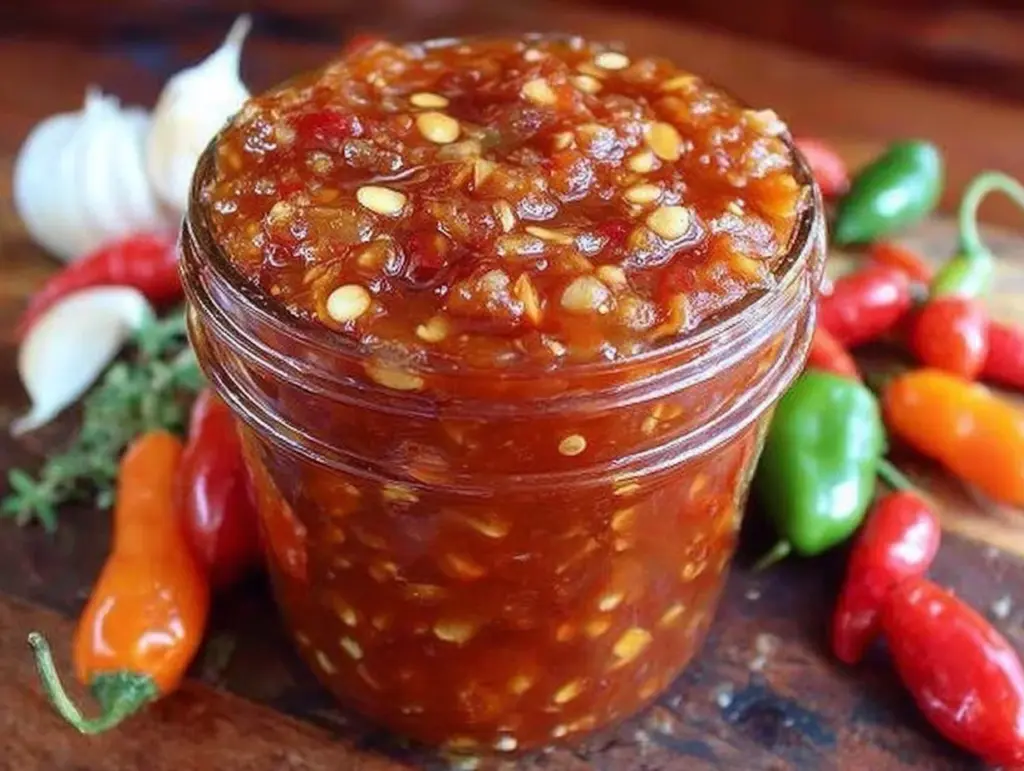
“You sure you want to make this?” my friend asked, eyeing the pile of fresh peppers I’d just brought home. Honestly, I wasn’t sure either. Fermenting hot sauce felt like something only the bravest kitchen explorers dared to tackle. But that tangy homemade fermented hot sauce recipe had been nudging me for weeks after I caught a whiff of a neighbor’s jar on a late summer evening. The smell—sharp, fruity, and alive—lingered in the air like a secret invitation.
That night, with a quiet kitchen and a few glowing jars on the counter, I decided to give it a shot. What started as a skeptical experiment quickly turned into a small obsession. I found myself tweaking the ratios, sampling every day (don’t judge), and discovering how this tangy homemade fermented hot sauce recipe could transform the simplest meal into something lively and unexpected.
It’s funny how such a humble blend of peppers, salt, and time can bring so much flavor and personality to the table. My first batch was far from perfect—too salty, a bit too funky—but I learned a lot, like how to spot the right bubbling stage and the best way to store it. Now, it’s a staple in my fridge, a little jar of sunshine that makes even a plain grilled cheese sing. There’s something quietly satisfying about waiting for those flavors to mature, knowing that each day deepens the sauce’s character.
If you’ve ever thought of trying your hand at fermented hot sauce but hesitated, this recipe might just be the gentle nudge you need. It’s approachable, reliable, and, honestly, quite addictive once you get the hang of it. Plus, it has that perfect tang that wakes up any dish without overpowering it. I stuck with it because it made me realize how fun and rewarding homemade ferments can be—and how much personality a little patience adds to your cooking.
Why You’ll Love This Tangy Homemade Fermented Hot Sauce Recipe
Making your own fermented hot sauce can sound intimidating, but this recipe breaks it down into steps that anyone can follow. Over repeated trials in my kitchen (yes, multiple batches a week), I’ve nailed a balance of tangy, spicy, and just a touch of sweetness. Here’s why this homemade fermented hot sauce stands out:
- Quick & Easy: The hands-on time is under 20 minutes, with most of the magic happening during fermentation.
- Simple Ingredients: It calls for basic pantry staples and fresh peppers—you probably have everything on hand already.
- Perfect for Meal Boosts: Whether you’re firing up a quick lunch or spicing up a dinner like the butter-basted ribeye steak, this sauce adds punch and depth.
- Crowd-Pleaser: Not everyone loves heat, but the fermentation tames the sharpness, making it palatable for many.
- Unbelievably Delicious: The tangy brightness is complex, with subtle fruitiness from fermentation that no store-bought sauce can match.
This isn’t just any hot sauce recipe—it’s a little science project that turns into pure flavor gold. The fermentation process softens the peppers and adds probiotics, giving the sauce a lively zing that’s both refreshing and bold. The natural tang makes it more than just heat; it’s about the balance and the character that you can’t get from vinegar-heavy sauces. Plus, the recipe is flexible, so you can tweak the heat level or add garlic and herbs as you please.
After trying this recipe, I couldn’t go back to plain hot sauces. It’s like the difference between fresh-squeezed lemonade and that bottled stuff. Trust me, once you taste this tangy homemade fermented hot sauce recipe, you’ll feel the same way.
What Ingredients You Will Need
This recipe uses simple, wholesome ingredients to deliver bold flavor and satisfying texture without the fuss. Most are pantry staples or easy to find at your local farmers market. Here’s what you’ll need, grouped by function:
- For the Fermented Hot Sauce Base:
- Fresh hot peppers (about 1 lb / 450 g) – I prefer a mix of jalapeños and fresnos for balanced heat and flavor
- Garlic cloves (4-5 medium, peeled) – adds depth and a slight sweetness
- Sea salt (non-iodized, 2 tbsp) – essential for fermentation and flavor control (I like Celtic sea salt)
- Filtered water (2 cups / 480 ml) – chlorine-free to allow good bacteria growth
- Optional Flavor Boosters:
- Carrot (1 small, peeled, chopped) – adds natural sweetness and supports fermentation
- Onion (1 small, roughly chopped) – for a mild savory note
- Apple cider vinegar (1 tbsp) – for a little extra tang if desired after fermentation
- Oregano or thyme (1 tsp fresh or dried) – herbal hint that pairs wonderfully with heat
For best results, choose firm, fresh peppers without soft spots. If you’re feeling adventurous, try swapping in habaneros or even smoky chipotles (dehydrated, rehydrated) for a different profile. For a gluten-free option, this recipe is naturally safe, but always double-check any added spices.
Equipment Needed
- Glass fermentation jar or a wide-mouth mason jar (1 quart / 1 liter size) – glass is best to avoid unwanted reactions
- Weight or small jar to keep peppers submerged – fermentation works best when everything stays under the brine
- Blender or food processor – to puree the peppers and garlic into a smooth sauce
- Measuring spoons and cups – for precise salt and water measurements
- Rubber gloves (optional) – if handling very hot peppers, gloves protect your skin
- Fine mesh strainer (optional) – if you prefer a smoother sauce after fermentation
If you don’t have a fermentation weight, a small, clean glass jar that fits inside your bigger jar works just fine. I’ve used stainless steel spoons to gently press down the peppers during fermentation, but avoid metal that touches the brine directly too long. For budget-friendly fermenting, mason jars are a great choice and easy to clean afterward.
Preparation Method
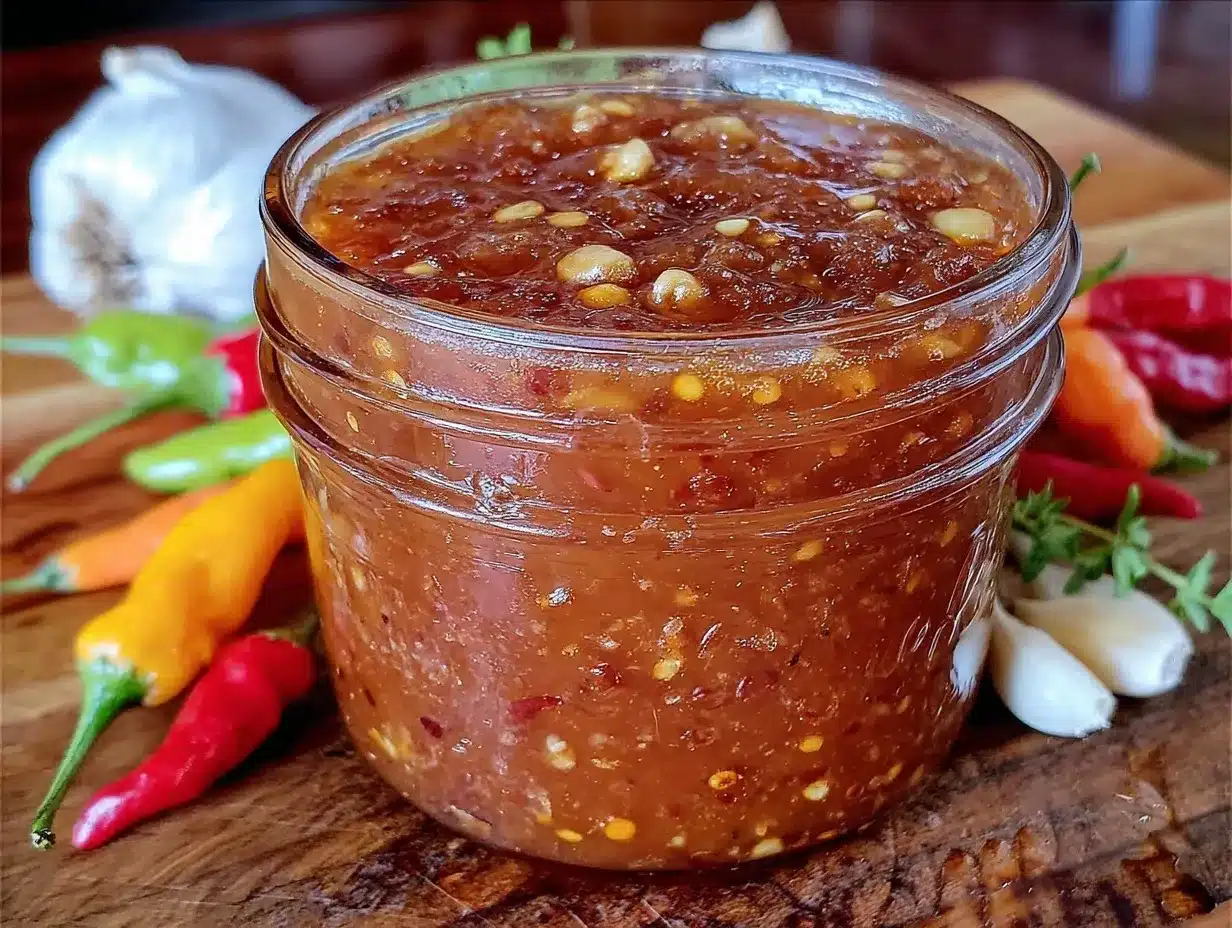
- Prepare your brine: Dissolve 2 tablespoons of sea salt in 2 cups (480 ml) of filtered water. Stir until fully dissolved and set aside.
- Clean and chop peppers: Rinse your peppers thoroughly. Remove stems and roughly chop them (seeds can stay if you like more heat). If you prefer a milder sauce, remove some seeds.
- Prepare additional vegetables: Peel and chop the garlic, carrot, and onion if using. These add layers of flavor and help fermentation.
- Combine ingredients in blender: Add the chopped peppers, garlic, carrot, and onion to your blender. Pour in half of the brine (about 1 cup / 240 ml). Blend until you reach a smooth, thick puree. If it’s too thick, add the remaining brine bit by bit to help blend.
- Transfer mixture to fermentation jar: Pour the pepper puree into your fermentation jar, leaving about 1 inch (2.5 cm) of headspace at the top for bubbling.
- Press down and weigh: Use a fermentation weight or a smaller jar to push the mixture down beneath the brine line. If needed, add a little more brine to keep everything submerged to avoid mold.
- Cover the jar: Use an airlock lid if you have one, or cover the jar with a cloth secured with a rubber band to allow gases to escape while keeping dust out.
- Ferment at room temperature: Keep the jar in a cool, dark place (65°F to 75°F / 18°C to 24°C) for 7 to 14 days. Check daily for bubbling and skim any surface white film (kahm yeast), which is harmless.
- Test flavor: After a week, taste a small spoonful. If it’s tangy and fizzy enough for your liking, it’s ready. If not, let it ferment longer.
- Blend and strain (optional): For a smoother sauce, blend again and strain through a fine mesh. Add 1 tablespoon apple cider vinegar if you want a sharper tang.
- Store: Transfer to a clean jar, seal tightly, and refrigerate. The sauce will keep for months and develop even more flavor over time.
Quick tip: If you ever notice off smells or colors (pink or fuzzy mold), discard that batch and start fresh. Fermentation is a living process, so trust your senses! Also, stirring the sauce gently every few days can help redistribute flavors and gases.
Cooking Tips & Techniques
Fermenting hot sauce is as much about patience as it is about technique. Here’s what I’ve learned after a few batches went sideways:
- Salt matters: Too little salt invites bad bacteria, too much slows fermentation. Stick to about 2% salt by weight of your peppers for a safe, tasty ferment.
- Keep it submerged: Oxygen exposure is the enemy here. Use weights and check daily to prevent mold growth.
- Temperature control: Room temperature is best. Too warm, and your sauce may ferment too fast and taste sour; too cold, and it may stall.
- Don’t rush the tasting: Flavors develop gradually. Resist the urge to open the jar too often early on—it can introduce unwanted bacteria.
- Using different peppers: Don’t hesitate to experiment with heat levels. I once mixed a few mild poblanos with habaneros for a complex kick that friends couldn’t get enough of.
Remember, every kitchen’s microflora is unique, so each batch might have subtle differences. That’s part of the charm! If you want a fast shortcut, you can blend fresh hot sauce ingredients without fermenting, but the tang and probiotic punch won’t be quite the same.
Variations & Adaptations
This recipe is a great base, but you can easily adapt it to fit your taste or dietary needs:
- Milder Version: Use mostly sweet peppers like banana or poblano with a small amount of hot peppers to keep the tang without too much heat.
- Garlic Lover’s: Double the garlic and add a pinch of smoked paprika for a smoky, pungent sauce that pairs beautifully with grilled meats.
- Herbal Infusion: Toss in fresh herbs like cilantro, basil, or oregano before fermenting for a fresh, layered flavor profile.
- Vegan & Allergy-Friendly: This recipe is naturally vegan and gluten-free. For a nutty twist, add a tablespoon of toasted sesame seeds or a splash of coconut aminos for a touch of umami.
- Quick Ferment: If you’re short on time, you can ferment for just 3-5 days, then refrigerate to slow fermentation but keep some tang.
One personal favorite is adding a bit of pineapple chunks during blending for a tropical sweetness that balances the heat perfectly. It’s a fun way to surprise guests who expect the usual fiery punch but get a sweet-tangy kick instead.
Serving & Storage Suggestions
This tangy homemade fermented hot sauce is incredibly versatile:
- Serve chilled or at room temperature alongside grilled meats, eggs, or even your favorite classic tuna melt on sourdough.
- Drizzle over roasted vegetables or stir into soups like a zingy twist on traditional flavors, similar to the bright punch in the Greek lemon chicken soup.
- Use as a base for spicy marinades or mix with mayo for a quick sandwich spread.
- Store in a sealed glass jar in the fridge for up to 6 months. The flavor will deepen with time, becoming more complex and less sharp.
- Reheat gently if using in cooked dishes, but avoid boiling to preserve the probiotics and bright flavors.
The sauce’s tang will mellow as it sits, so if you like a punchier taste, use it fresher. I find it pairs especially well with fatty dishes, cutting through richness with its acidity and heat.
Nutritional Information & Benefits
A typical serving of this fermented hot sauce (about 1 tablespoon / 15 ml) contains roughly:
| Calories | Carbohydrates | Protein | Fat |
|---|---|---|---|
| 5 | 1 g | 0.2 g | 0 g |
Thanks to fermentation, this hot sauce is rich in probiotics that support gut health and digestion. Peppers are loaded with vitamins A and C, plus capsaicin, which has been linked to metabolism boost and pain relief. The low-calorie, low-fat profile makes it a great addition for those watching their intake but craving big flavor. Though naturally gluten-free and vegan, always check added ingredients if modifying the recipe.
From a wellness perspective, I find this sauce is a fun way to add zing without relying on processed condiments loaded with sugar or preservatives. It’s a little kitchen ritual that feels nourishing and satisfying.
Conclusion
This tangy homemade fermented hot sauce recipe is well worth the short wait and minimal effort. It brings depth, brightness, and a probiotic punch to your meals that bottled sauces simply can’t match. Whether you’re a hot sauce enthusiast or just curious about fermentation, this recipe offers a clear, approachable path to homemade flavor magic.
Don’t hesitate to tweak the heat, add your favorite herbs, or experiment with different peppers to make it truly your own. I love this recipe because it transformed my perspective on spice and fermentation, turning something intimidating into a daily kitchen favorite.
If you give it a try, I’d love to hear your twists and stories—there’s always room for another version! Here’s to tangy, fiery sauces and happy cooking adventures ahead.
Frequently Asked Questions
How long does it take to ferment the hot sauce?
Typically, 7 to 14 days at room temperature is ideal. You can taste it starting at day 7 to decide if you like the tang and flavor. Fermentation time affects acidity and depth.
Can I make this hot sauce without fermenting?
Yes, you can blend fresh peppers with vinegar and salt for a quick sauce, but it won’t have the probiotic benefits or the complex tang of fermented sauce.
What if mold forms on the surface during fermentation?
White, powdery “kahm yeast” is harmless and can be skimmed off. Colored mold (pink, black, fuzzy) means discard the batch and clean thoroughly before starting again.
How spicy is this sauce?
It depends on the peppers used. This recipe uses jalapeños and fresnos for moderate heat. Adjust by swapping milder or hotter peppers to suit your taste.
How should I store fermented hot sauce?
Keep it refrigerated in a sealed jar. It will last for several months and continue to develop flavor slowly. Avoid freezing, as it may affect texture.
Pin This Recipe!
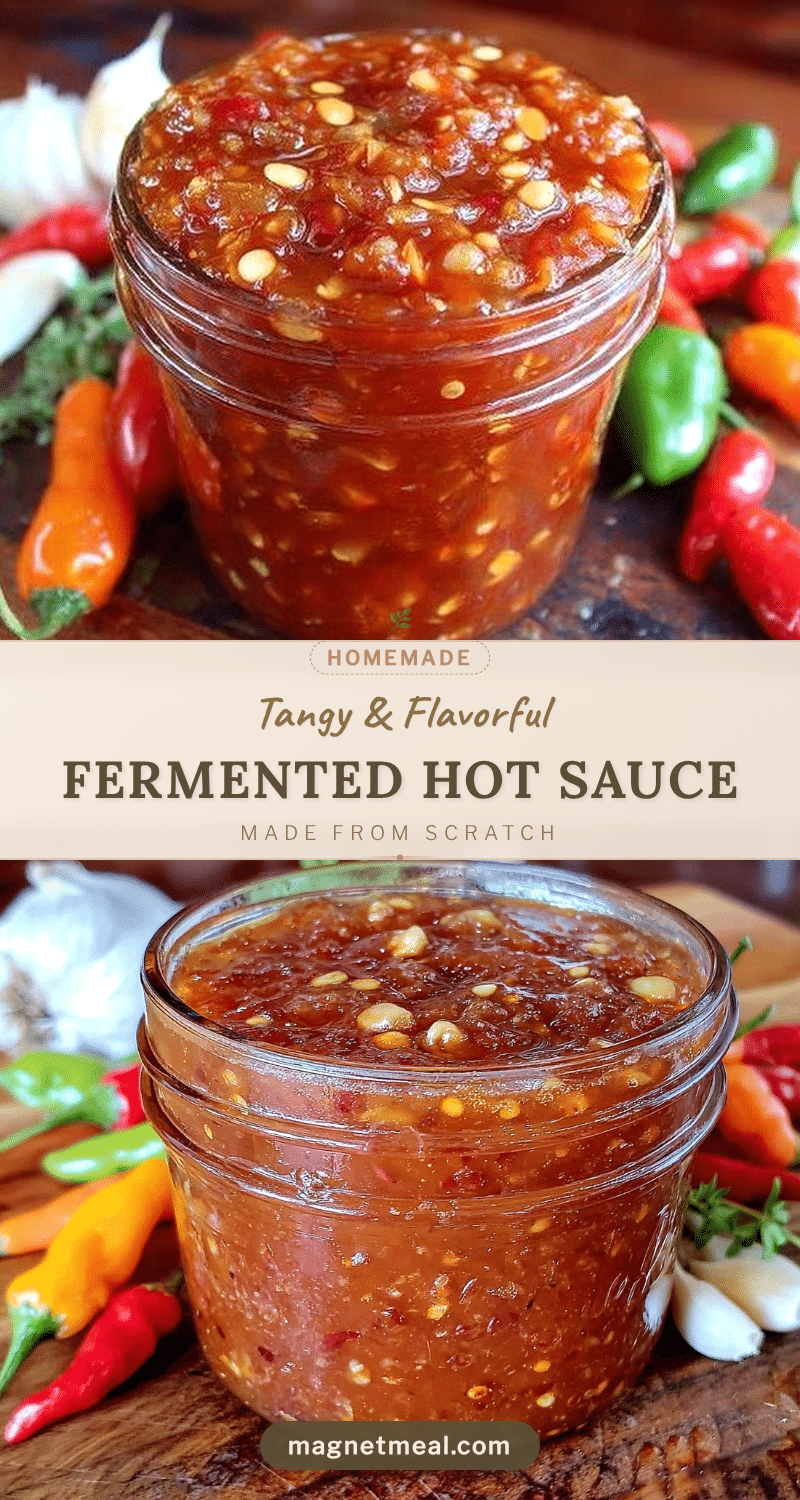
Tangy Homemade Fermented Hot Sauce Recipe
A tangy, flavorful fermented hot sauce made with fresh peppers, garlic, and sea salt that adds a probiotic punch and vibrant zest to any meal. This easy step-by-step guide helps you create a balanced, spicy, and slightly sweet sauce with simple ingredients and minimal hands-on time.
- Prep Time: 15 minutes
- Cook Time: 0 minutes
- Total Time: 7 to 14 days (fermentation time)
- Yield: About 1 quart (4 servings, approx. 1 tablespoon per serving) 1x
- Category: Condiment
- Cuisine: American
Ingredients
- 1 lb fresh hot peppers (jalapeños and fresnos recommended)
- 4–5 medium garlic cloves, peeled
- 2 tablespoons sea salt (non-iodized, e.g., Celtic sea salt)
- 2 cups filtered water (chlorine-free)
- Optional: 1 small carrot, peeled and chopped
- Optional: 1 small onion, roughly chopped
- Optional: 1 tablespoon apple cider vinegar
- Optional: 1 teaspoon fresh or dried oregano or thyme
Instructions
- Dissolve 2 tablespoons of sea salt in 2 cups (480 ml) of filtered water. Stir until fully dissolved and set aside.
- Rinse peppers thoroughly, remove stems, and roughly chop. Keep seeds for more heat or remove for milder sauce.
- Peel and chop garlic, carrot, and onion if using.
- Add chopped peppers, garlic, carrot, and onion to a blender. Pour in half of the brine (about 1 cup / 240 ml). Blend until smooth and thick. Add remaining brine as needed to blend.
- Pour the pepper puree into a 1-quart glass fermentation jar, leaving about 1 inch of headspace.
- Use a fermentation weight or smaller jar to press the mixture below the brine line. Add more brine if needed to keep submerged.
- Cover the jar with an airlock lid or a cloth secured with a rubber band to allow gases to escape.
- Ferment at room temperature (65°F to 75°F) in a cool, dark place for 7 to 14 days. Check daily for bubbling and skim off any white film (kahm yeast).
- After 7 days, taste the sauce. If tangy and fizzy enough, proceed; otherwise, ferment longer.
- Optional: Blend again and strain through a fine mesh for a smoother sauce. Add 1 tablespoon apple cider vinegar for extra tang if desired.
- Transfer to a clean jar, seal tightly, and refrigerate. Sauce keeps for up to 6 months and develops more flavor over time.
Notes
[‘Use non-iodized sea salt for best fermentation results.’, ‘Keep peppers submerged under brine to prevent mold.’, ‘Ferment at room temperature between 65°F and 75°F.’, ‘Skim off harmless kahm yeast if it forms on the surface.’, ‘Discard batch if colored mold (pink, black, fuzzy) appears.’, ‘Stir gently every few days to redistribute flavors and gases.’, ‘Adjust heat by using different peppers or removing seeds.’, ‘For a quicker ferment, reduce fermentation time to 3-5 days and refrigerate.’, ‘Add herbs or spices to customize flavor.’, ‘Avoid boiling sauce after fermentation to preserve probiotics.’]
Nutrition
- Serving Size: 1 tablespoon (15 ml)
- Calories: 5
- Carbohydrates: 1
- Protein: 0.2
Keywords: fermented hot sauce, homemade hot sauce, fermented condiment, spicy sauce, probiotic hot sauce, jalapeño sauce, fresno pepper sauce