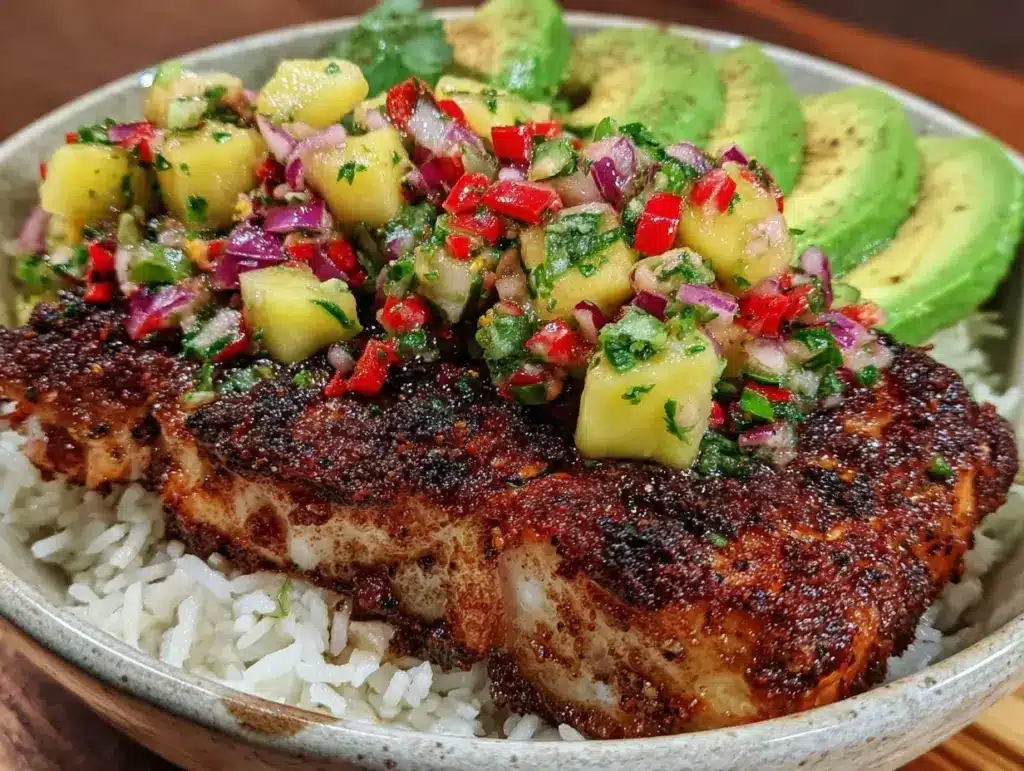
The moment you sear a piece of mahi mahi until it’s perfectly blackened, the kitchen fills with this smoky, spicy aroma that’s just impossible to ignore. Honestly, every time I make these blackened mahi mahi bowls, I get that little thrill of “Yes, dinner’s gonna be amazing!” I first stumbled upon this recipe during a summer beach vacation, where fresh fish and ripe mangoes felt like the ultimate combo. Since then, it’s become my go-to for warm-weather meals that are fresh, flavorful, and satisfying without being heavy. You know that satisfying crunch of spices on fish paired with the cool, sweet burst of mango salsa? Yeah, that’s what makes these bowls so addictive.
What’s great is how this blackened mahi mahi bowls recipe fits into busy lifestyles — it’s quick to put together, packed with nutrients, and feels like a treat any day of the week. Whether you’re feeding a family craving something light or just want a vibrant meal that hits all the right notes, this dish is a winner. Plus, if you’re into clean eating or just love seafood, mahi mahi offers firm, flaky flesh that holds up beautifully against the bold spice rub, making it perfect for these bowls. I’ve made this recipe dozens of times, tweaking the salsa here and there, but the core combo of blackened fish and mango salsa? That’s a keeper.
Why You’ll Love This Blackened Mahi Mahi Bowls Recipe
After countless tries and family taste tests, I can tell you this recipe nails it every time. Here’s why you’ll want to bookmark it:
- Quick & Easy: From prep to plate in under 30 minutes — perfect for those busy summer nights or when you want a fuss-free meal that still feels special.
- Simple Ingredients: Nothing fancy required. You probably have most of these staples on hand already, and the fresh mango salsa only needs a handful of ingredients.
- Perfect for Summer Meals: Light, refreshing, and vibrant — perfect for warm weather dining, whether it’s a casual weeknight or a weekend get-together.
- Crowd-Pleaser: Kids and adults alike love the spicy kick balanced with sweet mango. It’s a combo that sparks smiles around the table.
- Unbelievably Delicious: The blackened seasoning creates a crispy, flavorful crust, while the mango salsa adds that cool, juicy contrast that keeps you coming back for more.
This isn’t just any fish bowl — the secret is in the spice blend, which I carefully balance for a bold but not overpowering flavor. Plus, I like to make the mango salsa fresh right before serving to keep those bright, zesty notes popping. Honestly, after making this a few times, it’s become one of my favorite ways to eat mahi mahi, especially when I want a meal that feels healthy but indulgent.
What Ingredients You Will Need
This blackened mahi mahi bowls recipe uses fresh, wholesome ingredients designed to deliver a punch of flavor and a satisfying texture without complicated prep. Here’s what you’ll need:
- Mahi Mahi Fillets: About 1 to 1½ pounds (450-680g), skin removed. Look for firm, fresh fish with a mild scent.
- Blackened Seasoning Blend: A mix of smoked paprika, cayenne pepper, garlic powder, onion powder, dried thyme, dried oregano, salt, and black pepper. I recommend using freshly ground spices for the best aroma.
- Mango: One large ripe mango, peeled and diced. The sweeter and juicier, the better — it’s the star of the salsa.
- Red Bell Pepper: Finely diced, adds crunch and color.
- Red Onion: Minced, for a bit of sharpness. You can soak it in cold water briefly if you want to mellow the bite.
- Jalapeño: Seeded and finely chopped for a mild heat kick. Adjust based on your spice tolerance.
- Fresh Cilantro: Chopped, brightens the salsa with herbal notes.
- Lime Juice: Freshly squeezed, essential for that tangy zing in the salsa.
- Olive Oil: For cooking the fish and lightly tossing the salsa ingredients.
- Rice or Quinoa: About 2 cups cooked (390g cooked), to serve as the base of the bowl. Brown rice or quinoa works great for added nutrition.
- Optional Add-ins: Avocado slices, black beans, or corn kernels for extra texture and flavor.
If you want a gluten-free option, just double-check your spice blends or make your own to avoid any hidden additives. For a dairy-free meal, this recipe is naturally free of dairy, so no worries there. I usually grab organic mango when in season because it’s sweeter and more fragrant, but frozen diced mango can work in a pinch.
Equipment Needed
- Non-stick Skillet or Cast Iron Pan: A heavy-bottomed pan is best for achieving that iconic blackened crust on the mahi mahi. Cast iron is my go-to for even heat distribution.
- Mixing Bowls: For tossing the salsa ingredients and seasoning the fish.
- Sharp Knife and Cutting Board: For prepping the mango, veggies, and fish fillets safely and efficiently.
- Citrus Juicer: Handy but optional — you can squeeze lime juice by hand if needed.
- Measuring Spoons and Cups: To keep your spice blend balanced and consistent.
- Rice Cooker or Pot: For cooking your rice or quinoa base. I prefer a rice cooker for fuss-free results, but a pot works just fine.
If you don’t have a cast iron skillet, a heavy stainless steel pan will do — just make sure it gets hot enough to sear the spices properly. I’ve found that using well-seasoned cast iron keeps the crust from sticking and makes cleanup easier (just don’t forget to oil it well!). For budget-friendly options, many stores carry affordable non-stick pans that work well if you’re careful with heat.
Detailed Preparation Method
- Prepare the Rice or Quinoa (15-20 minutes): Start by cooking 1 cup (185g) of dry rice or quinoa according to package instructions. This usually takes about 15-20 minutes. Fluff with a fork and keep warm. This will be the hearty base of your bowl.
- Make the Mango Salsa (10 minutes): In a medium bowl, combine 1 diced ripe mango, ½ cup (75g) diced red bell pepper, ¼ cup (40g) minced red onion, 1 seeded and finely chopped jalapeño, and 2 tablespoons chopped fresh cilantro. Squeeze in the juice of 1 lime and drizzle about 1 tablespoon olive oil. Gently toss everything together. Taste and adjust lime or jalapeño to your liking. Set aside to let flavors marry while you cook the fish.
- Mix the Blackened Seasoning: In a small bowl, combine 1 teaspoon smoked paprika, ½ teaspoon cayenne pepper (reduce if you want less heat), 1 teaspoon garlic powder, 1 teaspoon onion powder, ½ teaspoon dried thyme, ½ teaspoon dried oregano, 1 teaspoon salt, and ½ teaspoon black pepper. Stir well to blend evenly.
- Season the Mahi Mahi: Pat dry 1 to 1½ pounds (450-680g) mahi mahi fillets. Sprinkle the blackened seasoning evenly on both sides, pressing gently to help it stick. Let the fish sit for 5 minutes at room temperature — this helps the flavors sink in and the fish to cook evenly.
- Heat the Pan: Place your cast iron or non-stick skillet over medium-high heat. Add about 1 tablespoon olive oil and let it heat until shimmering but not smoking.
- Cook the Fish (3-4 minutes per side): Carefully lay the fillets in the hot pan. Don’t crowd them — cook in batches if needed. Let them sear undisturbed for 3-4 minutes until a dark crust forms. Flip gently and cook the other side for another 3-4 minutes until the fish flakes easily with a fork. Avoid overcooking; mahi mahi remains moist and flaky when cooked just right.
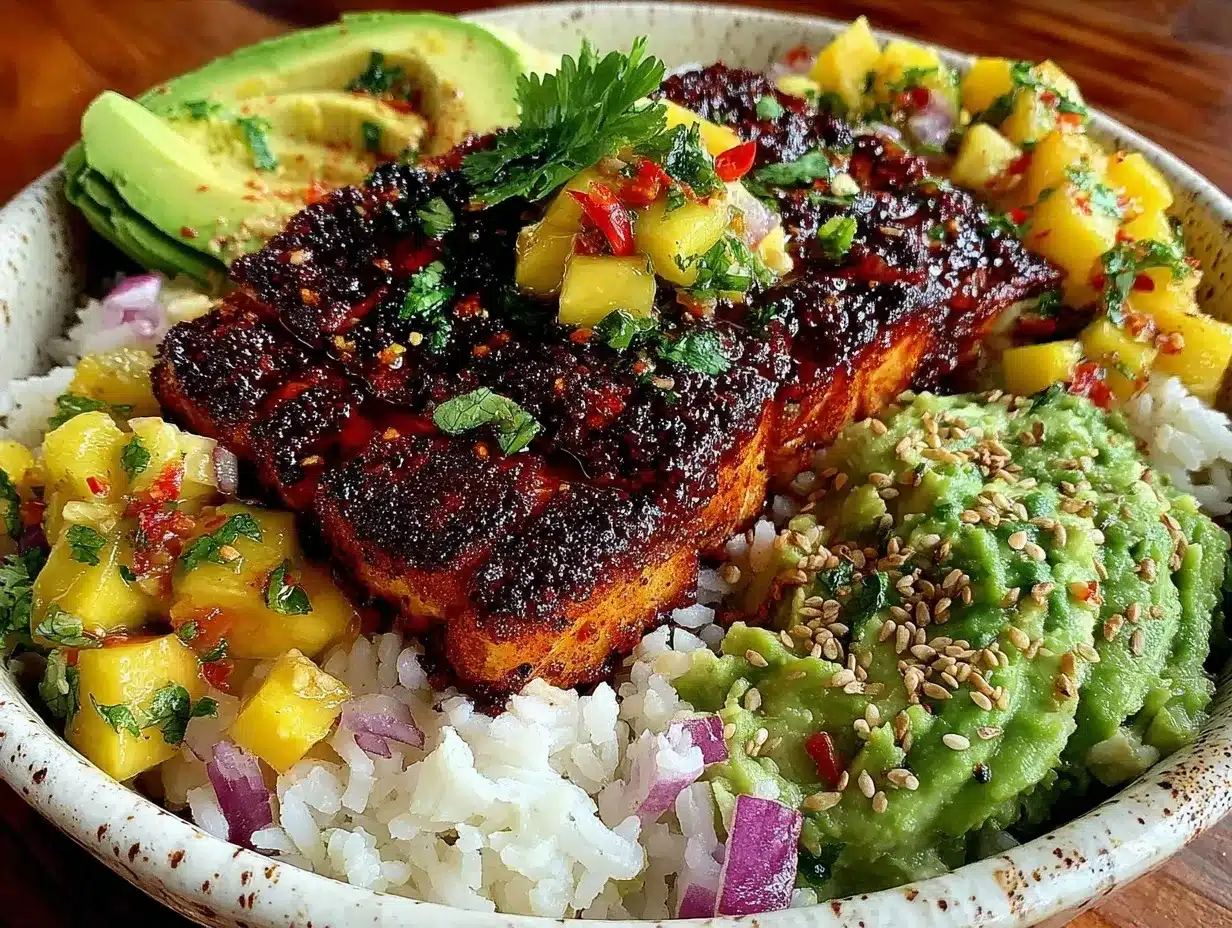
- Assemble the Bowls: Divide the cooked rice or quinoa between serving bowls. Top each with a blackened mahi mahi fillet. Spoon a generous amount of mango salsa over the fish. If you like, add avocado slices, black beans, or corn for extra texture.
- Serve Immediately: Garnish with extra cilantro or lime wedges on the side. Enjoy the contrast of smoky, spicy fish with the fresh, sweet salsa!
Pro tip: If your pan starts smoking too much, lower the heat slightly — blackening is about getting that crust without burning. Also, using a thin spatula helps flip the delicate fish without breaking it.
Cooking Tips & Techniques
Blackening fish can feel intimidating, but once you get the hang of it, you’ll see it’s pretty straightforward. Here are some tips I’ve picked up along the way:
- Pat the fish dry: Moisture is the enemy of a good crust. Make sure your mahi mahi is as dry as possible before seasoning.
- Don’t rush the pan heat: Let your skillet get really hot before adding the fish. This helps seal in the juices and creates that crave-worthy crust.
- Use enough oil: The oil should shimmer but not smoke excessively. Too little oil causes sticking, too much causes flare-ups.
- Flip carefully: Use a wide, thin spatula and flip only once to keep the fillets intact.
- Rest briefly: Let the fish rest a couple minutes after cooking to redistribute juices.
- Adjust spice levels: If you’re sensitive to heat, reduce cayenne or omit jalapeño. The paprika and herbs still deliver great flavor.
One time, I left the pan too hot and ended up with a charred mess — lesson learned! Also, prepping the mango salsa early lets the flavors meld, which makes a noticeable difference. Multitasking by cooking rice while prepping salsa and seasoning fish keeps everything moving smoothly.
Variations & Adaptations
Feel free to tweak this blackened mahi mahi bowls recipe to suit your tastes or dietary needs:
- Grilled Mahi Mahi: Instead of pan-searing, grill the seasoned mahi mahi over medium heat for 4-5 minutes per side for a smoky outdoor flavor.
- Low-Carb Bowl: Swap rice/quinoa for cauliflower rice or a bed of mixed greens to keep it light and keto-friendly.
- Fruit Variations: If mango isn’t your thing, try pineapple or peach salsa — both pair beautifully with the blackened fish.
- Spice Levels: Add smoked chipotle powder for a deeper smoky heat or leave out the cayenne for mild flavor.
- Allergen Substitutions: Naturally gluten-free, but double-check seasoning blends. Use avocado oil if you prefer a neutral oil for cooking.
Personally, I once made a version with grilled mahi mahi and a peach-jalapeño salsa — it was a hit at a summer barbecue! Don’t be afraid to experiment with whatever’s fresh and local.
Serving & Storage Suggestions
Serve your blackened mahi mahi bowls warm for the best experience. The contrast between the hot, spicy fish and the cool, fresh mango salsa is what makes this dish sing. Garnish with extra lime wedges or fresh cilantro leaves for a pop of color and brightness.
These bowls pair wonderfully with a crisp white wine or a light, citrusy cocktail. For sides, consider a simple green salad or roasted veggies to keep the meal balanced.
If you have leftovers, store them separately in airtight containers. The fish is best eaten within 2 days refrigerated, while the mango salsa can last up to 3 days but may soften over time. Reheat the fish gently in a skillet or oven at low heat to avoid drying it out. The flavors tend to mellow after a day, so the next-day bowl can be just as tasty, especially if you add fresh toppings.
Nutritional Information & Benefits
This blackened mahi mahi bowls recipe is a nutritious meal packed with lean protein, fiber, and vitamins. A typical serving provides about 350-400 calories, depending on your grain base and additions.
Mahi mahi is rich in omega-3 fatty acids, which support heart health and brain function. The mango salsa adds vitamin C and antioxidants, boosting your immune system. Using olive oil contributes healthy fats that help absorb nutrients and keep you full longer.
Gluten-free and naturally dairy-free, this dish suits a variety of diets. Just watch the spice if you have sensitivity, but otherwise, it’s a wholesome, balanced meal that tastes like a treat.
Conclusion
Making these blackened mahi mahi bowls with easy mango salsa is one of those recipes that’s both exciting and approachable. You get that smoky, spicy fish paired with a bright, sweet salsa that just feels like summer on a plate. I love how adaptable it is, whether you’re cooking for family, meal prepping, or impressing guests with minimal effort.
Give it a try, and don’t be shy about making it your own—swap ingredients, adjust spice, or add your favorite toppings. I’d love to hear how you customize your bowls, so drop a comment below and share your tweaks! Here’s to many flavorful meals ahead with this simple, satisfying recipe.
FAQs About Blackened Mahi Mahi Bowls
Can I use other types of fish instead of mahi mahi?
Absolutely! Firm white fish like swordfish, snapper, or even cod can work well with the blackened seasoning. Just adjust cooking times based on thickness.
How do I know when the mahi mahi is cooked perfectly?
The fish should flake easily with a fork but still be moist inside. Usually, 3-4 minutes per side on medium-high heat does the trick for 1-inch thick fillets.
Can I prepare the mango salsa ahead of time?
Yes, making it an hour or two ahead lets the flavors meld nicely. Just keep it refrigerated and stir before serving to freshen it up.
Is this recipe spicy?
It has a nice kick from cayenne and jalapeño but isn’t overwhelmingly hot. You can easily reduce or omit these ingredients for milder flavor.
What are good side dishes to serve with blackened mahi mahi bowls?
Simple sides like a green salad, roasted vegetables, or even a light slaw complement the bowls well without overpowering the flavors.
Pin This Recipe!
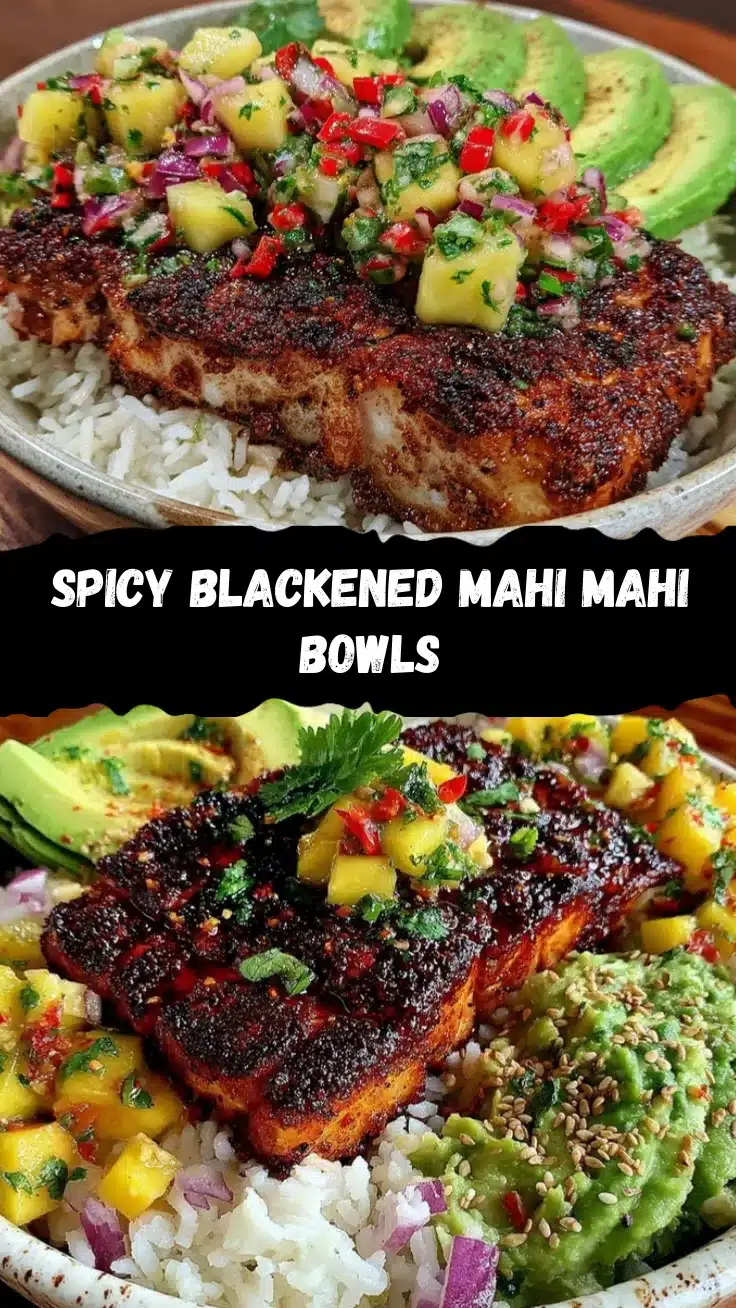
Blackened Mahi Mahi Bowls Recipe with Easy Mango Salsa for Summer Meals
A quick and flavorful blackened mahi mahi bowl paired with a fresh, sweet mango salsa, perfect for light and vibrant summer meals.
- Prep Time: 10 minutes
- Cook Time: 15 minutes
- Total Time: 25 minutes
- Yield: 4 servings 1x
- Category: Main Course
- Cuisine: American
Ingredients
- 1 to 1½ pounds (450-680g) mahi mahi fillets, skin removed
- 1 teaspoon smoked paprika
- ½ teaspoon cayenne pepper
- 1 teaspoon garlic powder
- 1 teaspoon onion powder
- ½ teaspoon dried thyme
- ½ teaspoon dried oregano
- 1 teaspoon salt
- ½ teaspoon black pepper
- 1 large ripe mango, peeled and diced
- ½ cup (75g) diced red bell pepper
- ¼ cup (40g) minced red onion
- 1 seeded and finely chopped jalapeño
- 2 tablespoons chopped fresh cilantro
- Juice of 1 lime
- 1 tablespoon olive oil (plus more for cooking)
- 2 cups cooked rice or quinoa (about 1 cup dry, 185g)
- Optional: avocado slices, black beans, or corn kernels
Instructions
- Cook 1 cup (185g) dry rice or quinoa according to package instructions (about 15-20 minutes). Fluff and keep warm.
- In a medium bowl, combine diced mango, red bell pepper, red onion, jalapeño, cilantro, lime juice, and 1 tablespoon olive oil. Toss gently and set aside.
- In a small bowl, mix smoked paprika, cayenne pepper, garlic powder, onion powder, dried thyme, dried oregano, salt, and black pepper.
- Pat mahi mahi fillets dry and evenly coat both sides with the blackened seasoning. Let rest for 5 minutes at room temperature.
- Heat a cast iron or non-stick skillet over medium-high heat. Add 1 tablespoon olive oil and heat until shimmering.
- Cook the fillets 3-4 minutes per side until a dark crust forms and fish flakes easily with a fork. Avoid overcooking.
- Divide cooked rice or quinoa into bowls. Top each with a blackened mahi mahi fillet and spoon mango salsa over the fish.
- Add optional avocado slices, black beans, or corn if desired. Garnish with extra cilantro or lime wedges and serve immediately.
Notes
Pat the fish dry before seasoning to ensure a good crust. Let the pan get hot before adding fish. Use a thin spatula to flip the fish gently. Rest fish briefly after cooking. Adjust cayenne and jalapeño for desired spice level. Mango salsa can be made ahead and refrigerated for up to 2 hours.
Nutrition
- Serving Size: 1 bowl with 1 mahi m
- Calories: 375
- Sugar: 12
- Sodium: 700
- Fat: 12
- Saturated Fat: 1.5
- Carbohydrates: 35
- Fiber: 4
- Protein: 30
Keywords: blackened mahi mahi, mango salsa, summer meals, seafood bowls, quick dinner, healthy recipe, gluten-free, dairy-free