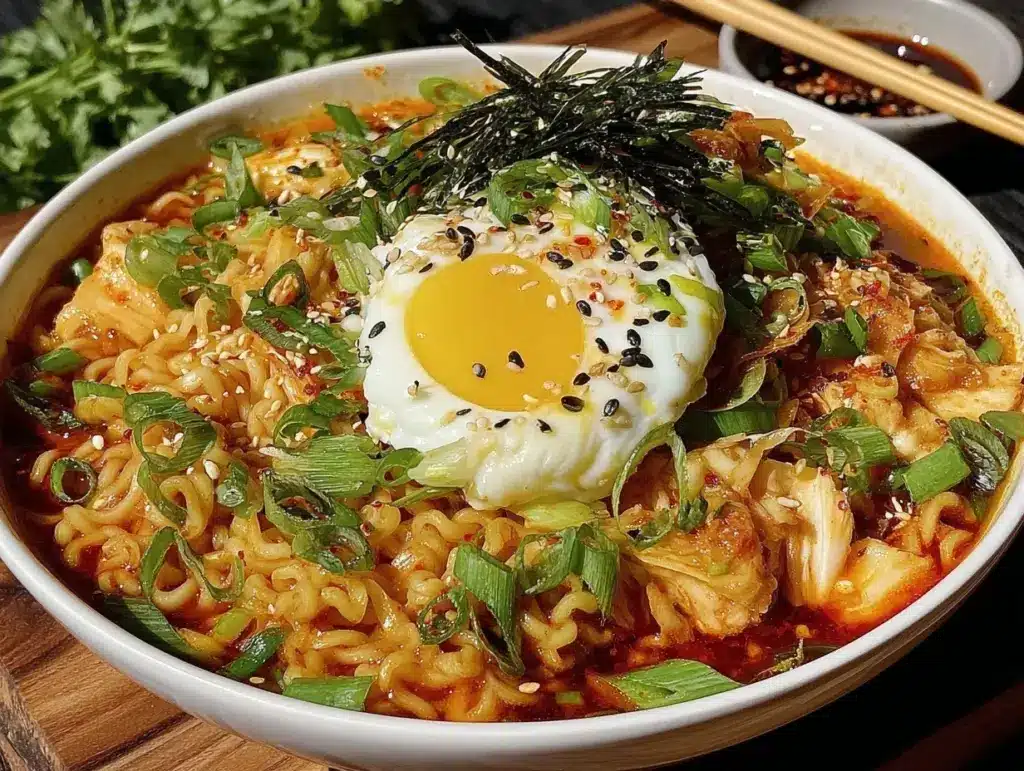
The first time I made this irresistible kimchi ramen bowl with soft-boiled egg, I was craving something fiery, comforting, and just a little bit messy. You know that slurpy, steamy noodle soup that feels like a warm hug on a chilly evening? Yeah, this recipe nails that vibe perfectly. The tangy kick from the kimchi paired with the silky soft-boiled egg makes every spoonful a little celebration in your mouth.
Honestly, ramen has always been my go-to when I want something quick yet satisfying, but finding a version that balances bold flavors without overwhelming the broth was a game-changer. After testing this recipe multiple times (you know me — a bit of a ramen perfectionist), I’ve landed on the perfect combo that’s easy to whip up at home yet tastes like you ordered it from a cozy noodle shop in Seoul.
This irresistible kimchi ramen bowl with soft-boiled egg is not just about flavor; it’s about bringing a little adventure to your weeknight dinner without complicated steps. Whether you’re a kimchi lover or just curious about adding a spicy twist to your usual ramen, this recipe is your new best friend. Plus, it’s great for anyone balancing busy days but still wanting a nourishing, soul-soothing meal. Let’s get into why this bowl will quickly become a staple for you.
Why You’ll Love This Recipe
- Quick & Easy: Comes together in about 30 minutes, perfect for those nights when you want something hearty but don’t want to spend hours cooking.
- Simple Ingredients: No exotic grocery runs needed — kimchi, noodles, and a few pantry staples are all it takes.
- Perfect for Cozy Nights: This bowl is ideal for chilly evenings or whenever you need that umami-packed comfort food fix.
- Crowd-Pleaser: Friends and family rave about the balance of spicy, tangy, and creamy elements.
- Unbelievably Delicious: The soft-boiled egg adds a luscious creaminess that contrasts perfectly with the sharpness of the kimchi.
This isn’t just any kimchi ramen bowl. What sets it apart is the way the broth is carefully layered with garlic, ginger, and a touch of sesame oil, creating a depth of flavor that hugs the noodles and toppings beautifully. The soft-boiled egg, with its jammy yolk, adds that silky texture everyone secretly loves but rarely nails at home.
You know, it’s one of those recipes that makes you close your eyes after the first bite and smile because it feels so good — like comfort food but with a spicy, zesty kick that awakens your taste buds. Whether you’re impressing guests or treating yourself after a long day, this bowl is a winner every time.
What Ingredients You Will Need
This irresistible kimchi ramen bowl recipe uses straightforward, wholesome ingredients to deliver bold, satisfying flavors without fuss. Most of these are pantry staples, and the kimchi is usually the star you might want to pick up fresh for the best taste.
- Ramen Noodles: Fresh if possible, but dried instant ramen noodles work well too (avoid seasoning packets).
- Kimchi: About 1 cup, chopped (I prefer firm, well-fermented kimchi for that perfect tang and spice).
- Soft-Boiled Eggs: 2 large eggs (look for free-range eggs for richer yolks).
- Broth Base: 4 cups chicken or vegetable broth (homemade or low-sodium store-bought works great).
- Garlic: 3 cloves, minced (adds aromatic depth).
- Ginger: 1 tablespoon, freshly grated (for that gentle zing).
- Soy Sauce: 2 tablespoons (I recommend Kikkoman for balanced saltiness).
- Gochujang (Korean Chili Paste): 1 tablespoon (adjust based on heat preference).
- Sesame Oil: 1 teaspoon (for that nutty aroma and flavor).
- Green Onions: 2 stalks, thinly sliced (fresh garnish).
- Optional Toppings: Toasted sesame seeds, nori strips, or fresh cilantro.
If you want to make it vegetarian, swap chicken broth for a hearty vegetable broth and skip the eggs or use tofu. I’ve also tried adding mushrooms for extra umami, and it works beautifully.
Equipment Needed
- Medium Pot: For boiling eggs and cooking noodles.
- Saucepan or Small Pot: To prepare the broth.
- Fine Mesh Strainer: Useful for rinsing noodles if needed.
- Sharp Knife: For chopping kimchi and slicing green onions.
- Slotted Spoon or Spider Strainer: Handy for removing soft-boiled eggs from hot water.
- Mixing Bowls: For prepping ingredients before assembling.
If you don’t have a slotted spoon, a regular spoon with a quick shake works just fine — I’ve been there! A small kitchen timer or simply your phone timer is essential for nailing the soft-boiled eggs perfectly. No fancy gadgets needed, making this recipe super accessible.
Detailed Preparation Method
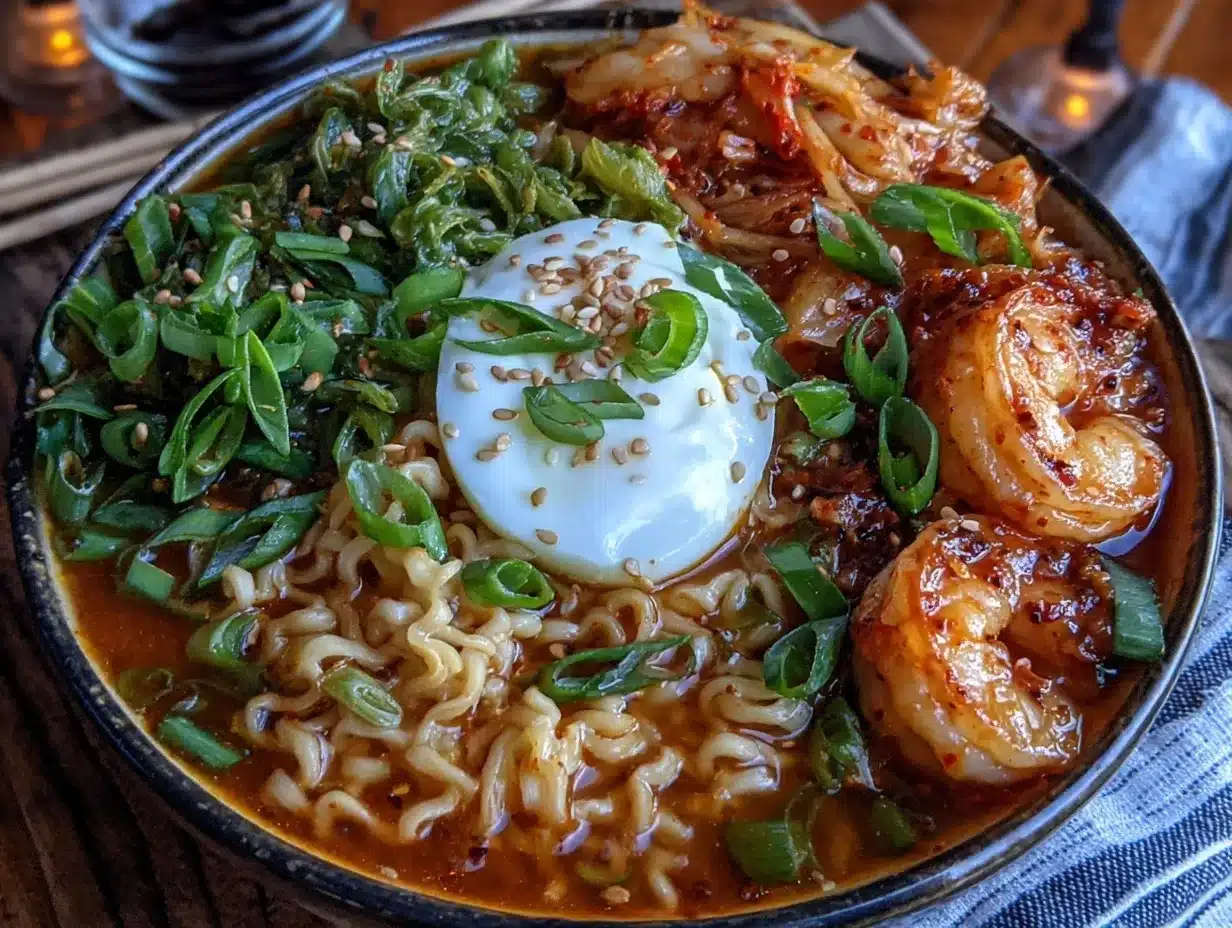
- Prepare the Soft-Boiled Eggs: Bring a medium pot of water to a gentle boil. Carefully lower 2 large eggs into the water using a slotted spoon. Boil for exactly 6 minutes for a jammy yolk (adjust 30 seconds either way if you prefer slightly firmer or runnier yolks). Immediately transfer eggs to an ice bath to stop cooking. Peel gently once cooled. (Tip: Crack the shell all over before peeling to make it easier.)
- Cook the Noodles: In the same or a separate pot, bring water to boil and cook the ramen noodles according to package instructions (usually 3-4 minutes for fresh, 4-5 for dried). Drain and rinse under cold water briefly to stop cooking and prevent sticking. Set aside.
- Make the Broth: In a saucepan, heat 1 teaspoon sesame oil over medium heat. Add minced garlic (3 cloves) and grated ginger (1 tablespoon), sauté for about 1 minute until fragrant but not browned. Pour in 4 cups (950 ml) chicken or vegetable broth, then stir in 2 tablespoons soy sauce and 1 tablespoon gochujang. Simmer for 8-10 minutes, allowing flavors to meld and broth to slightly thicken.
- Add Kimchi: Stir in 1 cup chopped kimchi and simmer for another 3-4 minutes. This step infuses the broth with that signature tang and spice. Taste and adjust seasoning, adding a pinch of salt or more soy sauce if needed.
- Assemble the Bowl: Divide cooked noodles between two bowls. Ladle hot kimchi broth over noodles, ensuring some kimchi pieces make it into each bowl. Slice soft-boiled eggs in half and place on top. Garnish with sliced green onions, toasted sesame seeds, and nori strips if using.
- Final Touches: Serve immediately while steaming hot. Encourage everyone to mix the egg yolk into the broth for that rich, creamy texture that makes the whole bowl sing.
Pro tip: If your broth tastes too spicy, a splash of coconut milk or a little sugar can mellow it out without losing character. Also, keep an eye on the egg timing — every second counts for that perfect oozy yolk!
Cooking Tips & Techniques
Getting the soft-boiled egg just right can be tricky, but here’s what I’ve learned: timing is everything. Setting a timer for exactly 6 minutes and using an ice bath makes peeling much easier and yolks perfectly jammy.
When it comes to the broth, don’t rush the sautéing of garlic and ginger — letting them release their aroma gently before adding liquids really makes the broth pop. Also, stirring in gochujang slowly helps it dissolve evenly without clumping, giving a smooth, balanced heat.
Avoid overcooking your noodles. They should be tender but still have a little bite (al dente). Rinsing them briefly in cold water stops the cooking process and keeps them from getting mushy once added to the hot broth.
Lastly, layering flavors is key. I like to taste my broth as I go and tweak with a splash of soy sauce or a pinch of sugar here and there. This little back-and-forth makes a big difference in the final depth of flavor.
Variations & Adaptations
- Vegetarian Version: Use vegetable broth, skip the egg, and add tofu cubes or sautéed mushrooms for protein.
- Spice Level Adjustment: For a milder bowl, reduce gochujang by half; for more heat, add a teaspoon of Korean chili flakes (gochugaru).
- Seasonal Twist: In warmer months, try a chilled kimchi ramen bowl by chilling the broth after cooking and serving over cold noodles.
- Gluten-Free: Swap ramen noodles for rice noodles and use tamari instead of soy sauce to keep it celiac-friendly.
- My Personal Favorite: Adding a squeeze of fresh lime juice just before serving adds a bright, tangy contrast that’s utterly addictive.
Serving & Storage Suggestions
Serve your kimchi ramen bowl steaming hot, ideally in deep bowls that keep the broth warm longer. Garnish with fresh green onions and a sprinkle of toasted sesame seeds for texture and color. Pair it with a crisp Asian-style salad or pickled vegetables for a complete meal.
If you have leftovers (rare, but it happens!), store broth and noodles separately in airtight containers in the fridge for up to 2 days. Reheat broth gently on the stove and briefly warm noodles before assembling the bowl again. Avoid microwaving noodles directly as they can become rubbery.
The flavors actually deepen after resting, so this ramen can taste even better the next day if you’re patient. Just add a fresh soft-boiled egg at serving time to keep that creamy element fresh.
Nutritional Information & Benefits
This kimchi ramen bowl is a balanced meal providing protein from the egg, probiotics from the fermented kimchi, and complex carbs from the noodles. A typical serving contains approximately 450-500 calories, with about 20 grams of protein and moderate fat content from sesame oil and egg yolk.
Kimchi is a fantastic source of vitamins A and C, plus gut-friendly bacteria that support digestion. Using a low-sodium broth keeps the dish heart-friendly, and you can easily adjust spice levels to suit your stomach’s needs.
For those watching carbs, swapping noodles for spiralized veggies works well, making this bowl adaptable to various dietary plans without sacrificing flavor.
Conclusion
In the end, this irresistible kimchi ramen bowl with soft-boiled egg is more than just a meal. It’s that perfect mix of spicy, tangy, and creamy that comforts and excites your taste buds all at once. I love how it’s quick enough for busy nights but feels special enough to serve when you want to impress.
Feel free to tweak the spice or add your favorite toppings — that’s the beauty of ramen! I’m always eager to hear how you make it your own, so drop a comment, share your variations, or ask questions.
Give this recipe a try tonight, and trust me, you’ll want to keep it in your dinner rotation for good. Happy cooking and even happier slurping!
FAQs
How do I make the perfect soft-boiled egg for ramen?
Bring water to a gentle boil, carefully add eggs, and boil for exactly 6 minutes. Immediately transfer to ice water, then peel gently. This timing gives a jammy yolk perfect for ramen.
Can I use store-bought kimchi for this recipe?
Absolutely! Just choose a firm, well-fermented kimchi for the best flavor and texture. Homemade is great too but not necessary.
What if I don’t have gochujang? Can I substitute it?
You can try using a mix of miso paste with a bit of chili powder or sriracha, but the flavor won’t be quite the same. Gochujang offers a unique sweet-spicy umami that’s hard to replace.
Can I prepare this recipe ahead of time?
You can make the broth and cook noodles separately in advance. Store them refrigerated and assemble just before serving. Soft-boiled eggs are best made fresh but can be prepared a day ahead and kept peeled in water.
How spicy is this kimchi ramen bowl?
The spice level is moderate, thanks to the gochujang and kimchi. You can adjust the heat by reducing or increasing gochujang or adding chili flakes to suit your taste.
Pin This Recipe!

Irresistible Kimchi Ramen Bowl Recipe with Soft-Boiled Egg
A fiery, comforting kimchi ramen bowl featuring a tangy broth, tender noodles, and a silky soft-boiled egg, perfect for cozy nights and quick dinners.
- Prep Time: 10 minutes
- Cook Time: 20 minutes
- Total Time: 30 minutes
- Yield: 2 servings 1x
- Category: Main Course
- Cuisine: Korean
Ingredients
- Ramen noodles (fresh or dried, avoid seasoning packets)
- 1 cup chopped kimchi (firm, well-fermented preferred)
- 2 large soft-boiled eggs (free-range recommended)
- 4 cups chicken or vegetable broth (homemade or low-sodium store-bought)
- 3 cloves garlic, minced
- 1 tablespoon freshly grated ginger
- 2 tablespoons soy sauce (Kikkoman recommended)
- 1 tablespoon gochujang (Korean chili paste)
- 1 teaspoon sesame oil
- 2 stalks green onions, thinly sliced
- Optional toppings: toasted sesame seeds, nori strips, fresh cilantro
Instructions
- Prepare the soft-boiled eggs: Bring a medium pot of water to a gentle boil. Carefully lower 2 large eggs into the water using a slotted spoon. Boil for exactly 6 minutes for a jammy yolk. Immediately transfer eggs to an ice bath to stop cooking. Peel gently once cooled.
- Cook the noodles: In the same or a separate pot, bring water to boil and cook the ramen noodles according to package instructions (3-4 minutes for fresh, 4-5 for dried). Drain and rinse under cold water briefly to stop cooking and prevent sticking. Set aside.
- Make the broth: In a saucepan, heat 1 teaspoon sesame oil over medium heat. Add minced garlic and grated ginger, sauté for about 1 minute until fragrant but not browned. Pour in 4 cups chicken or vegetable broth, then stir in soy sauce and gochujang. Simmer for 8-10 minutes to meld flavors and slightly thicken broth.
- Add kimchi: Stir in 1 cup chopped kimchi and simmer for another 3-4 minutes. Taste and adjust seasoning with salt or more soy sauce if needed.
- Assemble the bowl: Divide cooked noodles between two bowls. Ladle hot kimchi broth over noodles, ensuring some kimchi pieces make it into each bowl. Slice soft-boiled eggs in half and place on top. Garnish with sliced green onions, toasted sesame seeds, and nori strips if using.
- Final touches: Serve immediately while steaming hot. Encourage mixing the egg yolk into the broth for a rich, creamy texture.
Notes
Use an ice bath immediately after boiling eggs to stop cooking and make peeling easier. Adjust gochujang to control spice level. For vegetarian version, use vegetable broth and skip eggs or substitute tofu. Rinsing noodles under cold water stops cooking and prevents mushiness. A splash of coconut milk or sugar can mellow overly spicy broth.
Nutrition
- Serving Size: 1 bowl
- Calories: 475
- Sugar: 6
- Sodium: 900
- Fat: 18
- Saturated Fat: 3.5
- Carbohydrates: 55
- Fiber: 4
- Protein: 20
Keywords: kimchi ramen, soft-boiled egg, Korean noodle soup, spicy ramen, easy ramen recipe, comfort food, gochujang, quick dinner