
Let me tell you, the scent of warm, freshly baked brioche bread wafting through my kitchen is enough to make anyone’s mouth water instantly. That golden crust, soft pillowy texture, and the rich buttery aroma — honestly, it’s like a hug from the inside out. The first time I baked this tender brioche bread, it was one of those rare moments where you pause, take a deep breath, and just smile because you know you’re onto something truly special. The kind of bread that makes your morning coffee feel like a celebration.
Years ago, when I was knee-high to a grasshopper, my grandma used to make brioche for Sunday breakfast. It wasn’t just bread — it was family, tradition, and comfort all rolled into one. I stumbled upon this recipe on a rainy weekend, trying to recreate that nostalgic feeling with a homemade touch. And honestly? I wish I’d found this recipe years ago. My family couldn’t stop sneaking slices off the cooling rack (and I can’t really blame them). It’s dangerously easy to make, and the rich buttery flavor feels like pure, nostalgic comfort. Perfect for breakfast, brunch, or a sweet treat when you need a little pick-me-up.
You know what? This tender brioche bread is perfect for potlucks, gifting to neighbors, or just brightening up your Pinterest cookie board with something a little different. After testing it multiple times (in the name of research, of course), it’s become a staple for family gatherings, giving that warm, cozy vibe from the oven right to the table. If you’re going to try only one homemade bread recipe this year, this should be it — you’re going to want to bookmark this one.
Why You’ll Love This Tender Brioche Bread Recipe
Honestly, this tender brioche bread recipe ticks all the boxes for anyone who loves baking but wants a straightforward, rewarding experience. Here’s why it’s become my go-to:
- Quick & Easy: Comes together in under 3 hours, with most of the time spent letting the dough rise — perfect for busy weekends or last-minute baking urges.
- Simple Ingredients: You likely have everything on hand: flour, eggs, butter, sugar, and yeast — no fancy trips to specialty stores needed.
- Perfect for Any Occasion: Whether it’s a cozy brunch, holiday breakfast, or a show-stopping dinner side, this brioche fits beautifully.
- Crowd-Pleaser: Kids and adults alike rave about the buttery softness and subtle sweetness — it’s a guaranteed hit.
- Rich Buttery Flavor: The secret lies in generous butter incorporation and a touch of sugar, giving it that irresistible melt-in-your-mouth quality.
What sets this brioche bread apart? The dough is gently kneaded to develop just the right gluten structure, while the butter is folded in slowly to keep it tender and delicate. I also use a little extra egg yolk for richness, making this bread nothing like your average loaf. It’s that kind of recipe where you close your eyes after the first bite and just savor the moment. This isn’t just good bread; it’s comfort food in loaf form — healthier than a pastry but with all the soul-soothing satisfaction that makes you smile.
What Ingredients You Will Need
This recipe uses simple, wholesome ingredients to deliver bold flavor and a satisfying, tender texture without too much fuss. Most are pantry staples, and you can find great options at your local grocery store.
- All-purpose flour (3 ½ cups / 440 g) – Look for a good quality brand like King Arthur for best results.
- Active dry yeast (2 ¼ tsp / 7 g) – Fresh yeast works too if you prefer.
- Granulated sugar (¼ cup / 50 g) – Adds the perfect subtle sweetness.
- Salt (1 ½ tsp / 9 g) – Balances the flavors.
- Whole milk (½ cup / 120 ml), warmed to about 110°F (43°C) – Use dairy or your favorite non-dairy milk.
- Large eggs (5 total) – 4 for the dough and 1 for the egg wash, all at room temperature.
- Unsalted butter (1 cup / 227 g), softened – This is the star for that rich, tender crumb.
Optional but recommended:
- Vanilla extract (1 tsp) – Adds a subtle warm note.
- Honey (1 tbsp) – Can substitute some sugar for a natural sweetener twist.
If you want a dairy-free version, swap the milk for almond or oat milk and use vegan butter. For a slightly lighter loaf, try reducing butter by 2 tablespoons, but honestly, the richness is part of the magic. When selecting your butter, I personally prefer European-style butter for its higher fat content and creamier flavor.
Equipment Needed
- Stand mixer with dough hook attachment – Makes kneading a breeze and ensures even mixing. If you don’t have one, you can knead by hand, but plan on about 15 minutes of elbow grease.
- Mixing bowls – Large enough to allow dough to rise comfortably.
- Measuring cups and spoons – Precision matters in baking!
- Loaf pan or brioche molds (8 x 4 inches / 20 x 10 cm) – I like using a pullman pan for a neat shape, but a regular bread loaf pan works great too.
- Kitchen thermometer – Optional, but helpful for warming milk to the right temperature.
- Pastry brush – For brushing on that beautiful egg wash glaze.
- Plastic wrap or damp kitchen towel – To cover the dough while it rises.
For budget-friendly options, a sturdy wooden spoon and hands work just fine for mixing and kneading. If you’re serious about baking, investing in a stand mixer is a game-changer. I’ve been through cheap brushes and pans before, but quality equipment makes the process smoother and the results more consistent.
Preparation Method

- Activate the yeast: In a small bowl, combine the warm milk (110°F / 43°C) with 1 tablespoon of sugar and the active dry yeast. Let it sit for 5-7 minutes until foamy. If it doesn’t foam, your yeast might be inactive, so start over with fresh yeast.
- Mix dry ingredients: In the bowl of your stand mixer, whisk together the flour, remaining sugar, and salt.
- Add wet ingredients: Crack 4 room temperature eggs into the flour mixture, pour in the yeast mixture, and add vanilla extract if using. Mix with the dough hook on low speed until the dough comes together, about 2 minutes.
- Knead the dough: Increase the mixer speed to medium and knead for about 5 minutes until the dough is elastic but still sticky. It should pull away from the sides of the bowl but remain slightly tacky.
- Add butter gradually: With the mixer running, add the softened butter tablespoon by tablespoon. This step can take 8-10 minutes. Don’t rush; adding butter slowly helps keep the dough tender and silky.
- First rise: Transfer the dough to a clean, lightly greased bowl. Cover with plastic wrap or a damp towel and let it rise in a warm spot for 1 to 1.5 hours, or until doubled in size. (If your kitchen is cold, placing it near a warm oven helps!)
- Shape the dough: Gently punch down the dough to release air. Turn it onto a floured surface and shape into a loaf or divide into smaller balls for individual brioche buns.
- Second rise: Place the shaped dough into the greased loaf pan or molds. Cover again and let it rise for 45-60 minutes, until puffy and nearly doubled.
- Preheat oven: While the dough is rising, preheat your oven to 350°F (175°C).
- Egg wash: Beat the remaining egg with a teaspoon of water and brush it gently over the dough surface for that glossy, golden crust.
- Bake: Bake for 30-35 minutes, or until the loaf is deep golden and sounds hollow when tapped. If the top browns too quickly, tent it loosely with foil halfway through.
- Cool: Remove from the oven and let cool in the pan for 10 minutes, then turn out onto a wire rack. Resist the urge to slice warm – waiting at least 1 hour helps the texture settle perfectly.
If the dough feels too sticky at any point, sprinkle in a little flour, but be cautious — too much flour can toughen the bread. The butter folding step is where many shy away, but trust me, patience here pays off big time. The dough should feel soft, rich, and almost silky.
Cooking Tips & Techniques
Making tender brioche bread is rewarding, but there are a few tricks I’ve learned over time that make all the difference.
- Milk temperature matters: Too hot and you kill the yeast; too cold and it won’t activate well. Aim for warm but not scalding (around 110°F/43°C).
- Butter folding: Add softened butter slowly, one tablespoon at a time. If you add it too fast, the dough won’t incorporate it properly, resulting in a less tender crumb.
- Don’t rush rising times: Let the dough double in size naturally. Rushing with too much heat or too little time compromises texture and flavor.
- Egg wash for shine: Brushing the dough with egg wash creates that bakery-perfect glossy crust you want. For extra richness, add a teaspoon of milk to the egg wash.
- Be gentle when shaping: You want to keep as many air bubbles intact as possible — they’re part of what makes brioche so light and soft.
- Watch the oven closely: Every oven bakes differently. Check at the 25-minute mark to avoid burning, and tent with foil if necessary.
My first attempt at brioche was a sticky, buttery mess — but once I got the hang of the slow butter incorporation, everything changed. Also, multitasking by preparing other breakfast items while the dough rises is a great way to save time. Just don’t skip the cooling step — slicing warm bread is a rookie mistake that leads to gummy slices.
Variations & Adaptations
This tender brioche bread recipe is quite versatile. Here are a few ideas to mix things up:
- Sweet twist: Add ½ cup of raisins, dried cranberries, or chocolate chips into the dough during the last few minutes of kneading for a delightful surprise.
- Savory version: Fold in finely chopped herbs like rosemary or thyme and a pinch of black pepper. Swap sugar for a touch of honey or leave it out entirely for a less sweet loaf.
- Gluten-free adaptation: Use a gluten-free all-purpose flour blend designed for bread baking. Keep in mind that texture will be a bit different but still delicious.
- Overnight rise: For a deeper flavor, let the shaped dough rise slowly in the fridge overnight. Just bring it back to room temperature for an hour before baking.
I once tried adding lemon zest and a dash of cardamom for a bright, fragrant loaf — it was a hit at brunch! Feel free to experiment within reason; just remember that the butter and egg richness is key to keeping it tender.
Serving & Storage Suggestions
Serve this tender brioche bread slightly warm or at room temperature. It’s heavenly toasted with a pat of butter or your favorite jam. For an extra treat, make French toast with thick slices — the bread soaks up the custard beautifully.
Pair it with fresh fruit, creamy cheeses, or a hot cup of coffee or tea for a simple yet indulgent breakfast or snack. It also makes an elegant base for sandwiches or a sweet bread pudding.
Store brioche wrapped tightly in plastic wrap or in an airtight container at room temperature for up to 3 days. For longer storage, freeze sliced bread in a zip-top bag for up to 3 months. Thaw slices overnight in the fridge or toast directly from frozen.
Reheating gently in a toaster oven or wrapped in foil at 300°F (150°C) for 5-7 minutes refreshes the softness and brings back that just-baked feeling. Flavors tend to deepen after resting a day, so it’s perfectly fine (and delicious) to bake ahead.
Nutritional Information & Benefits
Each slice (about 50 g) of this tender brioche bread offers approximately:
| Calories | 180 kcal |
|---|---|
| Fat | 9 g (mostly from butter) |
| Carbohydrates | 20 g |
| Protein | 5 g |
The richness comes from real butter and eggs, providing healthy fats and protein that keep you feeling satisfied. Using whole milk adds calcium and vitamins. While this isn’t a low-fat recipe by any means, it’s made with wholesome ingredients and no preservatives or additives.
If you have dietary restrictions, this recipe can be modified to be dairy-free or gluten-free, but it naturally contains eggs and gluten. For a more balanced meal, pair your brioche with fresh fruit or a protein-rich side.
Conclusion
This tender brioche bread recipe is truly worth making if you want a homemade loaf that’s rich, buttery, and irresistibly soft. It’s one of those recipes that feels fancy enough to impress but is simple enough for a weekend baking project. Customize it with your favorite mix-ins or enjoy it plain — either way, it’s a winner.
Personally, I love how this brioche brings back memories of cozy mornings and family smiles. It’s a recipe I keep coming back to, especially when I want that warm, comforting feeling from the oven. Give it a try and let me know how it turns out — I’m always excited to hear your tweaks and stories!
If you enjoyed this guide, please share it with your friends or leave a comment below. Happy baking!
Frequently Asked Questions About Tender Brioche Bread
How long does brioche bread stay fresh?
Stored in an airtight container at room temperature, brioche stays fresh for about 3 days. For longer storage, freeze it sliced for up to 3 months.
Can I make brioche bread without a stand mixer?
Yes! You can knead the dough by hand, but it takes about 15 minutes of steady kneading to develop the gluten properly.
What’s the best way to warm up brioche before serving?
Toast slices lightly or warm them in a 300°F (150°C) oven for 5-7 minutes wrapped in foil to refresh softness without drying out.
Can I substitute butter with oil?
Brioche relies on butter for its flavor and texture, so oil isn’t recommended. For dairy-free options, use a high-quality vegan butter alternative.
Why is my brioche bread dense and not fluffy?
Common reasons include not kneading enough, adding butter too quickly, or not allowing enough rising time. Make sure your yeast is active and follow the slow butter incorporation step carefully.
Pin This Recipe!
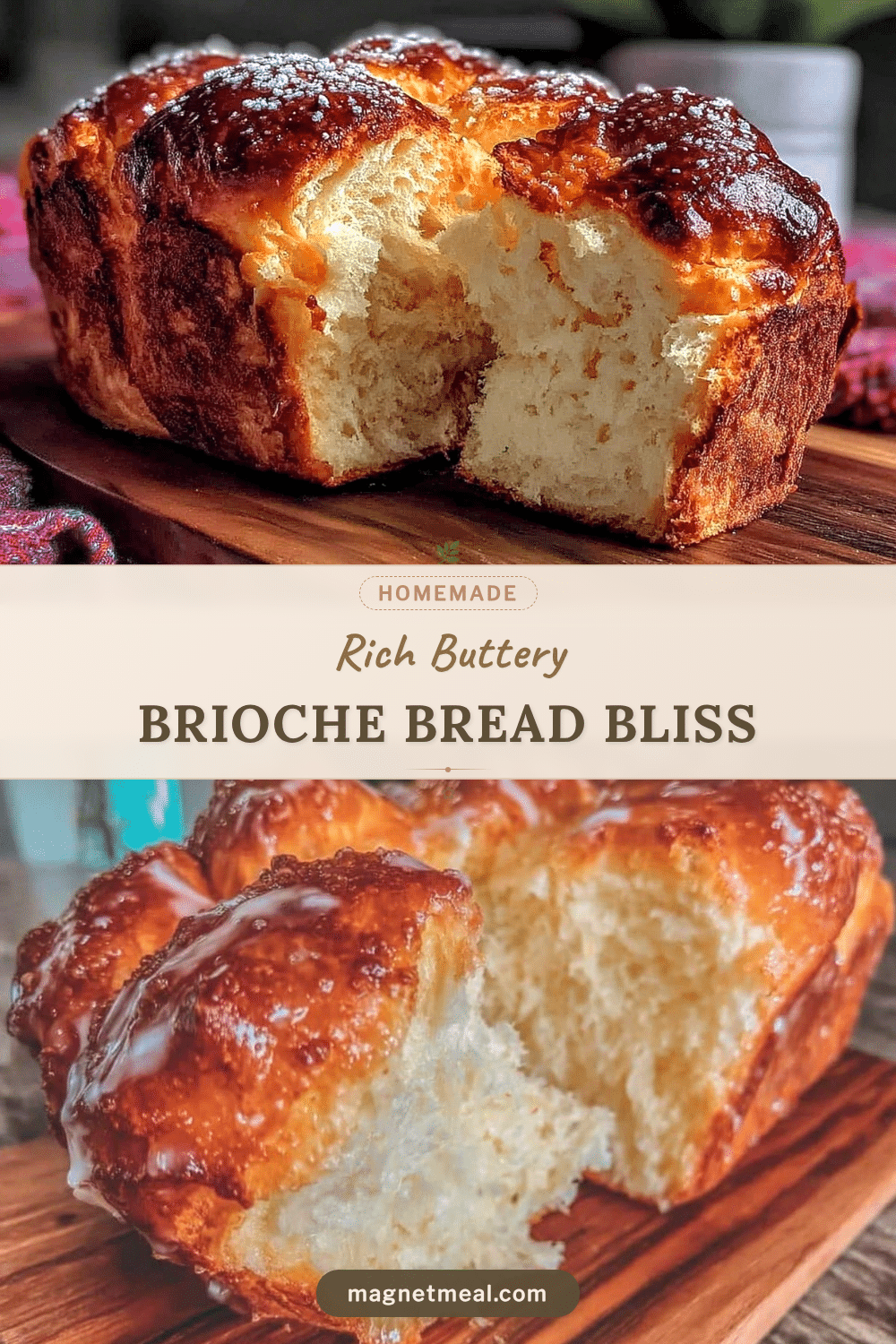
Tender Brioche Bread

A rich, buttery, and tender homemade brioche bread with a soft pillowy texture and golden crust, perfect for breakfast, brunch, or a sweet treat.
- Prep Time: 30 minutes
- Cook Time: 30-35 minutes
- Total Time: 2 hours 45 minutes
- Yield: 1 loaf (about 12 slices) 1x
- Category: Bread
- Cuisine: French
Ingredients
- 3 ½ cups (440 g) all-purpose flour
- 2 ¼ tsp (7 g) active dry yeast
- ¼ cup (50 g) granulated sugar
- 1 ½ tsp (9 g) salt
- ½ cup (120 ml) whole milk, warmed to about 110°F (43°C)
- 5 large eggs (4 for dough, 1 for egg wash), room temperature
- 1 cup (227 g) unsalted butter, softened
- 1 tsp vanilla extract (optional)
- 1 tbsp honey (optional)
Instructions
- Activate the yeast: In a small bowl, combine the warm milk (110°F / 43°C) with 1 tablespoon of sugar and the active dry yeast. Let it sit for 5-7 minutes until foamy.
- Mix dry ingredients: In the bowl of your stand mixer, whisk together the flour, remaining sugar, and salt.
- Add wet ingredients: Crack 4 room temperature eggs into the flour mixture, pour in the yeast mixture, and add vanilla extract if using. Mix with the dough hook on low speed until the dough comes together, about 2 minutes.
- Knead the dough: Increase the mixer speed to medium and knead for about 5 minutes until the dough is elastic but still sticky.
- Add butter gradually: With the mixer running, add the softened butter tablespoon by tablespoon over 8-10 minutes.
- First rise: Transfer the dough to a clean, lightly greased bowl. Cover and let it rise in a warm spot for 1 to 1.5 hours, or until doubled in size.
- Shape the dough: Punch down the dough, turn onto a floured surface, and shape into a loaf or divide into smaller balls for buns.
- Second rise: Place shaped dough into greased loaf pan or molds. Cover and let rise for 45-60 minutes until puffy and nearly doubled.
- Preheat oven to 350°F (175°C).
- Egg wash: Beat the remaining egg with 1 teaspoon of water and brush over dough surface.
- Bake for 30-35 minutes until deep golden and hollow sounding when tapped. Tent with foil if browning too quickly.
- Cool: Let cool in pan for 10 minutes, then turn out onto wire rack. Wait at least 1 hour before slicing.
Notes
[‘Milk temperature should be warm but not scalding (around 110°F/43°C) to activate yeast properly.’, ‘Add softened butter slowly, one tablespoon at a time, to keep dough tender and silky.’, ‘Allow dough to rise fully without rushing for best texture and flavor.’, ‘Brush dough with egg wash for a glossy, golden crust.’, ‘Be gentle when shaping to preserve air bubbles for lightness.’, ‘Check oven at 25 minutes to avoid burning; tent with foil if needed.’, ‘Cool bread at least 1 hour before slicing to avoid gummy texture.’, ‘For dairy-free, substitute milk with almond or oat milk and use vegan butter.’, ‘For gluten-free, use a gluten-free all-purpose flour blend designed for bread.’]
Nutrition
- Serving Size: 1 slice (about 50 g)
- Calories: 180
- Fat: 9
- Carbohydrates: 20
- Protein: 5
Keywords: brioche bread, homemade bread, buttery bread, breakfast bread, soft bread, rich bread, easy brioche recipe