There’s something about early spring that makes me want to slow down and savor the simple things—like fresh vegetables just starting to pop up at the farmer’s market. One afternoon, after a long day juggling work and a million little errands, I found myself staring at a bunch of vibrant asparagus, peas, and radishes and feeling too drained to do anything complicated. Honestly, I wasn’t sure if I could pull off a proper dinner without ordering takeout, but I didn’t want to give up on cooking either.
So, I tossed together this easy rustic spring vegetable galette, a dish that felt fancy enough to impress but relaxed enough to make without stress. The flaky crust, buttery and golden, wraps around the bright, crisp veggies with just the right touch of herbs and tang from a smear of cheese. It was one of those accidental wins—the kind that starts with skepticism (“Can I really make this look good?”) and ends with a quiet, satisfying moment of “Yeah, I nailed it.”
Since then, this galette has become my go-to whenever I want something light but hearty, fresh but comforting. It’s perfect for those days when you’re craving something homemade but don’t want to spend hours in the kitchen. The best part? It’s flexible enough to work with whatever spring produce you have on hand, making it a delicious little ritual to welcome the season each year.
Why You’ll Love This Recipe
- Quick & Easy: Comes together in under 45 minutes, perfect for busy weeknights or unexpected guests.
- Simple Ingredients: Uses pantry staples and spring veggies you can find at any market or grocery store.
- Perfect for Spring: Highlights fresh, seasonal vegetables that celebrate the best flavors of the season.
- Crowd-Pleaser: The flaky crust and savory filling get rave reviews from family and friends alike.
- Unbelievably Delicious: The balance of buttery pastry and crisp, bright veggies creates a texture and flavor combo that’s just irresistible.
What sets this rustic spring vegetable galette apart is the beautifully simple technique that lets the ingredients shine. Rather than hiding vegetables in a sauce or stew, this recipe showcases their natural texture and flavor with a flaky, homemade crust that’s surprisingly easy to make—even if you’re “not really a baker.” The smear of creamy ricotta or goat cheese beneath the veggies adds a subtle tang that ties everything together, making each bite satisfying and fresh.
It’s the kind of recipe you can make over and over, tweaking with whatever you find at the market or in your fridge, but it always delivers a comforting, homemade feel. Honestly, it’s like spring on a plate—bright, fresh, and effortlessly charming.
What Ingredients You Will Need
This recipe uses simple, wholesome ingredients to deliver bold flavor and satisfying texture without the fuss. Most are pantry staples, with fresh spring veggies bringing the dish to life.
- For the crust:
- All-purpose flour – 1 ½ cups (190g), sifted for best texture
- Unsalted butter – ½ cup (115g), cold and cubed (I like to use Kerrygold for its rich flavor)
- Ice water – 3 to 4 tablespoons, to bring the dough together
- Salt – ½ teaspoon
- For the filling:
- Asparagus – 1 bunch, trimmed and cut into 2-inch pieces (look for firm, bright green stalks)
- Fresh peas – 1 cup, shelled (or frozen if out of season)
- Radishes – 5 to 6, thinly sliced for a peppery crunch
- Shallot – 1 small, finely chopped
- Ricotta cheese – ½ cup (125g), whole milk (or goat cheese for tangier flavor)
- Olive oil – 2 tablespoons, plus extra for drizzling
- Fresh thyme – 1 teaspoon, chopped (or substitute rosemary)
- Salt and freshly ground black pepper to taste
- Optional for garnish:
- Fresh basil or parsley leaves
- A squeeze of lemon juice
Substitution tips: Use gluten-free flour blend instead of all-purpose for a gluten-free crust, or swap ricotta with a dairy-free yogurt cheese for a vegan twist. Frozen peas work just fine if fresh ones are hard to find early in the season. If you want to add a bit more richness, a sprinkle of Parmesan cheese on top works wonders.
Equipment Needed
- Mixing bowls – for dough and filling prep
- Pastry blender or fork – to cut butter into flour (a food processor works too, if you have one)
- Rolling pin – for rolling out the dough evenly
- Baking sheet – lined with parchment paper or silicone mat
- Sharp knife or pizza cutter – to trim the galette edges
- Measuring cups and spoons – for precision
For those without a pastry blender, two knives crossed can help cut the butter into the flour. I’ve also made this galette using my hands to gently work the dough—just be sure not to overhandle it or the crust gets tough. A silicone baking mat is a great budget-friendly option that helps with rolling and cleanup. Keeping your butter cold really makes a difference in that flaky texture, so I sometimes pop the dough in the fridge for 15 minutes before rolling.
Preparation Method

- Make the crust: In a large bowl, combine the sifted all-purpose flour and salt. Add the cold, cubed butter. Use a pastry blender or fork to cut the butter into the flour until the mixture resembles coarse crumbs with some pea-sized pieces. This helps create the flaky layers you want. (About 5 minutes)
- Add ice water: Drizzle 3 tablespoons of ice water over the mixture. Gently stir with a fork until the dough begins to come together. If it feels too dry, add the remaining tablespoon of water, but be careful not to overwork it. Form the dough into a ball, flatten it into a disk, wrap in plastic, and refrigerate for at least 30 minutes. (This chilling step is key for a tender crust.)
- Prepare the filling: While the dough chills, toss the asparagus pieces, peas, thinly sliced radishes, and chopped shallot in a bowl with 2 tablespoons olive oil, fresh thyme, salt, and pepper. Set aside to marinate slightly. (10 minutes)
- Roll out the dough: On a lightly floured surface, roll the chilled dough into a 12-inch (30 cm) circle about ⅛ inch (3 mm) thick. Try to keep it even, but don’t stress if the edges are a bit rough—that’s part of the rustic charm! Transfer the dough to a parchment-lined baking sheet.
- Add the cheese layer: Spread the ricotta cheese evenly over the dough, leaving a 2-inch (5 cm) border around the edges. The cheese acts as a creamy base that keeps the crust from getting soggy and adds tangy richness.
- Arrange the vegetables: Pile the marinated vegetables on top of the ricotta in a loose, even layer. Let some of the radishes peek through for color contrast. Gently fold the dough edges over the filling, pleating as needed to create a rustic edge.
- Bake: Drizzle a little olive oil over the crust and vegetables. Bake in a preheated oven at 400°F (200°C) for 30-35 minutes, or until the crust is golden brown and crisp, and the vegetables are tender but still vibrant. (Keep an eye from 25 minutes on to avoid burning.)
- Finish and serve: Once out of the oven, let the galette cool for 5 minutes. Garnish with fresh basil or parsley and a squeeze of lemon juice to brighten the flavors before slicing and serving.
Cooking Tips & Techniques
One trick I learned early on is to keep everything cold when making the crust—cold butter and ice water mean a flakier, less greasy dough. Overmixing the dough can make it tough, so gently combine ingredients and resist the urge to knead.
When rolling out the dough, flour the surface and rolling pin lightly, but not excessively—too much flour can dry out the crust. If the dough cracks at the edges, just press it back together with your fingers. Those little imperfections add to the rustic look.
For the filling, marinating the vegetables briefly in olive oil, herbs, salt, and pepper helps soften them just enough and enhances their natural flavors without cooking them beforehand. This keeps the texture fresh and bright.
Keep an eye on the galette while baking; ovens vary, so checking around 25 minutes is wise. If the crust edges brown too fast, loosely tent with foil to prevent burning while the veggies finish cooking.
Lastly, don’t rush cooling before cutting. Letting it rest allows the cheese to set slightly, so the slices hold together better when served.
Variations & Adaptations
- Seasonal Swaps: In summer, swap asparagus and peas for fresh cherry tomatoes, zucchini ribbons, and basil for a bright, juicy twist.
- Dietary Options: Use gluten-free flour blends for the crust and vegan ricotta or cashew cream to make this galette dairy-free.
- Flavor Twists: Add caramelized onions or sautéed mushrooms for a deeper, earthy flavor. A sprinkle of feta or goat cheese instead of ricotta gives a sharper tang.
- Cooking Method: This galette can also be cooked on a pizza stone or in a cast-iron skillet for a crispier bottom crust.
- Personal Favorite: I once added thinly sliced baby potatoes and fresh rosemary for a heartier version that still felt light and fresh—perfect for a spring brunch.
Serving & Storage Suggestions
This galette is best served warm or at room temperature, making it a versatile option for brunch, lunch, or a light dinner. Pair it with a crisp green salad and a chilled glass of white wine or sparkling water with lemon for a refreshing meal.
Leftovers keep well in the fridge for up to 3 days. To reheat, pop slices in a toaster oven or conventional oven at 350°F (175°C) for about 10 minutes to restore crispness. Avoid microwaving if you want to keep the pastry flaky.
Flavors actually deepen after a day, so sometimes I make it ahead and enjoy the next day’s leftovers just as much. The tang of the cheese and the herbs mellow beautifully with time.
Nutritional Information & Benefits
This rustic spring vegetable galette is a wholesome dish packed with fiber, vitamins, and antioxidants from fresh asparagus, peas, and radishes. The homemade crust provides energy-sustaining carbohydrates, while ricotta adds a dose of protein and calcium.
Because it’s made with fresh vegetables and minimal processed ingredients, it fits well into balanced eating plans. Gluten-free and dairy-free adaptations make it accessible for various dietary needs. Just watch the butter amount if you’re watching saturated fat intake.
Personally, I appreciate this recipe as a way to enjoy seasonal produce without overcomplicating dinner, supporting a mindful approach to cooking and eating.
Conclusion
This easy rustic spring vegetable galette recipe is a keeper for those moments when you want something homemade, fresh, and unpretentious. It’s flexible enough to suit your pantry and preferred veggies, yet always delivers that flaky, buttery crust and bright, flavorful filling that feels like a small celebration of spring.
I love how it turns a few simple ingredients into something that looks charming and tastes like you spent hours in the kitchen—without really doing so. Whether you’re cooking for yourself or sharing with friends, it’s the kind of dish that invites smiles and second helpings.
Give it a try and make it your own. And hey, if you find a new favorite veggie combo or a shortcut that works, I’d love to hear about it—there’s always room for more tasty ideas in my kitchen!
FAQs
Can I use frozen vegetables for this galette?
Yes! Frozen peas and asparagus work well if fresh aren’t available. Just thaw and drain them before using to avoid excess moisture.
How do I make the crust flakier?
Keep your butter and water cold, and don’t overwork the dough. Chilling the dough before rolling also helps create those flaky layers.
Can I prepare this galette ahead of time?
Absolutely. You can assemble it and refrigerate for a few hours before baking. Just bring it to room temperature for 15 minutes before putting it in the oven.
What cheese can I use instead of ricotta?
Goat cheese or feta are great alternatives for a tangier flavor. For dairy-free options, try cashew cream or a vegan ricotta substitute.
Is this galette suitable for vegans?
With a few swaps—using a vegan butter or coconut oil in the crust and a dairy-free cheese alternative—it can definitely be made vegan-friendly.
Pin This Recipe!
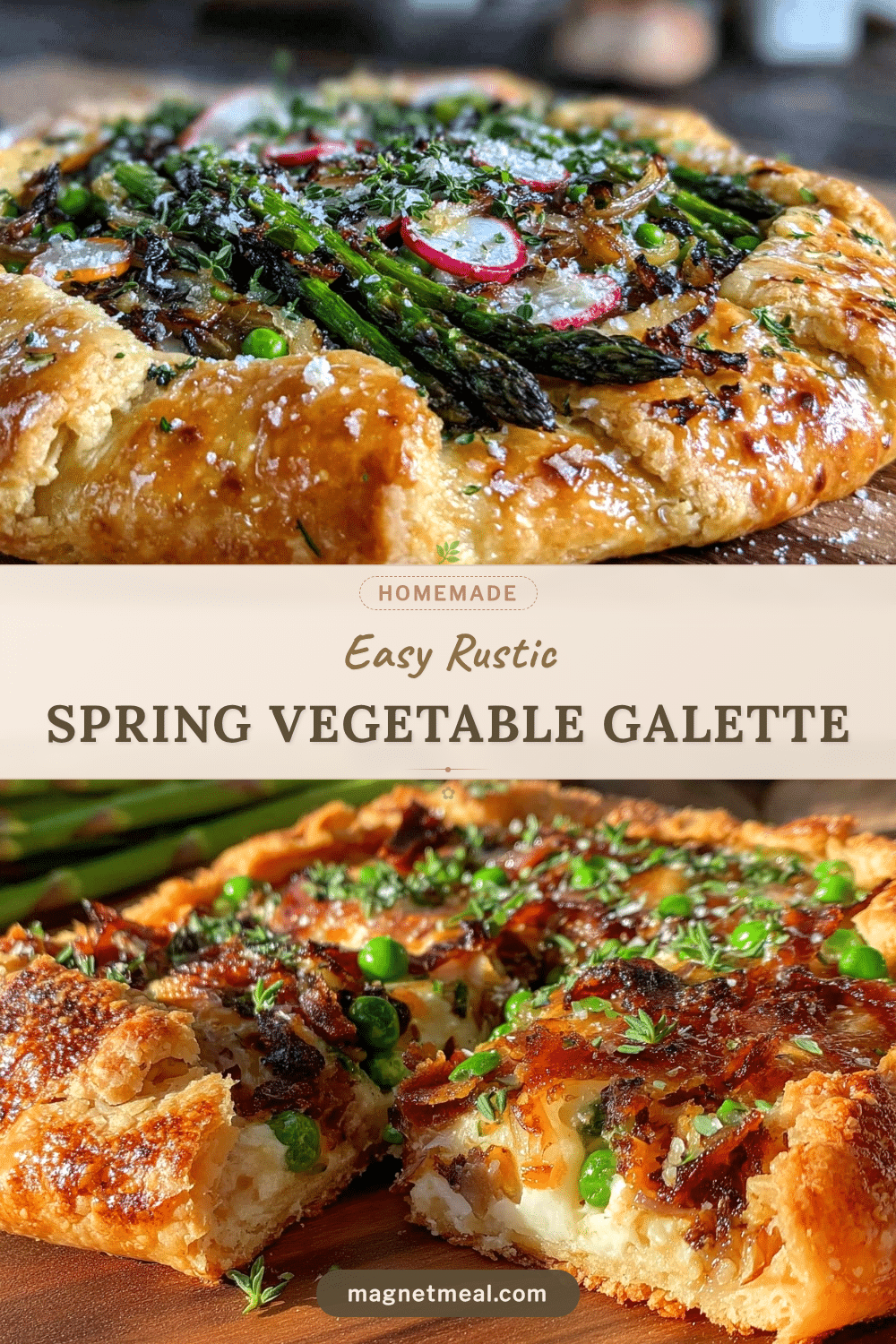
Easy Rustic Spring Vegetable Galette

A quick and easy rustic galette featuring fresh spring vegetables wrapped in a flaky, buttery crust with a creamy ricotta cheese base. Perfect for beginners and adaptable to seasonal produce.
- Prep Time: 15 minutes
- Cook Time: 30-35 minutes
- Total Time: 45-50 minutes
- Yield: 6 servings 1x
- Category: Main Course
- Cuisine: American
Ingredients
- 1 ½ cups (190g) all-purpose flour, sifted
- ½ cup (115g) unsalted butter, cold and cubed
- 3 to 4 tablespoons ice water
- ½ teaspoon salt
- 1 bunch asparagus, trimmed and cut into 2-inch pieces
- 1 cup fresh peas, shelled (or frozen, thawed and drained)
- 5 to 6 radishes, thinly sliced
- 1 small shallot, finely chopped
- ½ cup (125g) ricotta cheese (whole milk) or goat cheese
- 2 tablespoons olive oil, plus extra for drizzling
- 1 teaspoon fresh thyme, chopped (or rosemary)
- Salt and freshly ground black pepper to taste
- Optional garnish: fresh basil or parsley leaves
- Optional garnish: a squeeze of lemon juice
Instructions
- In a large bowl, combine sifted all-purpose flour and salt. Add cold, cubed butter and use a pastry blender or fork to cut butter into flour until mixture resembles coarse crumbs with some pea-sized pieces (about 5 minutes).
- Drizzle 3 tablespoons ice water over mixture and gently stir with a fork until dough begins to come together. Add remaining tablespoon if needed, but do not overwork. Form dough into a ball, flatten into a disk, wrap in plastic, and refrigerate for at least 30 minutes.
- While dough chills, toss asparagus pieces, peas, sliced radishes, and chopped shallot in a bowl with 2 tablespoons olive oil, fresh thyme, salt, and pepper. Set aside to marinate for 10 minutes.
- On a lightly floured surface, roll chilled dough into a 12-inch (30 cm) circle about ⅛ inch (3 mm) thick. Transfer dough to a parchment-lined baking sheet.
- Spread ricotta cheese evenly over dough, leaving a 2-inch (5 cm) border around edges.
- Arrange marinated vegetables on top of ricotta in a loose, even layer, letting some radishes peek through. Gently fold dough edges over filling, pleating as needed to create a rustic edge.
- Drizzle a little olive oil over crust and vegetables. Bake in preheated oven at 400°F (200°C) for 30-35 minutes, or until crust is golden brown and crisp and vegetables are tender but vibrant. Check at 25 minutes to avoid burning.
- Let galette cool for 5 minutes after baking. Garnish with fresh basil or parsley and a squeeze of lemon juice before slicing and serving.
Notes
Keep butter and water cold for a flakier crust. Do not overwork dough to avoid toughness. Chill dough before rolling. Marinate vegetables briefly to enhance flavor without cooking. Check galette at 25 minutes to prevent burning; tent with foil if needed. Let galette cool before slicing to help cheese set. Frozen peas and asparagus can be used if fresh are unavailable; thaw and drain well.
Nutrition
- Serving Size: 1 slice (1/6 of gale
- Calories: 280
- Sugar: 3
- Sodium: 250
- Fat: 18
- Saturated Fat: 10
- Carbohydrates: 22
- Fiber: 3
- Protein: 6
Keywords: spring vegetable galette, rustic galette, easy galette recipe, spring vegetables, asparagus recipe, peas recipe, radishes recipe, homemade crust, ricotta galette, vegetarian galette